
12 Fascinating Facts About Oceanography and the Deep Sea

Introduction
While we often look to the stars to find the unknown, the most profound mysteries on Earth are actually hidden beneath the waves. The ocean covers approximately 70% of our planet’s surface and holds an incredible 96.5% of all the water on Earth. Yet, despite its dominance over our geography, our understanding of this realm remains in its infancy. We are essentially living on a water planet that we have barely begun to map or catalog, making the field of oceanography one of the most vital frontiers of modern science.
The Hidden Frontiers of the Deep Sea
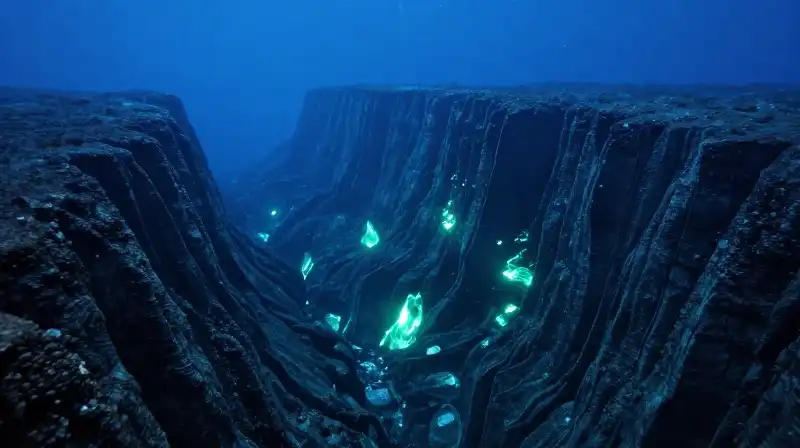
When people think of the ocean floor, they often imagine a flat, sandy expanse. In reality, the seabed is a landscape of extremes, featuring geological wonders that dwarf anything found on land.
- The World’s Longest Mountain Range: Far from being a flat plain, the ocean floor is home to the Mid-Oceanic Ridge. This massive underwater mountain system stretches over 56,000km, making it the longest mountain range on the planet.
- Extreme Depths: The Mariana Trench represents the lowest known points on Earth. At its deepest, the trench reaches approximately 11km down, creating a high-pressure environment unlike any other.
- A Massive Mapping Gap: Although satellite technology has advanced significantly, we have only mapped about 0.05% of the ocean floor with the highest possible sonar detail. This means that roughly 80-85% of the seabed remains unmapped at high resolution.
- Unidentified Life: Because so much of the deep sea remains unexplored, much of its inhabitants remain a mystery. Scientists estimate that two-thirds of all marine species have yet to be identified.
Temperature Extremes and Chemical Wonders
A common misconception is that the deep ocean is a uniform, freezing void. While it is true that general deep-sea temperatures often hover between a chilly 32 and 37 degrees Fahrenheit, the environment is actually defined by intense fluctuations.
Near hydrothermal vents, the rules of the deep change entirely. These vents can release water reaching temperatures as high as 700 degrees Fahrenheit. These thermal hotspots create unique ecosystems where life thrives on chemical energy rather than sunlight, showcasing the incredible adaptability of marine organisms.
Ocean Chemistry and Global Survival
The ocean does much more than just house sea creatures; it functions as a massive life-support system for the entire planet. Understanding oceanography involves studying how the chemical composition of seawater affects both marine life and the global climate.
- The Source of Our Oxygen: Many people assume rainforests are the primary source of the air we breathe, but the ocean is actually responsible for producing approximately 70% of the Earth’s oxygen. This is primarily driven by phytoplankton, microscopic marine organisms that perform photosynthesis.
- The Planet’s Carbon Sink: The ocean acts as a vital “carbon sink,” having absorbed roughly one-third of all carbon dioxide produced by human activities.
- The Threat of Acidification: While this absorption helps regulate the atmosphere, it comes at a cost. Rising CO2 levels are causing ocean acidification, a chemical shift that threatens fragile ecosystems like the Great Barrier Reef.
Comparing Marine Scale and Resources
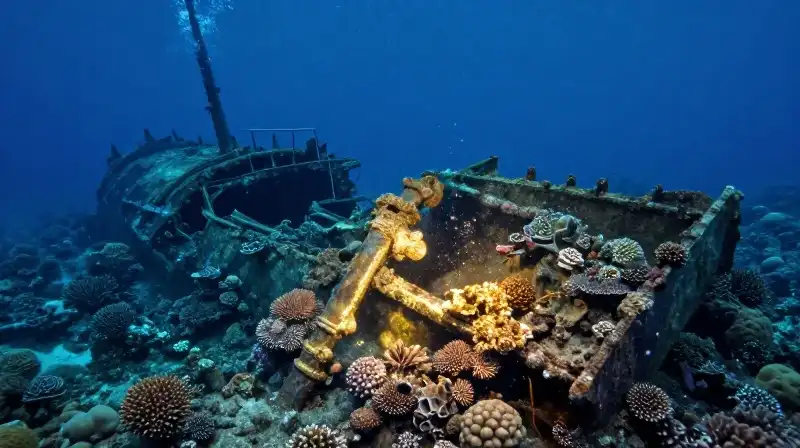
To understand the sheer scale of the ocean, it helps to look at the difference between massive living structures and the hidden resources dissolved within the water itself.
| Feature | Description / Scale | Significance |
|---|---|---|
| Great Barrier Reef | Spans over 1,400 miles (2,600km) | The world’s largest living structure; visible from the Moon. |
| Submerged History | Countless shipwrecks and artifacts | May hold more historical artifacts than all the world’s museums combined. |
| Suspended Gold | ~20 million pounds of gold | Highly diluted at just a few parts per trillion per liter, making it difficult to extract. |
What is a fun fact about oceanography?
If you are looking for a single surprising fact to share, consider the concept of “hidden abundance.” While we often think of the ocean as a place of empty blue water, it is actually a massive, floating library of history and wealth. Between the millions of pounds of gold suspended in the water and the fact that the seafloor likely contains more man-made artifacts than every museum on land, the ocean is essentially a vast, underwater archive of our planet’s past and future.
The Multidisciplinary World of Oceanographers
Studying the ocean is not a single task; it is a complex, multidisciplinary field. According to oceanographers are specialized scientists who divide their work into several key areas:
- Biological Oceanographers: Study marine life and how organisms interact with their environment.
- Chemical Oceanographers: Examine the chemical composition of seawater and how it changes.
- Geological Oceanographers: Focus on the seafloor, tectonics, and the physical structure of the ocean floor.
- Physical Oceanographers: Investigate ocean currents, waves, and the movement of water.
Why the Ocean Matters
The facts presented here underscore a central truth: the ocean is not just a body of water, but a complex, breathing engine that regulates our climate, provides our oxygen, and holds the majority of Earth’s biological and historical secrets. From the massive scale of the Mid-Oceanic Ridge to the microscopic work of phytoplankton, every element of the ocean is interconnected. As we continue to map the unmapped and identify the unknown, we gain a better understanding of how to protect this vital, fragile system that makes life on Earth possible.
Facts sourced from peer-reviewed marine biology research, NOAA, and the Smithsonian Ocean Portal. Our editorial team fact-checks all content against current scientific literature.
Frequently Asked Questions
What is a fun fact about oceanography?
The ocean contains approximately 20 million pounds of gold suspended in its water and likely holds more man-made artifacts than all the worlds museums combined.
Related Articles