
100 Fascinating Ocean Facts About Marine Life and Deep Seas

Introduction
While we often think of Earth as a land-dominated planet, the reality is that water defines our world. The oceans cover approximately 71% of the Earth’s surface, but their true scale is found in their depth. Because of this vertical expanse, the ocean contains 99.9% of the planet’s habitable space for life. Despite this vastness, much of it remains a mystery; scientists have only been able to accurately map about 5% of the seafloor. From the microscopic plankton that sustain our atmosphere to the ancient sharks roaming the deep, the marine world is a complex engine of biology and chemistry that regulates life on land.
A Global Life-Support System
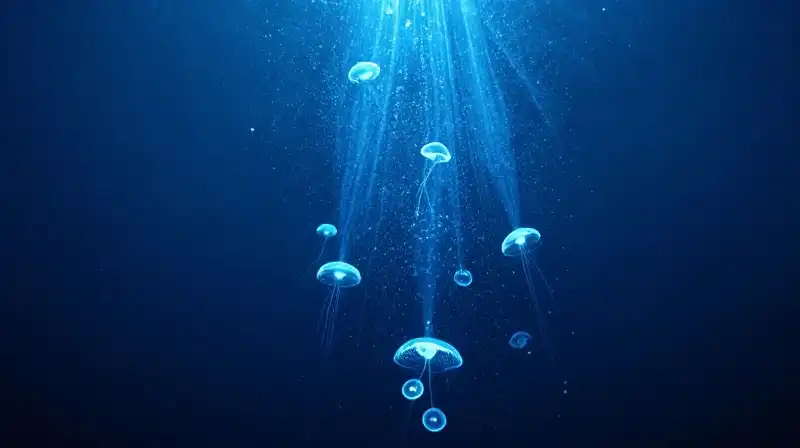
The ocean is far more than just a habitat for fish; it is a massive chemical reservoir that maintains the balance of our planet. Understanding these processes helps explain why marine conservation is critical to human survival.
- Oxygen Production: Much of our breathable air comes from the sea. Trillions of photosynthetic microbes known as phytoplankton produce roughly half of the oxygen in our atmosphere.
- Carbon Sequestration: The ocean acts as a giant sponge for greenhouse gases. It stores approximately 38,000 gigatons of carbon—which is 16 times more than the entire terrestrial biosphere.
- Ecological Hubs: Coral reefs are among the most efficient biological engines on Earth. While they cover less than 1% of the seafloor, they support up to 25% of all known marine species.
Life in the Deepest Trenches
As you descend into the ocean, pressure, temperature, and light change drastically. The deepest known point is the Challenger Deep in the Mariana Trench, reaching a depth of 10,994 meters. At this level, the pressure is roughly eight tonnes per square inch.
To survive these crushing depths, creatures have developed extraordinary biological adaptations:
- Ultra-Black Skin: Some deep-sea fish have evolved “ultra-black” skin that absorbs over 99.5% of light, making them nearly invisible to predators and prey in the darkness.
- Luring Prey: The anglerfish uses bioluminescence to hunt, employing a specialized light organ to draw prey toward its jaws.
- Unusual Reproduction: In the vast emptiness of the deep, finding a mate is difficult. Some anglerfish species use “sexual parasitism” to ensure reproduction, where the male attaches itself to the female.
- The Great Vertical Migration: Every single night, a massive biological movement called the Diel Vertical Migration occurs. Millions of deep-sea creatures rise toward the surface to feed on plankton under the cover of darkness, before retreating to the safety of the depths at dawn.
Remarkable Marine Biology and Longevity
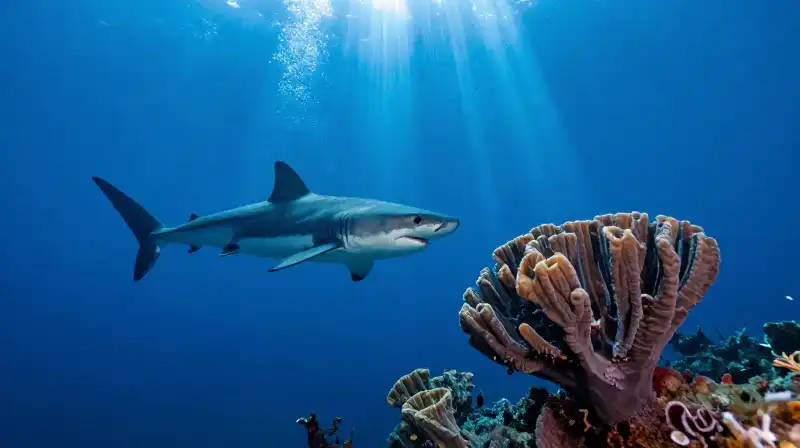
Marine life is often characterized by extreme lifespans and complex physiological structures that differ significantly from land animals.
Ancient and Long-Lived Species
Some of the oldest lineages on Earth are still swimming today. Sea sponges, for example, have existed for more than 640 million years and some individuals can live for over 11,000 years.
| Species | Notable Biological Trait | Longevity/Scale |
|---|---|---|
| Greenland Shark | Slow metabolism and cold-water adaptation | Can live over 400 years |
| Frilled Shark | Unique evolutionary lineage | Gestation period up to 42 months |
| Gray Whale | Incredible migratory endurance | Migrates 22,511km over 172 days |
The Intelligence of Cephalopods
Octopuses and their relatives represent a completely different way of “thinking.” Their nervous systems are decentralized, meaning that over 60% of an octopus’s cognition occurs in its arms rather than in a centralized brain. Additionally, they possess blue blood that contains copper, and most species utilize three separate hearts to pump it.
Busting Common Ocean Myths
Many misconceptions about the ocean stem from sensationalized media. We can correct these with scientific reality:
- Myth: Sharks are “monsters” that threaten humans.
Fact: While sharks are formidable predators, they pose very little threat to people. On average, fewer than 20 people are killed by sharks per year, whereas humans kill over 11,500 sharks every single hour. - Myth: The ocean is just water.
Fact: The ocean is a storehouse of historical and mineral wealth. It contains an estimated 20 million tonnes of gold dissolved in the seawater and holds roughly 3 million shipwrecks on its floor.
What will happen to the ocean in 100 years?
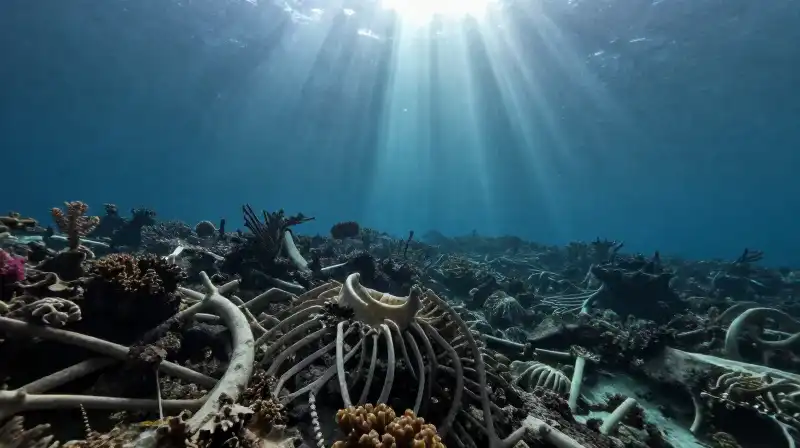
This is a question central to modern marine biology and conservation. While the exact future depends on human intervention, scientists focus on several key variables. The ocean’s role as a carbon sink is vital, but as it absorbs more CO2, issues like ocean acidification arise. Changes in water temperature can also impact the survival of coral reefs and the migratory patterns of species like the gray whale. Protecting the 1% of the seafloor that holds 25% of marine life is essential to ensuring the ocean remains a stable environment for the next century.
The Scale of Discovery
From the 640-million-year history of the sea sponge to the high-speed migrations of the gray whale, the ocean is a testament to biological resilience. It is a world where “ultra-black” skin is a necessity, where arms can think for themselves, and where the very air we breathe is a gift from microscopic organisms. As we continue to map the remaining 95% of the seafloor, we are not just discovering new species; we are uncovering the fundamental systems that keep our planet alive.
Facts sourced from peer-reviewed marine biology research, NOAA, and the Smithsonian Ocean Portal. Our editorial team fact-checks all content against current scientific literature.
Frequently Asked Questions
What will happen to the ocean in 100 years?
The exact future of the ocean depends on human intervention, though scientists are monitoring variables such as ocean acidification from CO2 absorption and changes in water temperature. These changes may impact the survival of coral reefs and the migratory patterns of species like the gray whale.
Related Articles