
Fascinating Facts About the Ocean: From Deep Seas to Climate Change

Introduction
While we live on dry land, our planet is fundamentally an aquatic one. The ocean covers approximately 70% of Earth’s surface and acts as the primary reservoir for our world, holding about 96.5% of all the water on Earth. It is a realm of extremes, containing both the highest mountains and the deepest trenches, and it functions as a vital life-support system that dictates the very air we breathe. Understanding the ocean is not just about studying water; it is about understanding the engine that drives Earth’s climate and biology.
The Unrivaled Scale of the Blue Planet
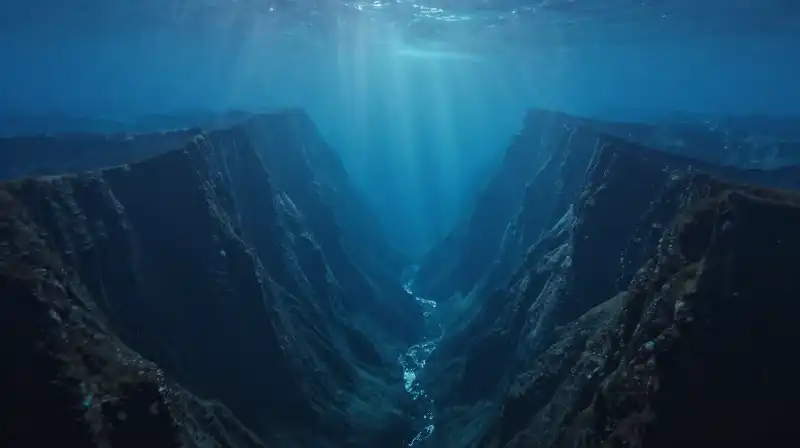
The sheer size of the ocean can be difficult to conceptualize. To understand the scale, we can look at the individual components and geological features that define this massive environment.
- The Pacific Giant: The Pacific Ocean is the largest single body of water on Earth, covering roughly 30% of the entire planet’s surface. Its name comes from the Latin Mare Pacificum, which translates to “peaceful sea”.
- Underwater Mountain Ranges: The ocean floor is not a flat, sandy plain. It contains the Mid-Oceanic Ridge, a massive underwater mountain chain that stretches over 56,000km along the center of ocean basins.
- The Deepest Descent: The most extreme vertical distance in the ocean is found in the Mariana Trench, which reaches depths of approximately 11km.
- The Largest Living Structure: The Great Barrier Reef is an biological marvel. Measuring around 2,600km, it is the world’s largest living structure and is so vast it can actually be seen from the Moon.
A Hidden World of Life and Microbes
When people think of ocean life, they often picture whales or sharks, but the true biodiversity of the sea exists at scales both massive and microscopic. Scientists have identified over 240,000 known species, yet the deep sea remains largely a mystery; estimates suggest there could be as many as two million undiscovered species waiting to be found.
The Microscopic Foundation
A significant portion of oceanic life is invisible to the naked eye. A single liter of ocean water can host up to 38,000 different kinds of microbes, including various types of phytoplankton and zooplankton. These microscopic organisms are the foundation of the marine food web and play a massive role in the global ecosystem.
The “Mega Museum” of History
Beyond biology, the ocean serves as a massive archive of human history. It is often referred to as a “mega museum” because it contains more historical artifacts and remnants of human history than all the world’s museums combined.
The Ocean as a Climate Regulator
The ocean is perhaps our most important ally in maintaining a habitable atmosphere. One of its most critical functions is oxygen production; the oceans produce approximately 70% of the oxygen we breathe.
However, the ocean is also a dynamic system that responds directly to changes in global temperature. This relationship is often misunderstood, particularly regarding sea levels.
| Time Period / Condition | Sea Level Impact | Context |
|---|---|---|
| Last Ice Age | 400 feet lower than today | Glaciers held vast amounts of water on land. |
| 125,000 years ago | 18 feet higher than today | A significant warm spell caused melting. |
| Modern Warming | Rising levels | Driven by melting ice and thermal expansion. |
Why Sea Levels Rise
A common misconception is that sea levels rise simply because “the bathtub is filling up.” In reality, rising temperatures cause sea-level rise through two main processes: the melting of land-based ice and thermal expansion. As the ocean absorbs heat, the water molecules move more vigorously and take up more space, increasing the overall volume of the ocean. This creates coastal hazards like flooding and erosion rather than just a gradual filling of basins.
The Great Unknown
Despite our technological advancements, we are still largely strangers to our own planet. Humans have currently only explored about 5% of the world’s oceans. This leaves the vast majority of marine habitats and the creatures that inhabit them as a profound scientific mystery. Every expedition to the deep sea has the potential to rewrite our understanding of biology, geology, and the history of life on Earth.
Why the Ocean Matters
The ocean is far more than just a body of salt water; it is a complex, living engine. From the microscopic phytoplankton providing the oxygen for our lungs to the massive geological ridges that shape the Earth’s crust, the ocean dictates the conditions for life on land. Recognizing its scale, its role in regulating our climate, and its immense, unexplored biodiversity is the first step in understanding our place on this blue planet.
Facts sourced from peer-reviewed marine biology research, NOAA, and the Smithsonian Ocean Portal. Our editorial team fact-checks all content against current scientific literature.
Related Articles