
7 Fascinating Facts About Jellyfish and Their Secrets

Introduction
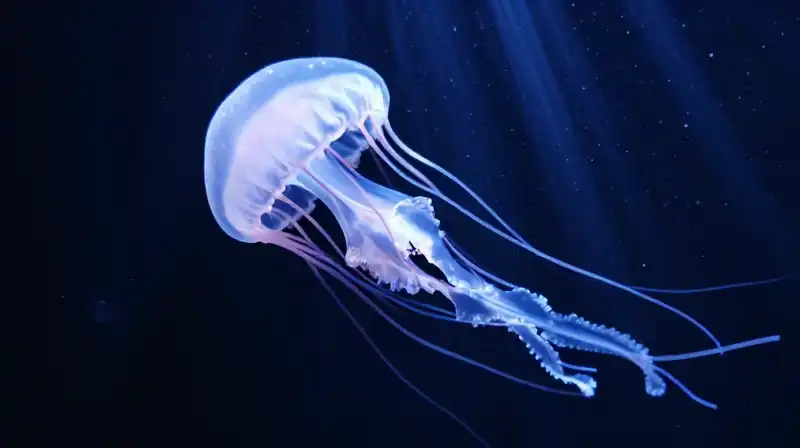
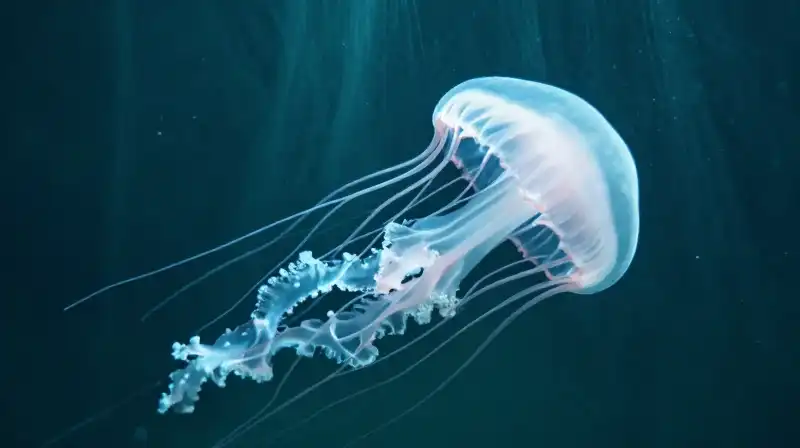
Drifting through the currents of the world’s oceans, jellyfish appear as ethereal, ghostly silhouettes, often mistaken for simple blobs of seawater. Yet, these gelatinous organisms are far from mindless drifters. They are ancient survivors that have mastered life in environments ranging from sun-drenched tropical coastlines to the crushing darkness of the deep sea. While they lack the complex skeletons and brains of most marine life, their biological strategies—from rapid digestion to cellular regeneration—reveal a level of evolutionary sophistication that continues to baffle and inspire marine biologists.
7 Fascinating Facts About Jellyfish and Their Secrets
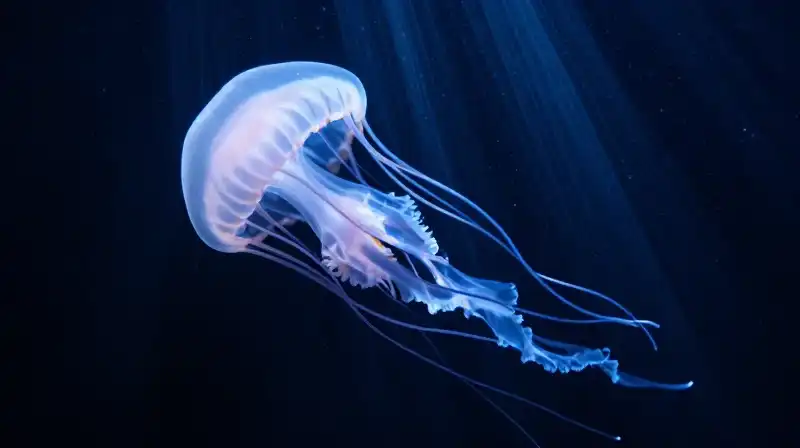
To understand the true nature of these creatures, we have to look past their translucent appearance and examine how they move, see, and even manage their own lifespans.
- They are ancient survivors of the pre-dinosaur era. Jellyfish are among the oldest known organisms on Earth. Their ancestors are estimated to be at least 500 million years old. This means they were thriving in the oceans long before the first dinosaurs ever walked the earth.
- The “Immortal” Jellyfish has a biological reset button. The species Turritopsis dohrnii has gained fame for its ability to effectively cheat death. When faced with extreme environmental stress—such as starvation, injury, or temperature shifts—it can reverse its life cycle, transforming from an adult medusa back into a polyp stage. However, there is a scientific nuance to this “immortality”: when the jellyfish reverts to a polyp, the resulting new medusae are genetically identical clones rather than a continuation of the original individual.
- Some species possess surprisingly advanced vision. While the vast majority of jellyfish lack a brain or central nervous system, the box jellyfish is a notable exception to the rule of “sightlessness.” These highly active swimmers possess 24 eyes that provide them with 360-degree vision.
- They are master swimmers, not just drifters. While many jellyfish rely entirely on ocean currents to move, the box jellyfish is an active predator capable of swimming up to six meters per minute, reaching top speeds of approximately 8km/h.
- Their anatomy is a masterclass in efficiency. A jellyfish’s body is essentially a smooth, bag-like structure. They possess a single opening in the center of their body that serves a dual purpose: it acts as both the mouth for eating and the exit for expelling waste.
- Fast digestion is a requirement for buoyancy. Because jellyfish are composed of a large percentage of water and must remain buoyant to float, they cannot afford to carry heavy, undigested meals. To avoid being weighed down, they must digest their diet—which includes fish, shrimp, crabs, and tiny plants—extremely quickly.
- They exhibit complex social patterns. Far from being solitary wanderers, some species show organized behaviors. For example, the Santa’s hat jellyfish (Periphylla periphylla) has been observed moving in distinct cycles of grouping together, scattering, and then regrouping.
Comparing Jellyfish Capabilities
Not all jellyfish are created equal. Their abilities vary wildly depending on their specific evolutionary niche.
| Trait | Typical Jellyfish | Box Jellyfish (Sea Wasp) |
|---|---|---|
| Movement | Passive drifting with currents | Active swimming (up to 8km/h) |
| Vision | Generally none or very simple | 24 eyes with 360-degree vision |
| Venom Level | Varies; often mild stings | One of the most venomous animals in the world |
Understanding Venom and Human Interaction
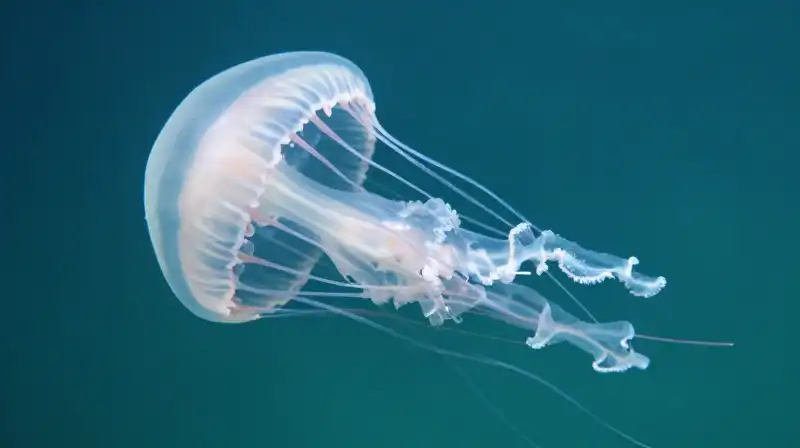
A common concern for swimmers is the danger posed by jellyfish stings. While most stings occur when humans accidentally brush against a creature, the level of risk is highly species-dependent. Certain species, specifically the “sea wasp” (a type of box jellyfish), are considered among the most venomous animals on the planet. Beyond the biological danger, jellyfish also hold a place in human culture; in countries like China, they are utilized not only as a food source but also in traditional medicine.
The Enduring Legacy of the Jellyfish
From their vibrant colors—ranging from pink and yellow to deep blues and purples—to their ability to produce their own bioluminescent light, jellyfish are among the most visually stunning residents of our oceans. They remind us that complexity does not always require a brain or a heart. By mastering the art of survival through ancient biological blueprints, jellyfish have proven that being “simple” is often a highly successful strategy for enduring through the ages.
Facts sourced from peer-reviewed marine biology research, NOAA, and the Smithsonian Ocean Portal. Our editorial team fact-checks all content against current scientific literature.
Related Articles