
12 Fascinating Facts About Gray Whales and Their Life Cycles

Introduction
While many people think of whales as sleek, streamlined giants patrolling the open ocean, the gray whale is a bit of a rebel. These massive mammals trade the high-speed life of their cousins for a slower, more methodical existence on the seafloor. From their mottled, scarred skin to their legendary migrations, gray whales possess a biological toolkit unlike almost any other cetacean. Understanding these creatures means looking past their unassuming gray appearance to see a species defined by endurance, specialized feeding, and a complex relationship with the changing oceans.
The Great Journey: Migration and Life Cycles
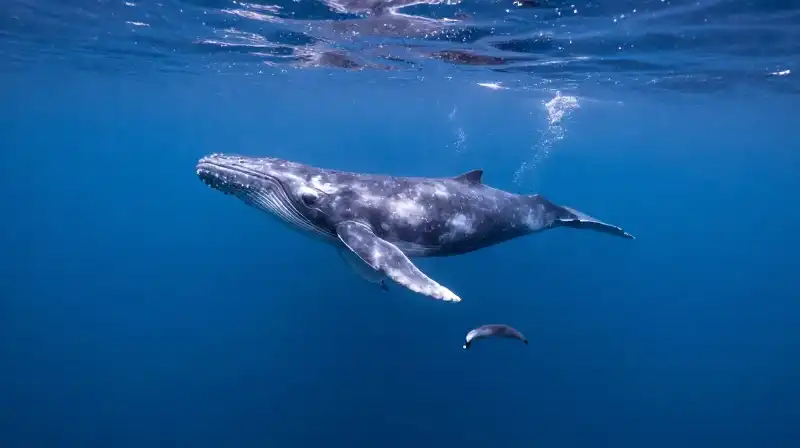
Gray whales are famous for completing one of the longest annual migrations of any mammal on Earth. This isn’t just a casual swim; it is a massive seasonal trek between Arctic feeding grounds and the warm, protected lagoons of Mexico. Depending on the specific route, these whales may travel anywhere from 5,000 to 14,000 miles round-trip.
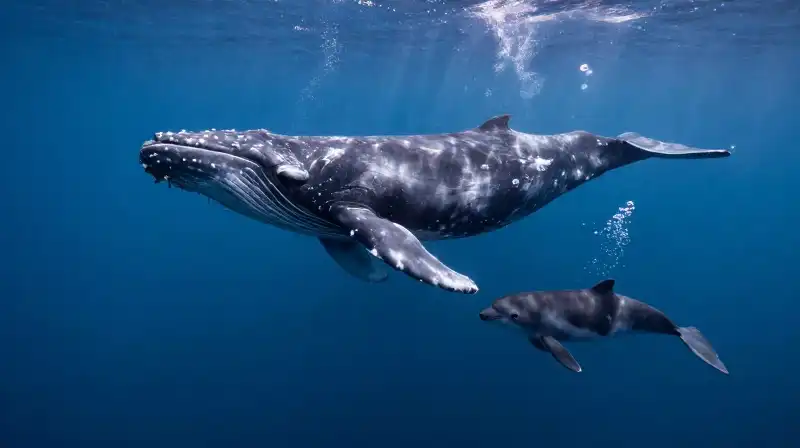
The cycle is driven by survival and reproduction. In the nutrient-rich waters of the north, adults feast to build up energy reserves. As the seasons shift, they head south to warmer waters to give birth. Even the newborn calves are impressive in scale, measuring between 14 and 16 feet long and weighing approximately 2,000 pounds at birth.
12 Fascinating Facts About Gray Whales
- A Unique Family Lineage: While they are classified as baleen whales, gray whales are highly distinct; they are the only living members of the family Eschrichtiidae.
- Distinctive “Knuckles”: Unlike many other whale species, gray whales lack a traditional dorsal fin. Instead, they feature a dorsal hump followed by a series of 6 to 12 small bumps often referred to as “knuckles”.
- Bottom-Feeding Specialists: Gray whales are distinctive bottom feeders. They often roll onto their sides to suck up sediment from the ocean floor, using their baleen to filter out small invertebrates like amphipods.
- A “Right-Handed” Preference: Interestingly, research suggests gray whales may be “right-handed” in their feeding habits, as they more frequently roll to the right to sweep the ocean floor with their baleen.
- Baleen Efficiency: To process the sediment they scoop up, they utilize between 130 and 180 coarse baleen plates.
- Heart-Shaped Breaths: When a gray whale surfaces to breathe, the exhale from its two blowholes often creates a distinctive, heart-shaped spray.
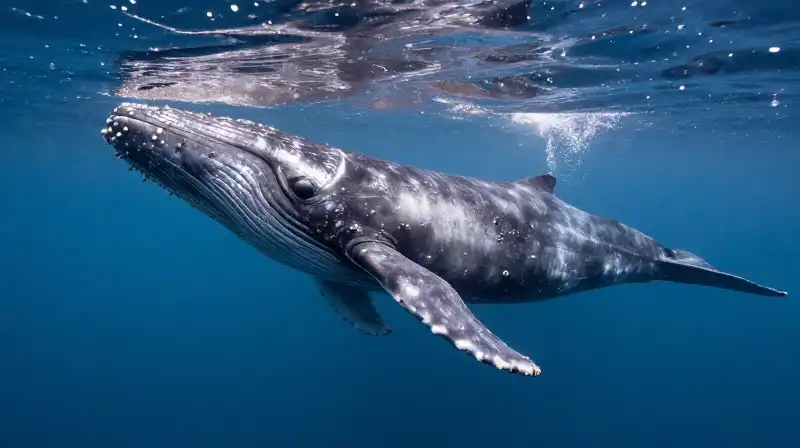
- Living Fingerprints: Because their skin is mottled gray and covered in unique patterns of scars, barnacles, and lice, scientists can use these markings to identify and track specific individuals, much like human fingerprints.
- Heavy Hitchhikers: Gray whales carry a significant load of “hitchhikers,” including barnacles and whale lice, which can collectively weigh up to 400 pounds.
- Communal Symbiosis: The relationship with whale lice is often considered communal, as these tiny organisms can actually help heal the whale’s skin injuries.
- Massive Physical Stature: These whales can grow to approximately 40–50 feet in length and weigh as much as 45 tons, or roughly 90,000 pounds.
- The “Devil Fish” Legacy: During the height of the whaling era, these whales earned the nickname “devil fish” because they were known to fight back aggressively against whalers using harpoons.
- A Tale of Two Populations: Not all gray whales share the same status. While one group is thriving, another is struggling to survive (see conservation section below).
Gray Whale vs. Other Cetaceans
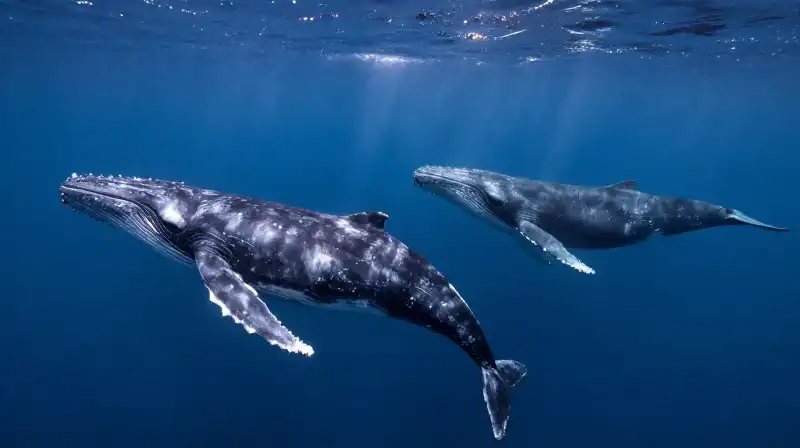
To understand the scale of a gray whale, it helps to compare them to other well-known marine giants.
| Feature | Gray Whale | Humpback Whale (Typical) |
|---|---|---|
| Max Length | ~40–50 feet | ~40–50+ feet |
| Weight | Up to 45 tons | Up to 40 tons |
| Feeding Style | Bottom-feeding (sediment) | Lunge feeding (water column) |
| Dorsal Feature | Dorsal hump and “knuckles” | Prominent dorsal fin |
Are Gray Whales Rare?
The answer depends entirely on which population you are looking at. The species is divided into different groups based on their migration routes, and their rarity varies significantly between them.
The Eastern North Pacific population has seen a major conservation success story. After being protected, they were delisted from the Endangered Species Act in 1994 and are now considered a stable population. However, the Western North Pacific population is a different story; they remain critically endangered, with estimates suggesting fewer than 300 individuals remain.
Conservation and Modern Threats
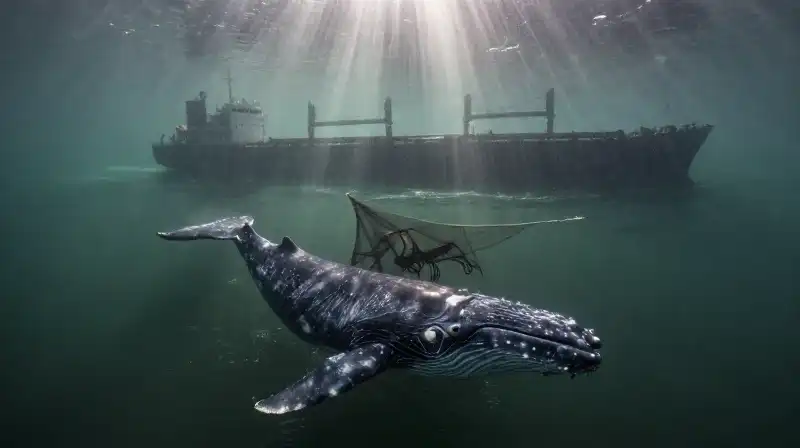
Even for the stable populations, gray whales face a gauntlet of modern challenges. While they are no longer hunted by whalers, they must navigate a much busier and louder ocean. Major threats to their survival include:
- Entanglement: Getting caught in commercial fishing gear.
- Vessel Strikes: Collisions with ships in heavy shipping lanes.
- Ocean Noise: Acoustic pollution that interferes with their ability to communicate and navigate.
- Climate Change: Shifting sea ice patterns that can disrupt their traditional feeding and migration cycles.
The Resilience of the Gray Whale
The gray whale is a testament to biological specialization. By carving out a niche as a bottom-feeder and enduring one of the most taxing migrations in the animal kingdom, they have survived for millennia. Whether they are being identified by their unique skin patterns or navigating the dangers of modern shipping lanes, these whales remain one of the most fascinating and resilient subjects of marine biology. Their survival is a delicate balance of protecting their habitats and managing the human-driven changes to our oceans.
Facts sourced from peer-reviewed marine biology research, NOAA, and the Smithsonian Ocean Portal. Our editorial team fact-checks all content against current scientific literature.
Frequently Asked Questions
Are gray whales rare?
The rarity of gray whales depends on the population; the Eastern North Pacific population is stable, while the Western North Pacific population is critically endangered with fewer than 300 individuals remaining.
Related Articles