
12 Fascinating Humpback Whale Facts and Unique Behaviors

Introduction
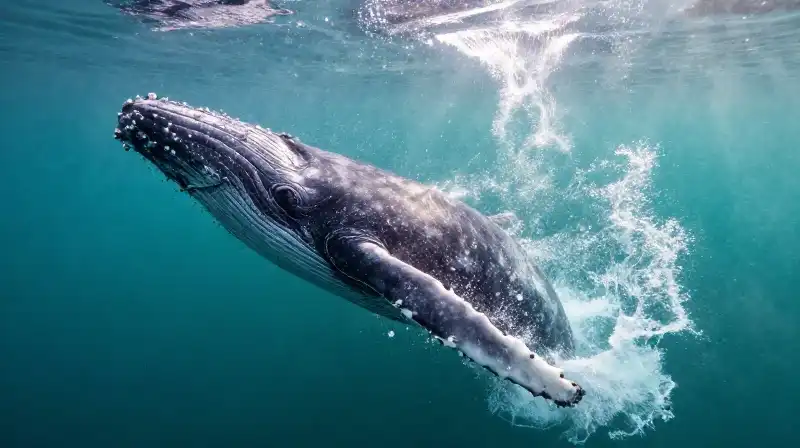
Watching a humpback whale breach the surface is one of the most dramatic spectacles in the natural world. These massive mammals, known for their acrobatic leaps and haunting songs, are much more than just giant wanderers of the deep. They are highly intelligent, socially complex creatures that exhibit behaviors ranging from coordinated group hunting to protective “big brother” instincts. Understanding these whales requires looking past their immense scale and into the intricate ways they navigate the world’s oceans.
Physical Marvels and Identification
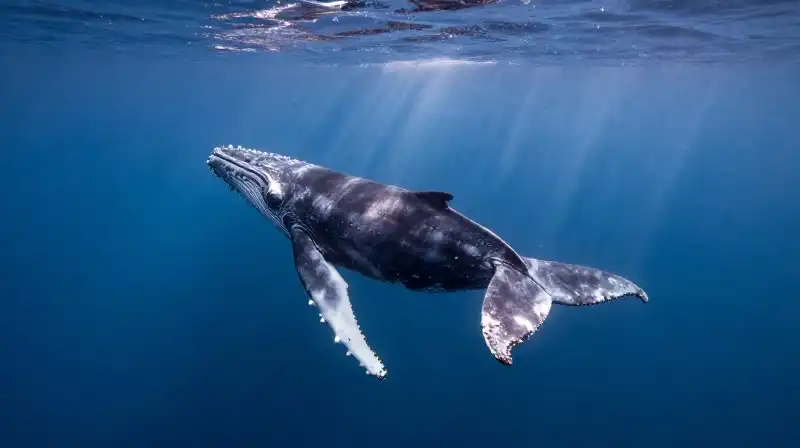
Humpback whales possess several distinct physical characteristics that set them apart from other baleen whales. Their most striking feature is their exceptionally long pectoral fins, which can reach up to one-third of their total body length. Beyond these fins, their heads are marked by “tubercules”—large bumps that are unique to the species. These bumps may even serve a practical purpose; according to they can host barnacles that act as a form of “body armor” during physical competition between males.
Because every humpback is unique, marine biologists use their tails to keep track of individual animals. Much like a human fingerprint, the patterns and shapes on a whale’s tail flukes are one-of-a-kind, allowing researchers to use citizen science programs to monitor specific whales over time.
Size and Scale
To grasp the sheer magnitude of a humpback, it helps to look at the estimated ranges for their growth and weight:
| Attribute | Estimated Range |
|---|---|
| Length | 14.6 to 19 meters (approx. 48 to 62.5 feet) |
| Weight | 30 to 40 tonnes |
12 Fascinating Humpback Whale Facts and Unique Behaviors
From their complex vocalizations to their sophisticated hunting methods, humpback whales engage in a variety of behaviors that continue to fascinate marine biologists.
- The Complexity of Humpback Songs: Only male humpback whales sing, creating intricate compositions that can last up to 30 minutes. These songs consist of high-pitched squeals, whistles, and low rumbles. Interestingly, these songs are unique to specific breeding stocks, though they can evolve and even be shared between different groups.
- Dramatic Breaching: Humpbacks are famous for “breaching,” or leaping completely out of the water. While this is a favorite sight for whale watchers, scientists are still investigating the exact reason behind it—researching whether it serves a specific communication purpose or is simply done for enjoyment.
- Bubble-Net Feeding: This is a highly sophisticated hunting technique where whales work together to create a “net” of bubbles that traps schools of fish. This behavior is believed to be a learned skill passed from mother to calf rather than a purely instinctive action.
- Massive Annual Migrations: These whales are world-class travelers, moving up to 8,000 kilometers or more between their polar feeding grounds and tropical breeding waters. Some populations have been known to swim non-stop for up to nine weeks.
- Extended Fasting: During their long migrations to warmer waters, humpbacks generally do not eat for about eight months. They rely entirely on the massive energy reserves they stored during their intense feeding season in the polar regions.
- The “Big Brother” Effect: In a surprising display of interspecies interaction, some researchers suggest that humpbacks may act as “big brothers” of the sea, occasionally intervening to harass orca attacks to protect other species or even human divers.
- Tail Fluke Diving: When a humpback prepares to dive deep, it often lifts its tail flukes high out of the water, a behavior known as “fluking” that provides a clear view of their unique markings.
- Global Distribution: While found in every ocean worldwide, they exist in specific regional populations, such as the Oceania stock found in New Zealand waters.
- Body Armor: The barnacles attached to the tubercules on their heads may provide a layer of protection during male-male competition.
- Dorsal Fin Distinction: Unlike some other whale species, humpbacks are identified by a prominent hump located just in front of their relatively small dorsal fins.
- Social Learning: The fact that behaviors like bubble-netting are passed down through generations suggests a high level of social intelligence and cultural transmission within whale pods.
- Environmental Indicators: Because they are so large and mobile, they serve as “sentinels” of ocean health. For example, researchers can monitor ocean noise pollution by studying changes in cortisol levels found in whale feces.
What is so special about humpback whales?
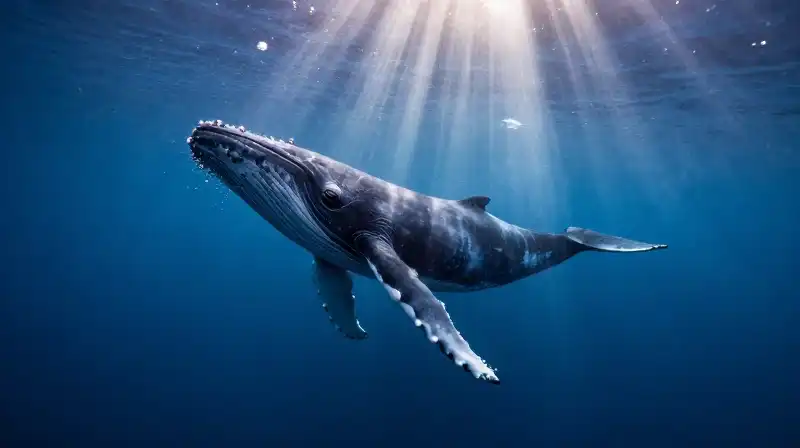
What makes humpback whales truly special is the combination of their massive physical presence and their highly complex social lives. They are not merely passive giants; they are active participants in their environment through learned hunting techniques, complex musical communication, and even documented instances of protecting other species. Their ability to migrate thousands of miles while fasting, relying on biological memory and stored fat, is one of the most impressive feats of endurance in the animal kingdom.
Conservation and Recovery
The history of the humpback whale is closely tied to the era of commercial whaling. Historically, these animals were heavily targeted, which reduced some populations by as much as 95%. However, thanks to conservation efforts, the species is currently classified as a “Least Concern” by many researchers, though it is important to note that recovery rates vary significantly between different regional stocks.
Today, the challenges facing humpbacks have shifted from direct hunting to environmental pressures. Because scientists can track their health through biological markers—such as cortisol levels in waste—we are gaining a better understanding of how anthropogenic (human-caused) factors, like increased ocean noise pollution, affect their well-being.
A Remarkable Legacy of the Deep
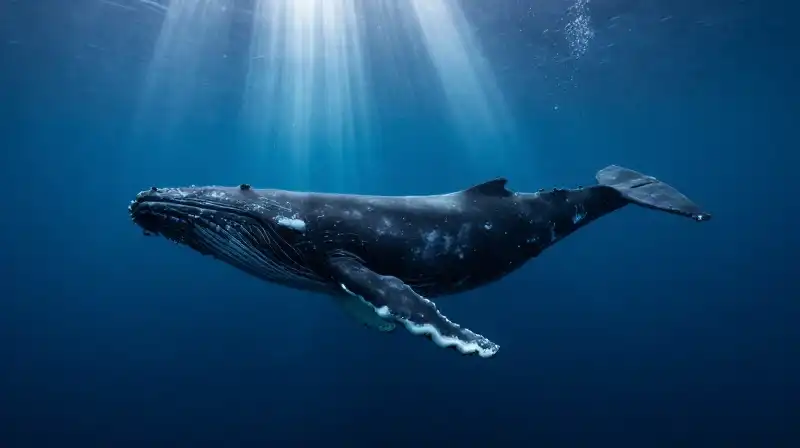
Humpback whales remind us that the ocean is a place of profound intelligence and connection. From the unique “fingerprints” on their tails to the evolving melodies of their songs, every individual tells a story of survival and adaptation. As we continue to study their migrations and social structures, these whales remain vital indicators of the health of our global oceans, proving that even the largest creatures on Earth are deeply sensitive to the changes happening in their world.
Facts sourced from peer-reviewed marine biology research, NOAA, and the Smithsonian Ocean Portal. Our editorial team fact-checks all content against current scientific literature.
Frequently Asked Questions
What is so special about humpback whales?
Humpback whales are special due to their massive physical presence combined with highly complex social lives, which include learned hunting techniques and intricate musical communication. They also demonstrate impressive endurance through massive annual migrations and have been observed protecting other species.
Related Articles