
100 Fascinating Facts About Narwhals: The Unicorns of the Sea


Introduction
In the freezing, dark waters of the Arctic, a creature exists that looks as though it stepped out of a medieval legend. With a long, spiraled horn protruding from its head, the narwhal has earned the nickname “the unicorn of the sea.” However, unlike the mythical creatures of folklore, narwhals are highly specialized biological marvels, perfectly adapted to one of the most extreme environments on Earth.
Understanding these whales requires looking past their striking appearance to see the complex sensory systems and deep-sea survival strategies that allow them to thrive under thick Arctic ice. From their unique dental anatomy to their dramatic life-cycle color changes, the narwhal is a masterclass in marine evolution.
The Mystery of the Tusk: More Than Just a Horn

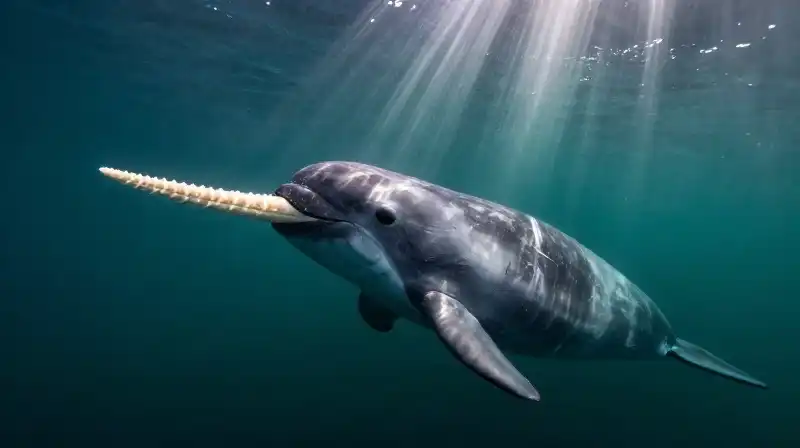
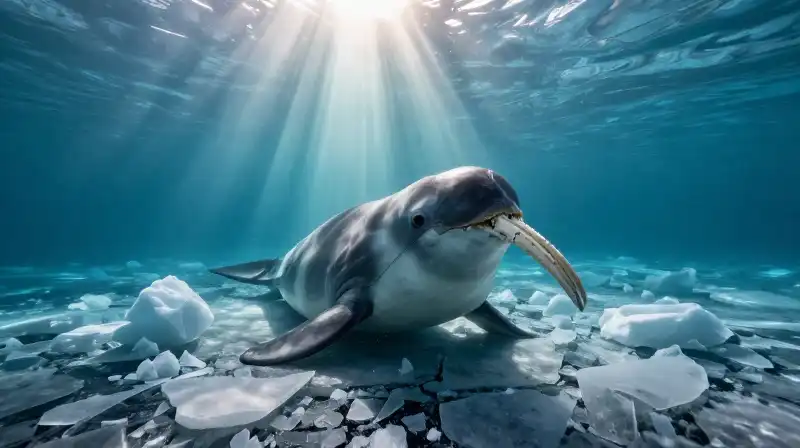
The most defining characteristic of the narwhal is its tusk, but there is a significant biological distinction to make: it is not actually a horn. According to the tusk is an enlarged, spiraled tooth that can reach lengths of 9 to 10 feet.
While many assume the tusk is used primarily for combat or attracting mates, recent science suggests it serves a much more sophisticated purpose. It is a highly sensitive sensory organ, packed with up to 10 million nerve endings. This incredible density of nerves allows the narwhal to “feel” its environment in ways other whales cannot.
How the Tusk Works
- Sensory Input: Tiny holes in the tusk allow seawater to pass through, which may enable the whale to detect subtle changes in the water, such as salinity or temperature.
- Environmental Navigation: These sensory capabilities likely help the narwhal locate prey or navigate the changing conditions of the Arctic waters.
- Biological Variation: While the tusk is most commonly found in males, it is not exclusive to them; females occasionally develop them as well. Furthermore, some individuals may possess two tusks, while others have none at all.
Narwhal Physical Profile and Life Cycle
Narwhals are substantial marine mammals, possessing the strength and mass required to navigate heavy ice packs and dive into the crushing pressures of the deep ocean. An adult narwhal typically reaches lengths of 13 to 20 feet and can weigh as much as 1.5 tons, or approximately 4,200 pounds.
A Changing Palette
One of the most striking aspects of a narwhal’s life is how its appearance shifts as it matures. Rather than maintaining a consistent color, they undergo a dramatic transformation:
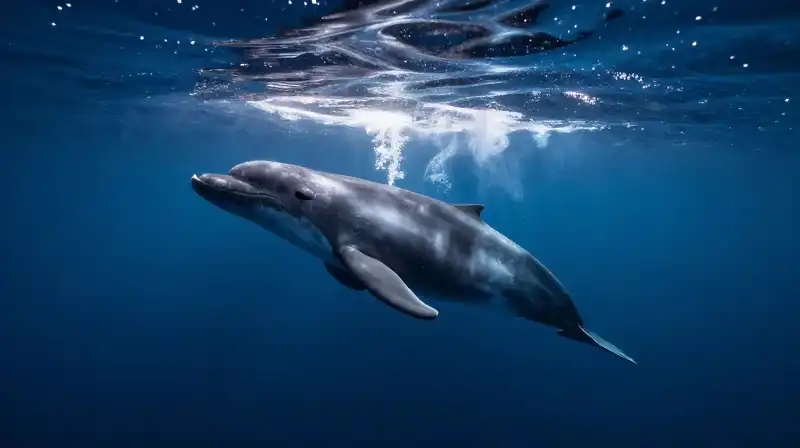
- Newborns: Characterized by a blue-gray coloration.
- Juveniles: Transition into a deep blue-black hue.
- Adults: Develop a mottled gray pattern.
- Older Narwhals: Eventually become nearly white.
Arctic Habitat and Deep-Sea Behavior

Unlike many other whale species that follow seasonal migration patterns to warmer waters, narwhals are true Arctic residents. They spend their entire lives in the high north, including regions near Canada, Greenland, Norway, and Russia.
Their lifestyle is dictated by the ice. In areas like the Baffin Bay-Davis Strait, narwhals may spend up to five months of the winter living under the sea ice. To find food beneath this ice, they perform incredible feats of athleticism, capable of deep-sea dives reaching depths of approximately one mile.
Diet and Hunting
As carnivores, narwhals rely on a diet of nutrient-dense Arctic prey. Their primary food sources include:
- Greenland halibut
- Arctic and polar cod
- Squid
- Shrimp
Quick Comparison: Narwhal Characteristics
| Feature | Detail |
|---|---|
| Max Length | 13 to 20 feet |
| Max Weight | Approximately 1.5 tons / 4,200 lbs |
| Tusk Length | 9 to 10 feet |
| Max Dive Depth | Approximately 1 mile |
| Primary Habitat | Arctic waters (Canada, Greenland, Norway, Russia) |
Common Questions About Narwhals
How old is the oldest narwhal?
While specific records for the absolute oldest individual can vary based on field observations, narwhals are long-lived mammals capable of surviving many decades in the harsh Arctic environment. (Note: Specific maximum age data was not provided in the primary research sources, but their longevity is a key part of their life history in the Arctic.)
Are narwhals endangered?
While the term “endangered” is a specific legal status, narwhals face significant conservation threats that impact their population stability. Key concerns include climate change, which alters the sea ice they rely on, and oil and gas development.
Conservation and Environmental Challenges
The survival of the narwhal is intrinsically linked to the health of the Arctic ecosystem. Because they are so specialized for life under the ice, they are particularly vulnerable to human-driven changes in their habitat.
Increased shipping traffic, driven by both industrial development and melting ice, poses two major risks: collision with vessels and underwater noise pollution. Because narwhals rely on sound to navigate and communicate in the dark, deep waters, excessive noise can interfere with their ability to function effectively, potentially isolating pods or disrupting feeding patterns.
The Remarkable Resilience of the Arctic’s Unicorn
The narwhal is far more than a biological curiosity with a tooth for a horn. They are highly specialized deep-sea divers, sophisticated sensory experts, and resilient inhabitants of one of the planet’s most unforgiving regions. From their dramatic color changes to their ability to navigate the pitch-black depths of the Arctic Ocean, they represent a unique chapter in marine biology. Protecting their environment is not just about saving a single species, but about preserving the delicate, icy balance of the entire Arctic ecosystem.
Facts sourced from peer-reviewed marine biology research, NOAA, and the Smithsonian Ocean Portal. Our editorial team fact-checks all content against current scientific literature.
Frequently Asked Questions
How old is the oldest narwhal?
The article does not provide specific data regarding the maximum age of the oldest narwhal. It only notes that they are long-lived mammals capable of surviving many decades.
Related Articles