
12 Fascinating Facts About Humpback Whales and Their Songs

Introduction
To see a humpback whale breach the surface is to witness one of the ocean’s most dramatic spectacles. These massive mammals are not just large; they are incredibly expressive, vocal, and highly intelligent creatures that navigate vast distances across the globe. Defined by their long, sweeping pectoral fins and a distinct hump before their dorsal fin, humpbacks occupy a unique place in the marine world, balancing a life of intense feeding in polar waters with long, fasting migrations to tropical breeding grounds.
12 Fascinating Facts About Humpback Whales and Their Songs
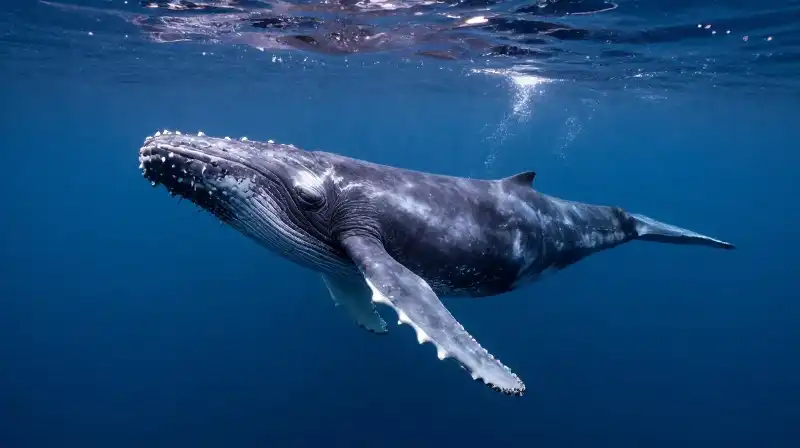
Understanding these giants requires looking past their sheer scale and into the complex behaviors that define their lives. Here are the most compelling details about their biology, culture, and survival.
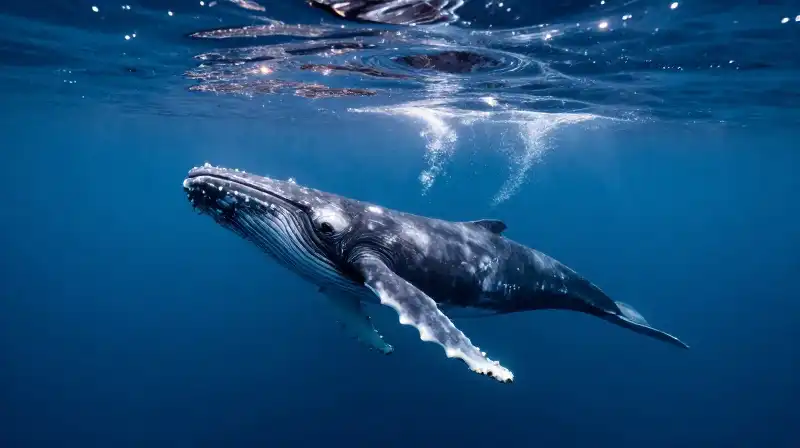
- Massive scale and unique anatomy: Humpback whales are true giants of the sea, reaching lengths between 14.6 and 19 meters and weighing up to 30 to 40 tonnes. They are easily identified by their exceptionally long pectoral fins, which can stretch to one-third of their total body length. Additionally, the “bumps” found on their heads and jaws—known as tubercles—actually feature tiny whiskers on top of each one.
- The complex culture of whale song: Humpbacks are famous for their intricate vocalizations, but there is a specific rule to their music: only the males sing. These songs can last up to 30 minutes and consist of a diverse range of sounds, from low-frequency gurgles to high-pitched squeals.
- Evolving musical trends: A humpback’s song is not a fixed loop. These songs evolve incrementally every year. Interestingly, different populations may actually share or exchange songs when they encounter one another during their migrations.
- Individualized “fingerprints”: Researchers don’t need to tag every single whale to track them. The pattern and the shape of the trailing edge of a whale’s tail, or fluke, is unique to every individual, much like a human fingerprint.
- Learned hunting techniques: Some humpback populations utilize “bubble-netting,” a highly specialized hunting method where whales blow bubbles to create a cylinder that traps prey. This behavior is not purely instinctual; researchers believe it is a learned skill passed down from mother to calf.
- Epic annual migrations: These whales undertake some of the longest migrations of any mammal, traveling 8,000 kilometers or more between their polar feeding grounds and tropical breeding waters.
- Life on an empty stomach: During these long journeys, some whales may swim for up to nine weeks without stopping. They generally do not eat for the eight months they spend migrating and breeding.
- A diet of the small and plentiful: Despite their enormous size, humpbacks are omnivorous feeders that focus on small, nutrient-dense prey, primarily consisting of krill, plankton, and small fish.
- Rapid growth spurts: Humpback calves have a demanding beginning, gaining approximately five pounds every single hour as they grow. They continue this rapid development until they are roughly ten years old.
- The “Big Brothers” of the sea: In a display of surprising social behavior, humpbacks have been observed acting as protectors, sometimes harassing orcas to defend other species or even human divers.
- A history of devastation: While they are currently classified as a species of “least concern” in terms of conservation status, their populations were once decimated by commercial whaling, with some stocks reduced by as much as 95 percent.
- Modern acoustic threats: Today, the primary danger isn’t just physical contact, but noise pollution. Increased ship and air traffic create underwater noise that can interrupt the low-frequency sounds these whales rely on to communicate.
Comparing Humpback Physicality
To visualize the sheer magnitude of these animals, it helps to look at their dimensions compared to standard metrics.
| Feature | Measurement / Detail | Context |
|---|---|---|
| Length | 14.6 – 19 meters | Typical adult range |
| Weight | 30 – 40 tonnes | Massive mammalian scale |
| Pectoral Fins | Up to 1/3 of body length | Key identifying characteristic |
| Calf Growth | ~5 lbs per hour | Rapid early-life development |
Are humpback whales rare?
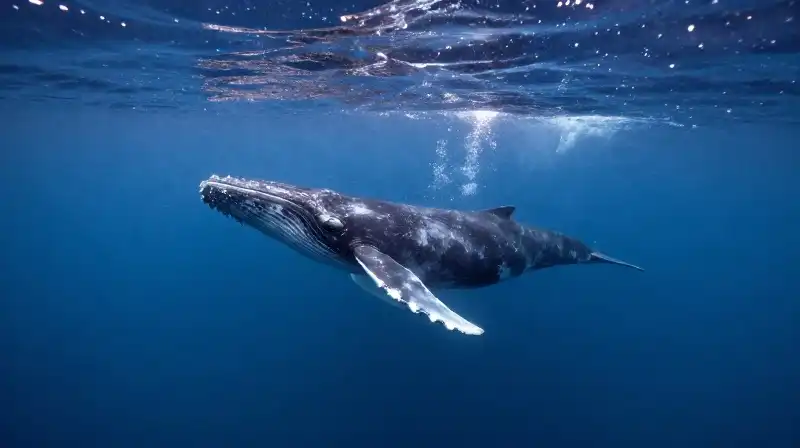
While they were once pushed to the brink of extinction by whaling—with some populations losing 95 percent of their numbers—humpback whales are no longer considered “rare” in the sense of being nearly extinct. They are currently listed as a species of “least concern” regarding their overall conservation status. However, this does not mean they are without risk. Their recovery is constantly monitored due to modern environmental pressures like noise pollution and shifting ocean conditions.
The Importance of Marine Conservation
The story of the humpback whale is one of incredible resilience. They have transitioned from the brink of collapse to a period of significant recovery. Yet, their survival remains tied to the health of the ocean. Because they rely so heavily on acoustic communication for mating and social structures, the increasing “noise” of human industry is a growing concern for marine biologists. Protecting these animals means more than just preventing hunting; it means managing the very atmosphere of the ocean they call home.
Ultimately, the humpback whale serves as a reminder of the complexity of life beneath the surface. From their evolving musical traditions to their learned hunting skills, they are far more than just massive biological machines; they are sentient, social, and deeply connected to the rhythms of the sea.
Facts sourced from peer-reviewed marine biology research, NOAA, and the Smithsonian Ocean Portal. Our editorial team fact-checks all content against current scientific literature.
Frequently Asked Questions
Are humpback whales rare?
Humpback whales are no longer considered rare in the sense of being nearly extinct and are currently listed as a species of least concern. However, they still face risks from modern environmental pressures like noise pollution.
Related Articles