
12 Fascinating Fun Facts About Gray Whales and Their Migration

Introduction
While many whales are known for their massive dorsal fins or acrobatic breaching, the gray whale offers a different kind of spectacle. These long-distance travelers are defined by their rugged, mottled appearance and a lifestyle that takes them from the icy feeding grounds of the Arctic to the warm, shallow lagoons of Baja California. Following a predictable path along the coast, they have become one of the most frequently studied and easily observed whale species in the world. Understanding the gray whale requires looking past their unassuming color to discover a creature of immense endurance, unique feeding mechanics, and a complex relationship with the ocean environment.
The Great Annual Journey
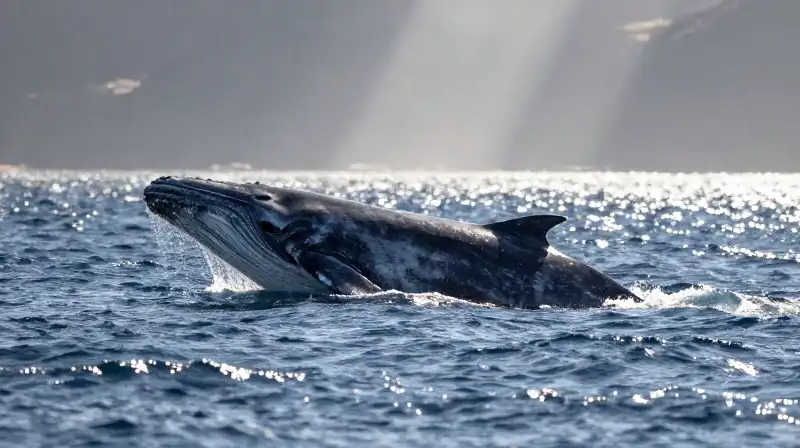
Gray whales are famous for performing one of the longest annual migrations of any mammal. They travel between 5,000 and 14,000 miles round-trip each year. This journey serves a vital biological purpose: they spend the summer months feeding in the nutrient-rich Arctic waters and migrate to the warmer, protected lagoons of Baja California to rest and give birth. Because they often travel close to the shoreline, they are highly accessible to researchers and whale watchers alike.
12 Fascinating Fun Facts About Gray Whales
Beyond their incredible migrations, these whales possess several unique biological and behavioral traits that set them apart from other baleen whales.
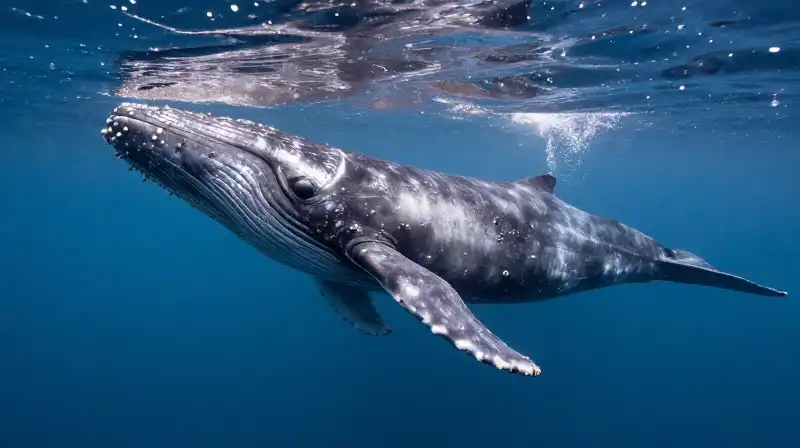
- A Distinctive Profile: You can identify a gray whale by its mottled gray skin and the absence of a traditional dorsal fin. Instead of a fin, they feature a series of 6 to 12 small bumps along their backs known as “knuckles”.
- Bottom-Feeding Specialists: Unlike many other whales that hunt in the open water, gray whales are primarily bottom feeders. They often roll onto their sides to scoop up sediment from the seafloor, using their baleen plates to filter out tiny invertebrates like amphipods.
- The “Right-Handed” Whale: Interestingly, researchers have observed that gray whales appear to be “right-handed” in their feeding habits, frequently rolling 90 degrees to the right to ingest sediment.
- Secondary Feeding Methods: While they prefer the seafloor, they are also known to “skim-feed” on plankton near the ocean surface.
- The Heart-Shaped Blow: When a gray whale exhales through its two blowholes, the mist left in the air creates a visual pattern known as a “heart-shaped blow”.
- Heavy Hitchhikers: Gray whales carry a significant “cargo” of barnacles and whale lice. This biological community can weigh approximately 400 pounds.
- Symbiotic Healing: The relationship with these hitchhikers is often communal; some evidence suggests that these organisms can actually help heal the whale’s injuries.
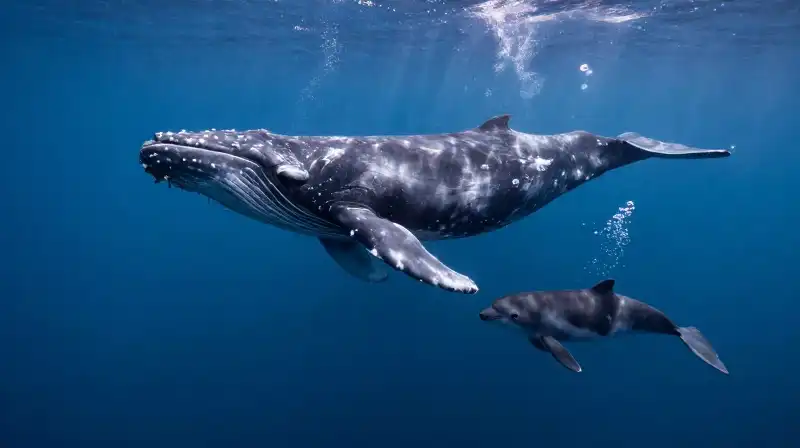
- Massive Newborns: Gray whale calves are surprisingly large from birth, typically measuring between 14 and 16 feet long and weighing approximately 2,000 pounds.
- The “Devil Fish” Moniker: Historically, whalers gave them the nickname “devil fish” because the whales were known to fight back aggressively against harpoons.
- Impressive Size: Adult gray whales can grow to about 49 feet long and weigh approximately 90,000 pounds (Competitor Snippet).
- Gender Differences: Within the species, females tend to be slightly larger than males (Competitor Snippet).
- Varied Conservation Status: Not all gray whales face the same risks; while the Eastern North Pacific stock has recovered and was removed from the Endangered Species List in 1994, the Western North Pacific stock remains critically endangered with fewer than 300 individuals.
Quick Comparison: Gray Whale vs. Humpback Whale
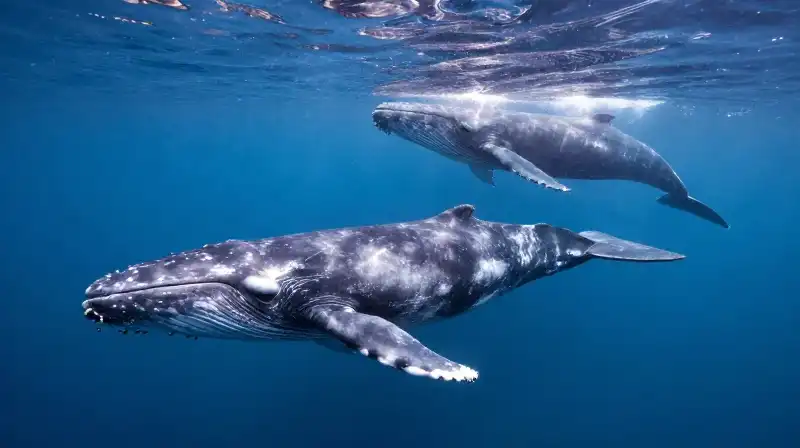
When observing whales in the wild, people often wonder how to tell species apart. While both are baleen whales, they have distinct physical profiles.
| Feature | Gray Whale | Humpback Whale |
|---|---|---|
| Dorsal Feature | Knuckles (6–12 bumps) | Large, prominent dorsal fin |
| Primary Feeding | Benthic (bottom-feeding) | Filter-feeding (open water/surface) |
| Skin Appearance | Mottled gray/blotchy | Usually darker/smoother appearance |
Common Questions About Gray Whales
Are gray whales rare?
It depends on the population. The Eastern North Pacific stock is relatively common and has seen a significant recovery in recent decades. However, the Western North Pacific stock is quite rare and is considered critically endangered.
Why are gray whales called gray?
Their name comes from their mottled gray skin, which is often characterized by a blotchy appearance due to the presence of barnacles and scarring.
Threats and Conservation
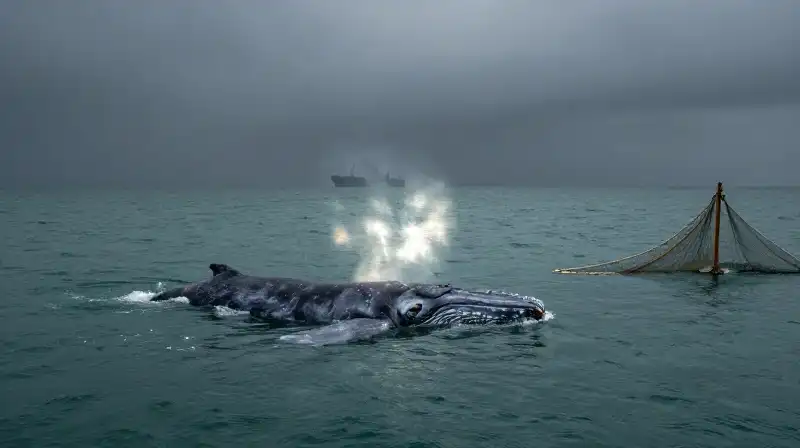
Despite the recovery of some populations, gray whales face ongoing challenges in a changing ocean. Major threats include:
- Vessel Strikes: Increased maritime traffic in coastal waters poses a collision risk.
- Fishing Gear Entanglement: Getting caught in nets and lines remains a significant danger.
- Ocean Noise: Anthropogenic noise can interfere with their ability to navigate and communicate.
- Climate Change: Shifting sea ice patterns directly impact their traditional feeding grounds in the Arctic.
The Resilience of the Gray Whale
The gray whale is a testament to biological endurance. From their specialized “right-handed” feeding techniques to their incredible multi-thousand-mile migrations, they occupy a unique niche in the marine ecosystem. While they once earned a reputation as “devil fish” due to their defensive nature against whalers, they are now more accurately understood as vital, sensitive indicators of ocean health. Protecting them means addressing the complex, overlapping challenges of noise, traffic, and a changing climate to ensure their long journeys continue for generations to come.
Facts sourced from peer-reviewed marine biology research, NOAA, and the Smithsonian Ocean Portal. Our editorial team fact-checks all content against current scientific literature.
Frequently Asked Questions
Are gray whales rare?
Whether gray whales are rare depends on the population; the Eastern North Pacific stock is relatively common, but the Western North Pacific stock is quite rare and critically endangered.
Why are gray whales called gray?
Gray whales are named for their mottled gray skin, which often has a blotchy appearance caused by scarring and the presence of barnacles.
Related Articles