
Essential Moon Jellyfish Facts: Biology, Life Cycle and Diet

Introduction
Drifting through the ocean currents like a translucent, pulsing umbrella, the moon jellyfish is one of the sea’s most recognizable inhabitants. While they may appear delicate and ethereal, these gelatinous creatures are masterfully adapted to their environment through a biological design that prioritizes simplicity and efficiency. Whether you encounter them as a shimmering bell in the open water or find them washed up on a beach, understanding their unique anatomy and life cycle reveals a fascinating story of survival without a brain, a heart, or even bones.
Biological Simplicity: Life Without a Central Nervous System
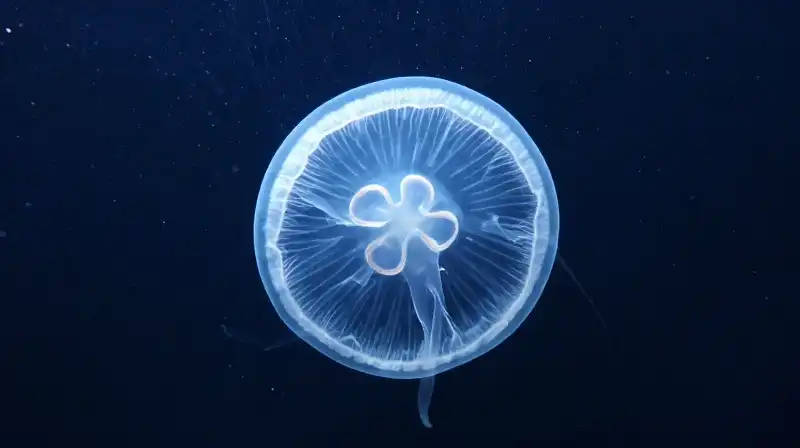
Moon jellyfish are a marvel of evolutionary minimalism. To look at a moon jelly is to see an organism that has stripped away the complexities found in most animals, resulting in a body that is approximately 95% water. This high water content makes them incredibly buoyant, allowing them to move through the water column with minimal effort.
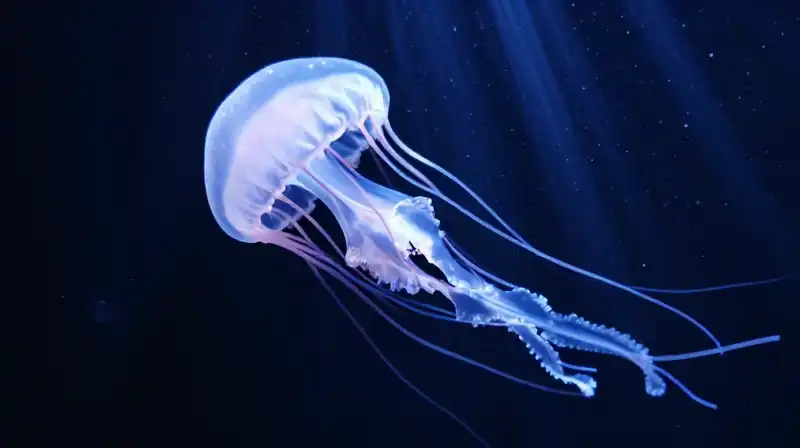
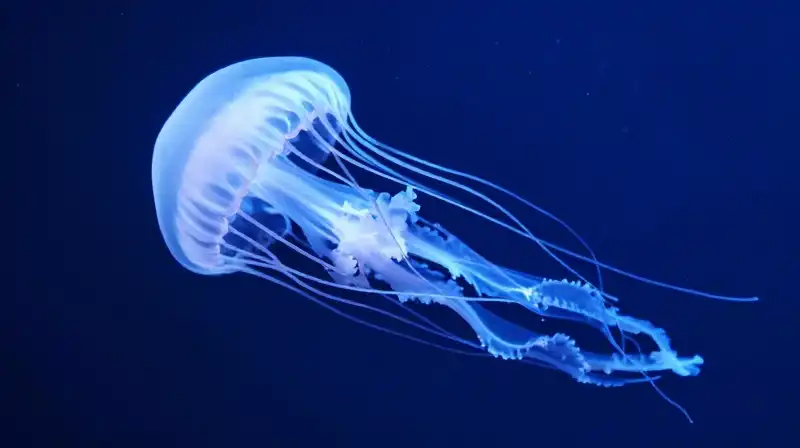
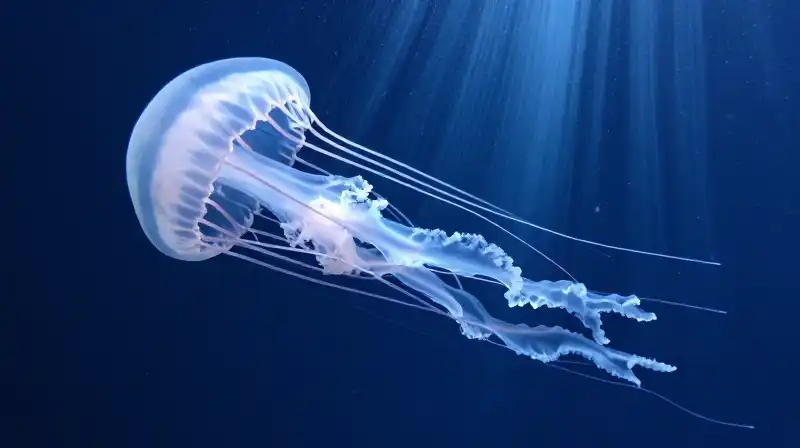
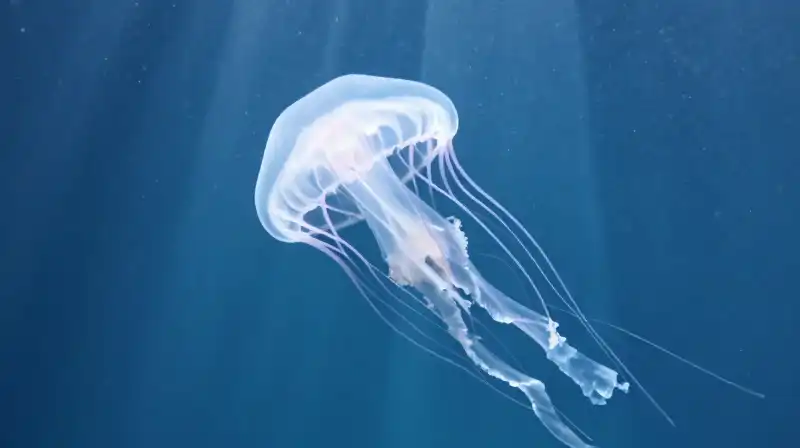
One of the most striking aspects of their biology is what they lack. Unlike humans or even fish, moon jellyfish do not have a brain to process information, a heart to pump blood, or a complex skeletal structure. Instead, they rely on a decentralized nervous system to sense their surroundings. Their appearance is defined by several key features:
- The Bell: A translucent, dome-shaped structure that serves as the main body. Depending on the species and environment, these can reach diameters between 5cm and 40cm.
- The Gonads: At the center of the bell, you will notice four opaque, circular markings. These are often purple and serve as the animal’s reproductive organs.
- Tentacles: Unlike many jellyfish that sport long, stinging trailing ribbons, moon jellies possess relatively short, thin tentacles that extend around the edge of the bell.
How Moon Jellyfish Feed
Despite their lack of traditional mouthparts seen in larger predators, moon jellyfish are effective hunters of the microscopic world. Their diet primarily consists of zooplankton, small crustaceans, fish eggs, and larvae. Their feeding process is a clever use of surface tension and specialized structures:
The jellyfish uses a layer of mucus spread over its bell to trap microscopic prey like plankton. Once the prey is caught in this sticky trap, the jellyfish uses its specialized tentacles to pass the food toward its mouth. This method allows them to fuel their metabolism even while drifting passively through the water.
The Complex Life Cycle: From Polyp to Medusa
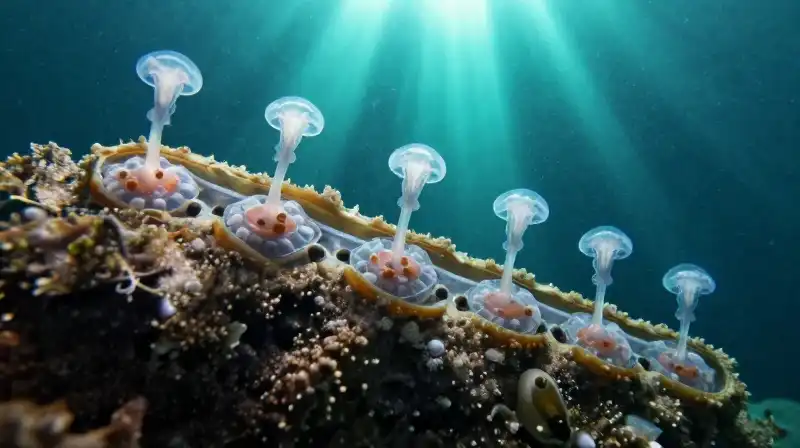
A moon jellyfish’s life is not a single, continuous existence as a swimming bell. Instead, they undergo a sophisticated transformation that moves between two very different biological states: the polyp and the medusa.
- The Polyp Stage: In their juvenile phase, moon jellies act more like stationary sea creatures. They often attach themselves to hard surfaces, such as the undersides of docks or rocks, to grow and avoid predators.
- Strobilation: During the asexual polyp stage, they can reproduce through a process called strobilation. This is where the polyp begins to produce many small, disc-like structures called ephyrae.
- The Medusa Stage: These ephyrae eventually grow into the adult, free-swimming “medusa” form that we recognize as the moon jellyfish.
In the wild, this life cycle is relatively rapid. Most moon jellyfish have short lifespans, often living less than six months and typically dying off by late summer or early fall after they have spawned. In controlled environments, such as captivity, they may live slightly longer, sometimes exceeding a year.
Common Questions About Moon Jellyfish
Can moon jellyfish glow in the dark?
While many people associate jellyfish with bioluminescence, the moon jellyfish is primarily known for its translucent appearance rather than an ability to produce its own light. Their visual appeal comes from how they catch and refract the light already present in the water.
How many hearts do moon jellyfish have?
Moon jellyfish have zero hearts. Because their bodies are so highly composed of water and they lack a circulatory system, they do not need a heart to pump blood; instead, oxygen and nutrients are distributed through their simple body structure.
Do moon jellyfish sting?
While most jellyfish are known for painful stings, moon jellyfish are generally not considered a danger to humans. They do not possess the same level of stinging potency found in other species, and many people find them harmless when encountered on beaches.
Regional Variations
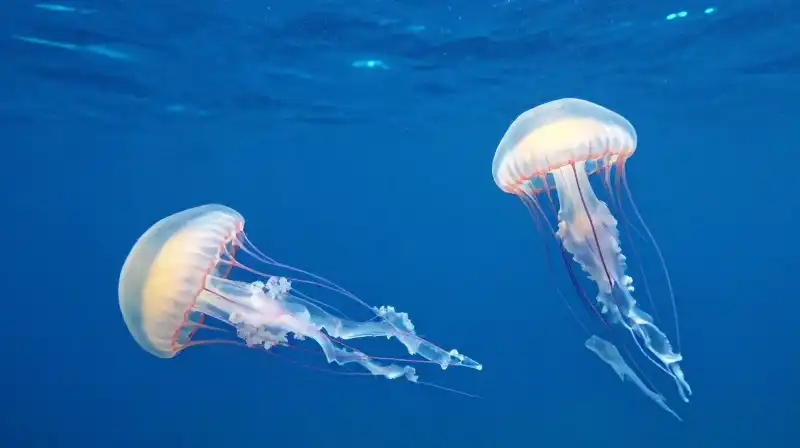
While the “moon jelly” is a common term, there are different species inhabiting different parts of the globe. The following table highlights the distinction between two prominent types:
| Species Name | Common Habitat |
|---|---|
| Aurelia labiata | Northeast Pacific and the Salish Sea |
| Aurelia aurita | Common in the Atlantic Ocean |
Conservation and Environmental Threats
Although moon jellyfish populations are currently considered plentiful and common, they are not immune to the changing health of our oceans. One of the most significant threats they face is plastic pollution. Because of their drifting nature, they often inhabit the same upper water layers where floating debris accumulates. This creates a fatal confusion for other marine life; for instance, sea turtles and various bird species often mistake floating plastic bags for jellyfish, leading to accidental and fatal ingestion.
Why the Moon Jellyfish Matters
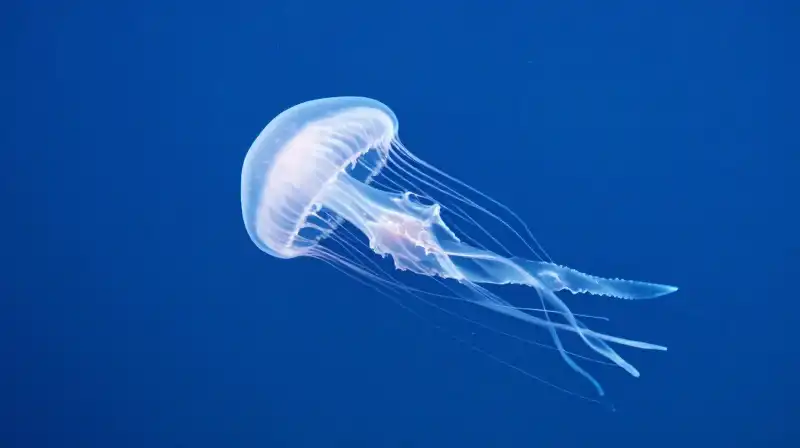
The moon jellyfish serves as a vital reminder of how much life can be achieved through simplicity. They prove that a complex brain or a powerful heart is not a prerequisite for success in the ocean. By mastering the art of drifting, utilizing mucus for feeding, and transitioning through diverse life stages, they have secured a permanent place in the world’s oceans. Protecting our waters from plastic pollution is essential to ensuring that these translucent wanderers continue to pulse through the sea for generations to come.
Facts sourced from peer-reviewed marine biology research, NOAA, and the Smithsonian Ocean Portal. Our editorial team fact-checks all content against current scientific literature.
Frequently Asked Questions
What are some fun facts about moon jellyfish?
Moon jellyfish are approximately 95% water and survive without a brain, heart, or bones. They also undergo a life cycle transformation that moves between a stationary polyp stage and a free-swimming medusa stage.
Can moon jellyfish glow in the dark?
No, the moon jellyfish is known for its translucent appearance rather than the ability to produce its own light. Their visual appeal comes from catching and refracting light that is already present in the water.
How many hearts do moon jellyfish have?
Moon jellyfish have zero hearts. Because they lack a circulatory system, they do not need a heart to pump blood.
Related Articles