
Minke Whale Facts: Size, Subspecies, and Surprising Behaviors

Introduction
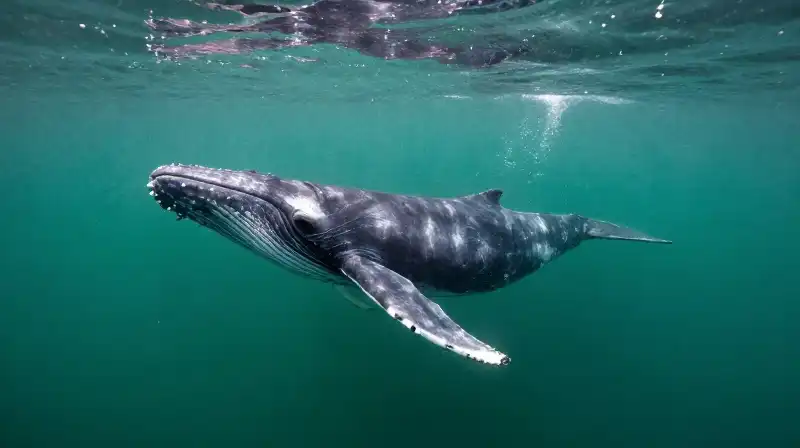
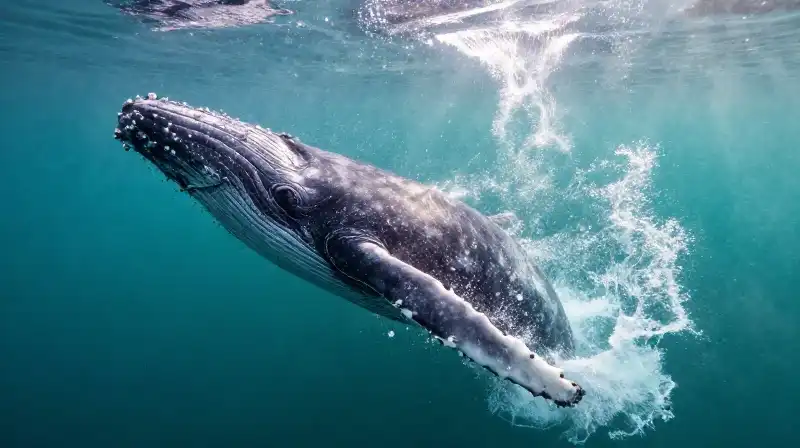
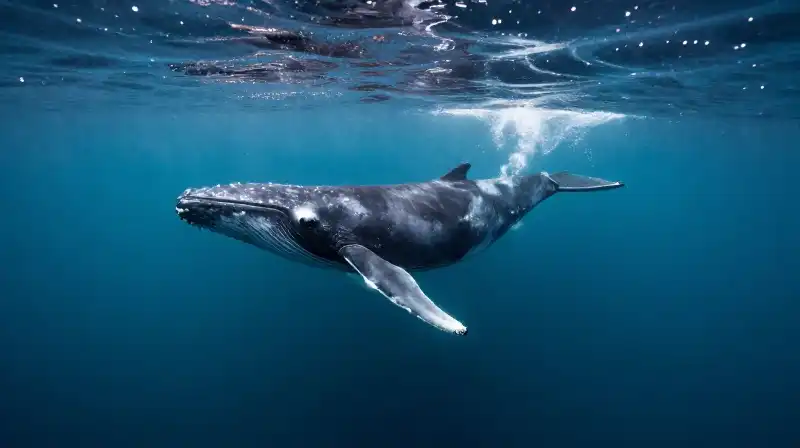
While the massive Blue whale often captures the world’s imagination, the ocean’s most abundant baleen whale is a much more elusive and agile character. The minke whale is the smallest of the “great” whales, yet it is far from insignificant. Often moving quickly through the water and diving without the dramatic tail-slaps seen in larger species, these whales are masters of efficiency. They are highly successful, with an estimated global population of 800,000—the highest of any baleen whale species.
Identifying Minke Whale Subspecies
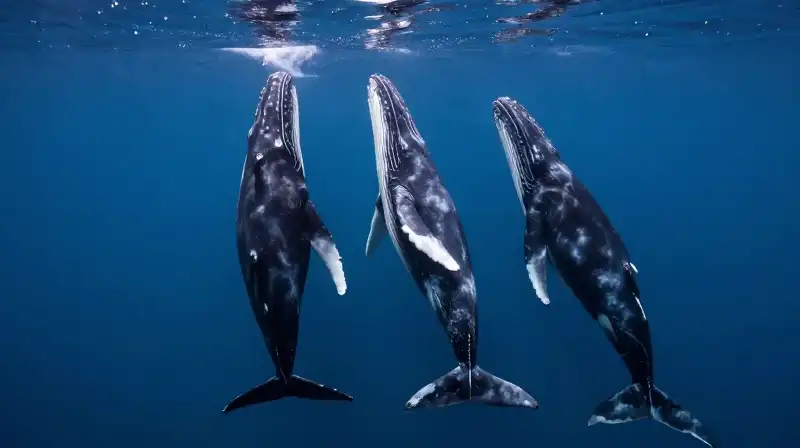
Not all minke whales are identical. They are a species complex consisting of three distinct varieties, which can be distinguished by their size and specific markings. Understanding these differences is key to identifying them in the wild.
| Subspecies | Approximate Size/Weight | Distinguishing Marks |
|---|---|---|
| Common (Northern) Minke | Up to 35 feet; 20,000 lbs | A well-defined white band on their dark flippers. |
| Antarctic (Southern) Minke | Similar to Northern minke | Lacks the prominent white flipper band; possesses asymmetrical baleen with fewer white plates on the left side of the mouth. |
| Dwarf Minke | ~26 feet; 14,000 lbs | A bright white patch on the upper pectoral fin and a dark half-collar around the head. |
Surprising Minke Whale Facts and Behaviors
Minke whales have developed unique ways of navigating and feeding that set them apart from other rorquals. Their lifestyle is defined by speed, vocalization, and highly specialized hunting techniques.
- Elusive Diving Habits: Unlike many other large whales that lift their flukes (tails) high out of the water when diving, minke whales tend to slip beneath the surface more subtly. This makes them much harder to spot from the surface.
- High-Speed Escapes: They are remarkably fast swimmers. When being pursued by predators, they can reach top speeds of approximately 25 mph (40 km/h).
- “Side-Lunging” Feeders: Minke whales are opportunistic eaters, consuming anything from plankton and crustaceans to schooling fish like herring, mackerel, and salmon. To catch them, they use a “side-lunging” strategy: they swim in circles to compress a school of prey, then lunge sideways to gulp massive amounts of water, using their baleen plates to trap the food.
- Vocal Diversity: These whales are highly vocal. Their acoustic repertoire includes clicks, grunts, and pulses. Scientists have even recently identified a unique sound known as a “boing”.
- Social Dynamics: While they are frequently seen traveling alone or in small groups of two or three, they are capable of massive gatherings. In polar feeding areas, loose groups of up to 400 animals have been observed.
Lifespan and Natural Predators
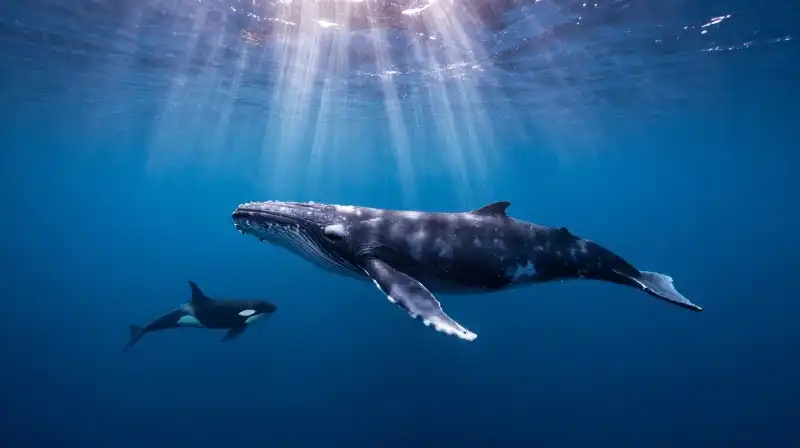
A minke whale’s life is shaped by its environment and its place in the food web. On average, these whales live between 40 and 50 years, though some individuals are estimated to reach up to 60 years of age.
Despite their speed, they are not without threats. Their primary natural predator is the killer whale (orca), which engages them in long, taxing chases. In the modern era, however, human-related factors have become significant concerns for their survival.
Conservation and Modern Threats
While some minke whale populations remain stable, they face several anthropogenic challenges that impact their health and distribution. These include:
- Entanglement: Getting caught in fishing gear can lead to injury or drowning.
- Vessel Strikes: Increased maritime traffic poses a constant risk of collisions.
- Ocean Noise: Anthropogenic noise can interfere with their ability to communicate and navigate.
- Climate Change: Shifting ocean temperatures are altering the distribution of their prey, forcing the whales to adapt to new feeding patterns.
Why are they called “Minke”?
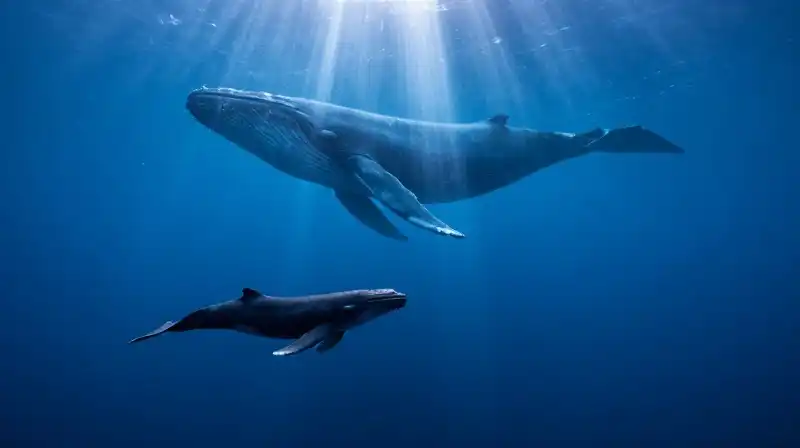
The name itself has a bit of maritime lore attached to it. It is said to have originated from a Norwegian novice whaler named Meincke, who reportedly mistook the species for a much larger blue whale.
The Resilience of the Smallest Rorqual
The minke whale serves as a fascinating reminder that size is not the only measure of success in the ocean. Through high-speed movement, specialized feeding, and a massive global population, they have secured a vital place in the marine ecosystem. Understanding their subtle differences and unique behaviors helps us better appreciate the complex biodiversity of our oceans and the importance of protecting them from modern environmental pressures.
Facts sourced from peer-reviewed marine biology research, NOAA, and the Smithsonian Ocean Portal. Our editorial team fact-checks all content against current scientific literature.
Related Articles