
10 Fascinating Facts About Dolphins and Their Secrets


Introduction
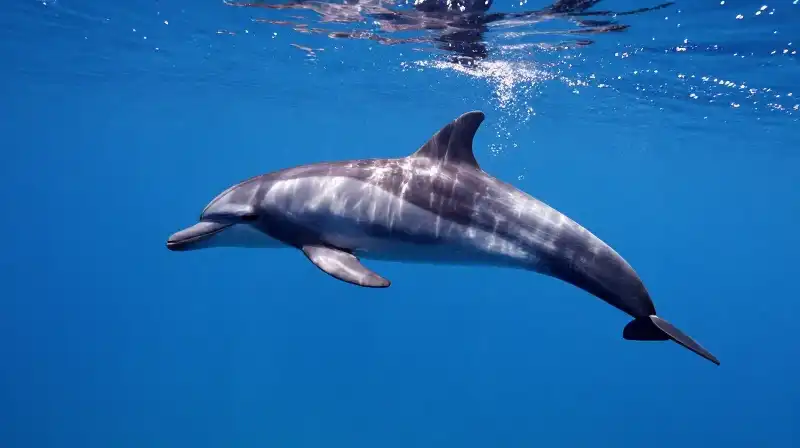
Dolphins are far more than just the friendly, smiling faces often seen in coastal tourism. As members of the Odontoceti—a group of toothed whales—these highly intelligent marine mammals possess biological features and social structures that rival the complexity of many land animals. From the deep blue oceans to the silted waters of the Amazon River, between 40 and 49 different species of dolphins and porpoises have adapted to nearly every aquatic environment on Earth.
10 Fascinating Facts About Dolphins and Their Secrets
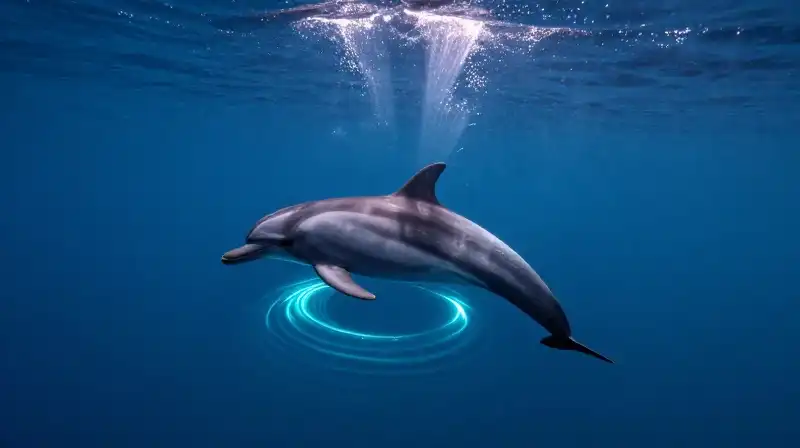
To understand the true nature of these creatures, one must look past the surface. Their survival depends on a suite of specialized evolutionary tools, ranging from sophisticated biological sonar to incredibly fast skin regeneration.
- They possess a “name” for themselves: Every dolphin develops a unique “signature whistle” that acts as an individual identifier. This isn’t just random noise; it is a way for dolphins to signal their identity to the rest of the pod. Remarkably, even unborn calves begin developing these unique whistles while still in the womb.
- Their echolocation provides a 3D view: Dolphins navigate and hunt using a sophisticated form of sonar known as echolocation. By sending out sound waves that bounce off objects, they receive echoes relayed back through their lower jaw, allowing them to construct a precise 3D mental image of their surroundings.
- The Orca is actually a dolphin: While often called “killer whales,” orcas are technically the largest members of the dolphin family. As apex predators, they sit at the top of the marine food web, yet despite their formidable reputation, there are almost no recorded instances of orcas attacking humans in the wild.
- They have a complex three-stomach system: To manage their prey, dolphins have evolved a specialized digestive tract consisting of three distinct stomachs. One stomach is used for holding food, a second is dedicated to mastication (chewing/processing), and a third handles final digestion and waste.
- Their skin regenerates at incredible speeds: A dolphin’s skin is a marvel of biological efficiency. It is capable of renewing itself in just two hours—a process that is nine times faster than human skin regeneration.
- Amazon River dolphins have flexible necks: Unlike most whales, the freshwater Amazon River dolphin has unfused vertebrae in its neck. This anatomical quirk allows them to turn their heads a full 180 degrees, a vital advantage for navigating through dense, obstacle-filled river environments.
- They are highly social survivors: Being part of the Odontocetes means dolphins are built for community. They form strong family bonds and spend much of their lives living, traveling, and hunting together in coordinated pods.
- Lifespans vary significantly by species: In the wild, dolphins generally live between 45 and 60 years. For instance, female bottlenose dolphins can reach 60 years, while some orcas have been documented living up to 90 years.
- They are surprisingly fast swimmers: Speed varies depending on the species and its specific needs. While a bottlenose dolphin can reach speeds of 18 mph, the larger orca is capable of much higher bursts, reaching up to 35 mph.
- Captivity significantly impacts health: There is a stark difference between wild and captive life. Dolphins in tanks may only live 10 to 12 years, and calves born in captivity face a much higher risk of mortality, with a 56% higher chance of dying in their first year compared to their wild counterparts.
Comparing Key Dolphin Species
Because “dolphin” covers a wide range of animals, it is helpful to see how their physical capabilities differ across common species.
| Feature | Bottlenose Dolphin | Orca (Killer Whale) |
|---|---|---|
| Classification | Toothed Whale (Odontocete) | Largest Dolphin Species |
| Top Speed | Up to 18 mph | Up to 35 mph |
| Average Lifespan | 45–60 years | Up to 90 years |
| Ecological Role | Social Predator | Apex Predator |
Conservation and Environmental Reality

While dolphins are resilient, their habitats are under constant pressure. Whether they are living in the open ocean or the freshwater systems of the Amazon, they face challenges from human activity. The data regarding captivity highlights a critical concern: the biological needs of these animals—from their complex social structures to their specialized digestive and regenerative systems—are difficult to replicate in artificial environments. The survival of these species depends heavily on maintaining the integrity of the diverse aquatic environments they call home.
Why These Facts Matter
Understanding dolphins requires looking beyond the “fun” aspect of their behavior and recognizing the biological sophistication that allows them to thrive. From the acoustic precision of their echolocation to the unique anatomical adaptations of the Amazon River dolphin, these animals are masterworks of evolutionary engineering. Recognizing their intelligence, their social complexity, and the physiological differences between wild and captive populations is essential for anyone looking to understand the true depth of marine biology.
Facts sourced from peer-reviewed marine biology research, NOAA, and the Smithsonian Ocean Portal. Our editorial team fact-checks all content against current scientific literature.
Related Articles