
Deep Sea Facts: Exploring Earths Most Mysterious Frontier

Introduction
We often look to the stars to find the final frontier, yet a vast, alien world exists right here on Earth, hidden beneath kilometers of crushing water. The deep sea remains the most unexplored environment on our planet; in fact, some estimates suggest we possess more detailed knowledge of the moon’s surface than we do of the deep ocean trenches. While we have mapped much of the world above, traditional sonar techniques have only surveyed between 5% and 15% of the ocean’s depths. This lack of data leaves us with a landscape of immense mystery, home to creatures that defy our understanding of biology and physics.
Living Under Pressure: The Physics of the Deep
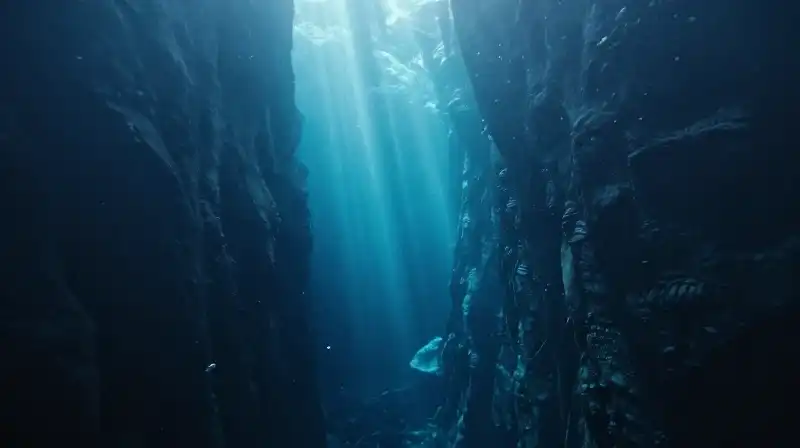
The deep sea is defined by conditions that would be instantly fatal to almost any terrestrial life form. As you descend, the weight of the water column above increases dramatically. For every 10 meters of descent, the pressure increases by approximately 6.47kg (14.27lbs) per square inch.
To visualize the scale of the deepest known point on Earth, consider the Challenger Deep in the Mariana Trench. It reaches a depth of approximately 11 kilometers (about 7 miles). If you were to place Mount Everest into this chasm, the peak would still be submerged under more than a mile of water.
| Location/Metric | Value/Scale | Context |
|---|---|---|
| Challenger Deep Depth | ~11 km (7 miles) | Deepest known point on Earth. |
| Pressure in Challenger Deep | ~1,100x surface pressure | Equivalent to massive, crushing weight. |
| Temperature Extremes | Near-freezing to 700°F | Vents can release incredibly hot water. |
Biological Adaptations and Deep Sea Facts
Survival in the dark, high-pressure abyss requires specialized evolutionary “hacks.” From light-producing organs to biological immortality, the residents of the deep sea utilize strategies that seem like science fiction.
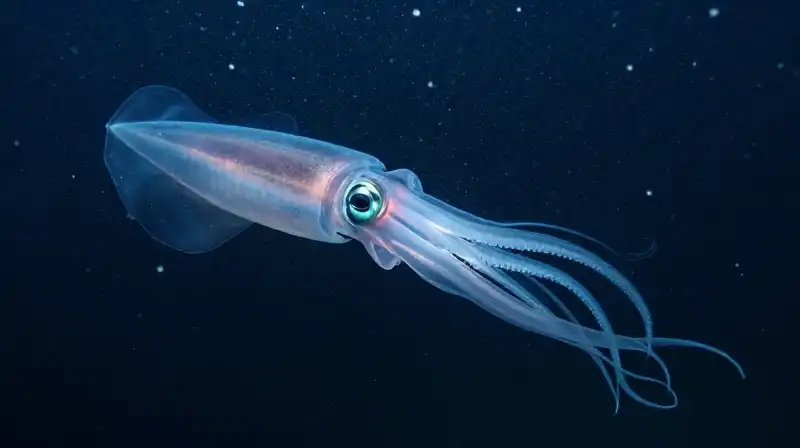
- Bioluminescence as a Tool: In a world without sunlight, many organisms create their own light. This isn’t just for show; fish use lighted lures to attract prey, squid deploy bioluminescent liquid to confuse predators, and certain worms use light to attract potential mates.
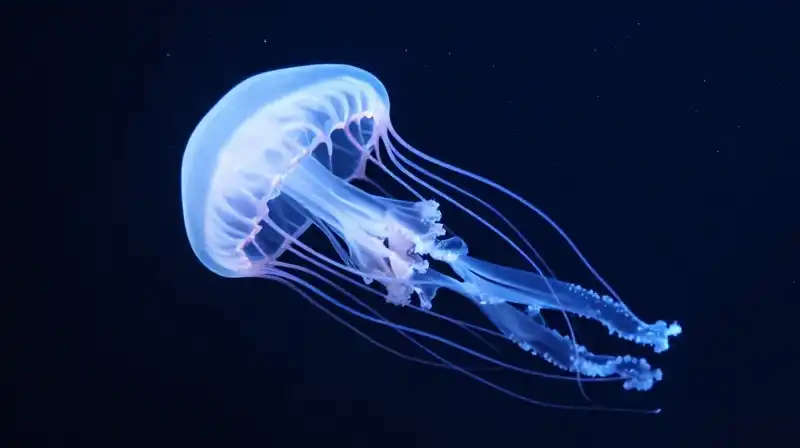
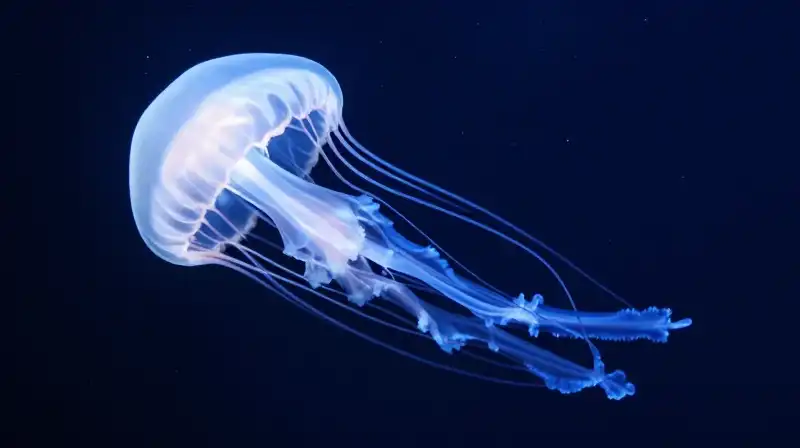
- The “Immortal” Jellyfish: The Turritopsis nutricula exhibits a remarkable survival adaptation. It can theoretically revert its cells back to its polyp stage to regrow, essentially resetting its life cycle and avoiding death from old age.
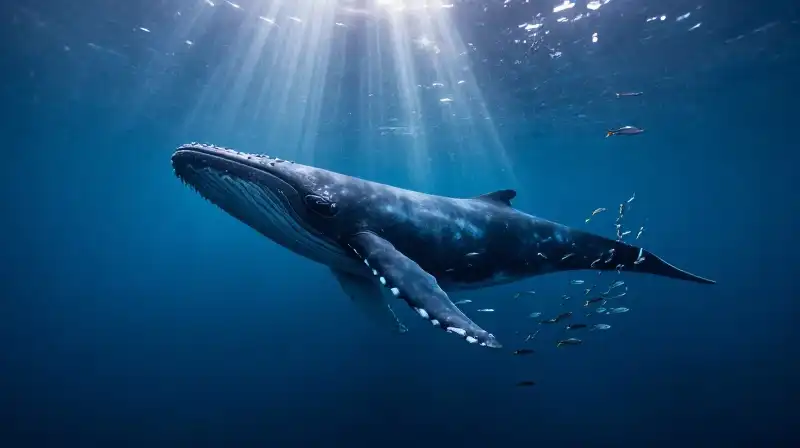
- Massive Residents: The deep sea isn’t just home to tiny microbes. The Greenland shark, for example, is a massive predator that can reach lengths of up to 7.2 meters (24 feet) and weigh as much as 1,400 kg.
- The Seafloor Hub: While we often think of the ocean as an endless void, life is highly concentrated near the bottom. Approximately 98 percent of all ocean species live in, on, or just above the seafloor.
- Hidden Biodiversity: Because so much remains unmapped, scientists estimate that between 500,000 and 10 million species live in the deep sea, though a vast number have yet to be officially discovered.
The Ocean as a Global Life Support System
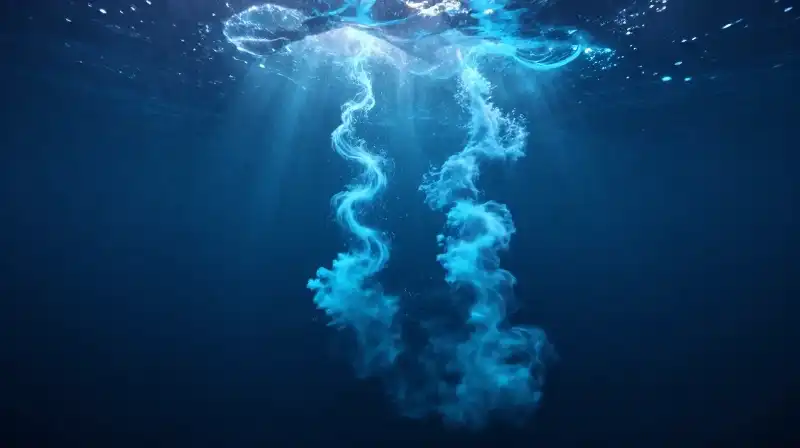
The deep sea is not an isolated basement; it is a vital component of Earth’s climate regulation. Through a process known as “thermohaline circulation”—often called the “great ocean conveyor”—water moves through the entire ocean in a massive, slow-moving loop. This circulation takes approximately 1,600 years to complete a single cycle. This movement is essential for distributing heat and nutrients around the globe, stabilizing the climate we rely on.
Busting Myths: The Truth About Ocean Sounds
For years, the deep sea has been the subject of urban legends and “scary facts about the deep sea.” One of the most famous examples was “the bloop,” a powerful, low-frequency sound recorded underwater that many speculated came from an unknown, massive creature. However, scientists have since debunked these theories, attributing such noises to natural phenomena like “icequakes”—the sound of frozen ground or ice sheets breaking.
Conservation and the Human Footprint
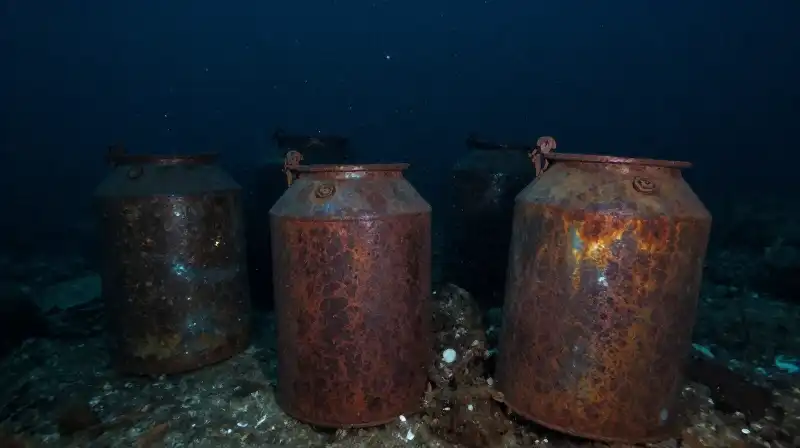
Despite its distance from human civilization, the deep sea is not immune to our influence. Human impact is a growing concern for these delicate ecosystems. Historically, hazardous waste, including toxic pharmaceutical waste, has been dumped into deep areas like the Puerto Rico Trench. This has led to demonstrable, negative changes in local microbial communities. Protecting the deep sea is not just about preserving strange creatures; it is about protecting the fundamental biological and chemical processes that keep our planet habitable.
Why the Deep Sea Matters
The deep sea is a testament to the resilience and creativity of life. It is a place of contradictions: where water can be near-freezing one moment and 700 degrees Fahrenheit near a hydrothermal vent the next. From the slow-moving Greenland shark to the microscopic life driving the great ocean conveyor, these deep-sea facts reveal an environment that is as fragile as it is formidable. Understanding this mysterious frontier is essential, not just for the sake of curiosity, but for the health of the entire global ocean.
Facts sourced from peer-reviewed marine biology research, NOAA, and the Smithsonian Ocean Portal. Our editorial team fact-checks all content against current scientific literature.
Related Articles