Amazing Facts About the Mimic Octopus and Its Shape-Shifting Skills

Introduction
Most octopuses are masters of camouflage, blending into the background to vanish from sight. But the mimic octopus (*Thaumoctopus mimicus*) has taken this evolutionary strategy a step further. Rather than just hiding, this small cephalopod actively impersonates other animals to manipulate the behavior of those around it. Discovered in 1998 off the coast of Sulawesi, Indonesia, this species doesn’t just change color; it changes its entire identity to suit the situation.
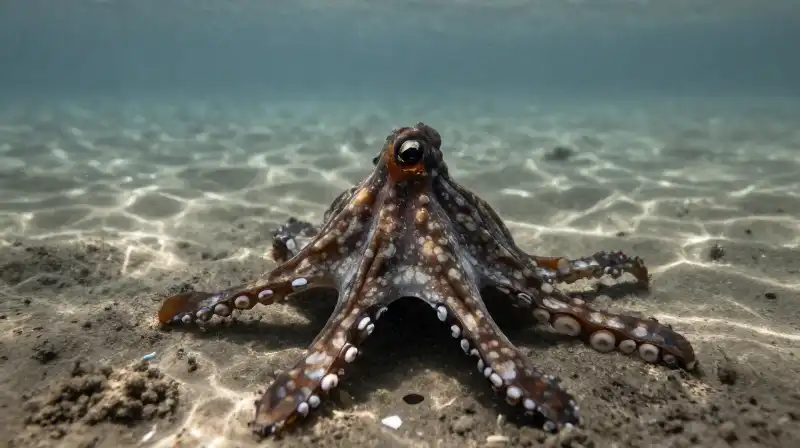
While many cephalopods rely on complex coral reefs for protection, the mimic octopus is a specialist of the “mucky” bottom. It thrives in silty, open environments like river mouths and estuaries where there are fewer places to hide, making its ability to transform into a different creature not just a trick, but a vital survival mechanism.
The Science of Shape-Shifting
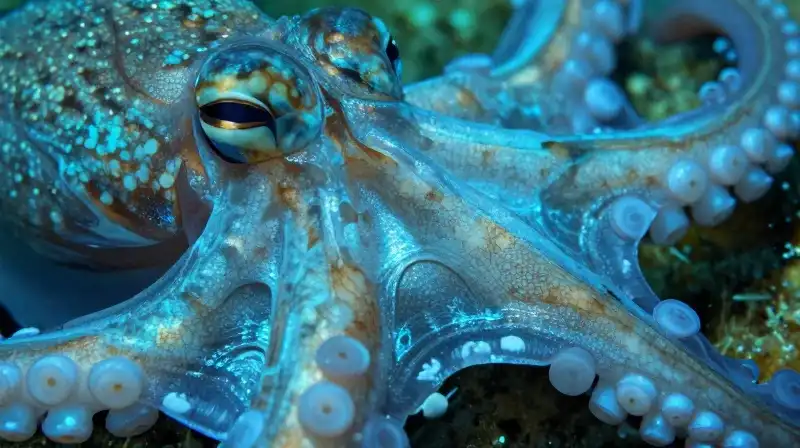
To understand how an octopus can become a sea snake or a fish, we have to look at its biological toolkit. The mimic octopus utilizes two primary methods to alter its appearance: chemical pigment changes and physical structural changes.
Chromatophores and Texture
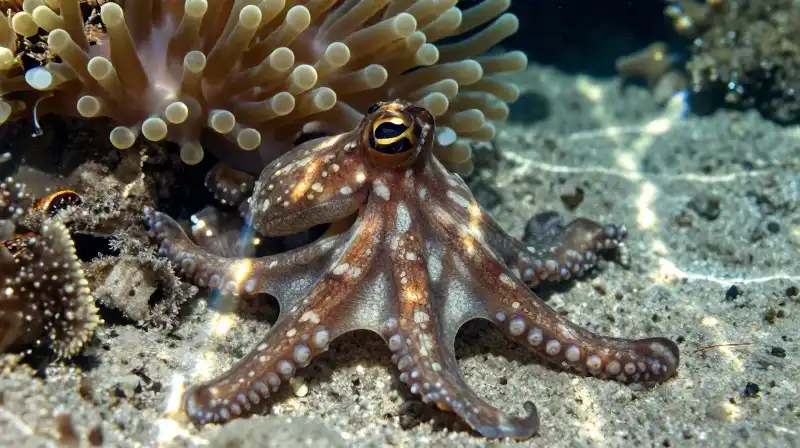
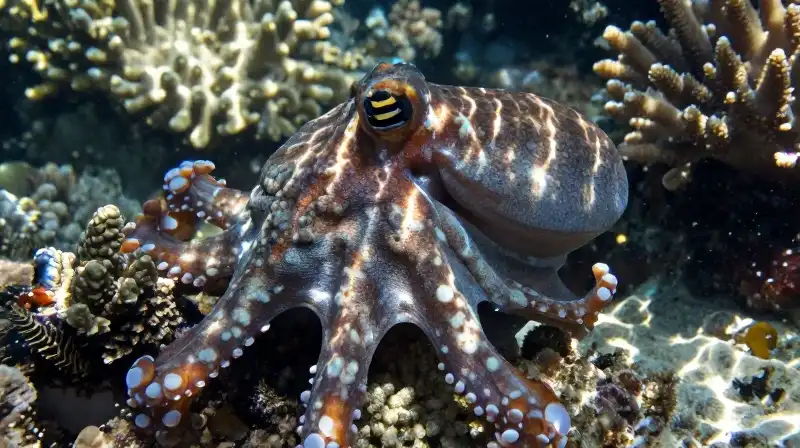
The octopus uses chromatophores—tiny, specialized pigment sacs located just beneath its skin. By contracting or expanding these sacs, the animal can rapidly shift its color and patterns. However, color is only half the battle; the octopus can also alter the texture of its skin to better match the appearance of its target impersonation.
Biological Flexibility
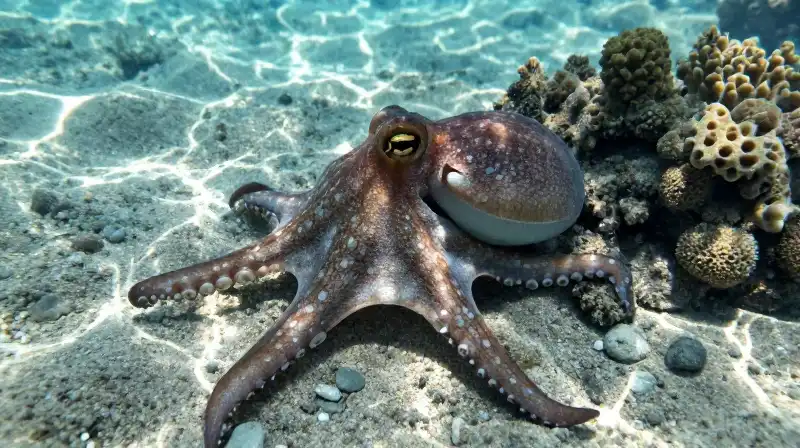
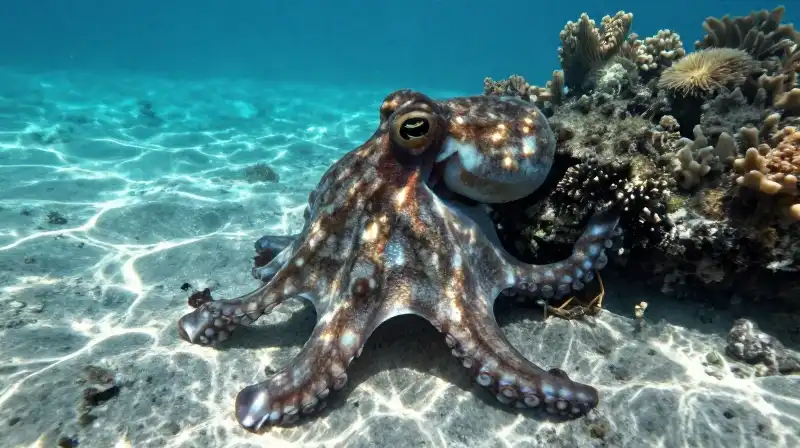
Because octopuses lack a rigid skeleton—with the exception of their hard beak—they possess nearly infinite sculptural potential. This allows the mimic octopus to manipulate its limbs and body posture to mimic the silhouettes and swimming patterns of other species.
Amazing Facts About the Mimic Octopus
The mimic octopus is a highly strategic thinker. Scientists believe it doesn’t just mimic animals at random; it chooses specific impersonations based on which predator is currently threatening it.
- The Sole Fish Transformation: To avoid certain predators, the octopus can pull its arms tightly against its body and use jet propulsion to mimic the flat, undulating movement of a toxic sole fish.
- The Lionfish Defense: If it needs to look more intimidating, the octopus can splay its arms out to resemble the venomous, striped spines of a lionfish.
- The Sea Snake Disguise: When threatened, it may tuck six of its arms into a hole or burrow while extending two banded arms in opposite directions. This mimics the striking movement of a venomous sea snake, a tactic often used to scare off damselfish.
- Hunting via Deception: Mimicry isn’t just for defense. There is evidence suggesting the octopus may impersonate a crab to lure unsuspecting mates into striking distance.
- The “Copycat” Partner: Interestingly, the octopus isn’t the only one benefiting from this deception. The harlequin jawfish has been observed staying close to the mimic octopus, using the octopus’s changing colors to help itself blend in and avoid detection.
Species Profile: At a Glance
| Feature | Details |
|---|---|
| Scientific Name | Thaumoctopus mimicus |
| Average Length | Approximately 2 feet (60 cm) |
| Primary Habitat | Silty, “mucky” bottoms, estuaries, and river mouths |
| Lifespan | Approximately 9 months |
| Key Ability | Dynamic mimicry (shifting between multiple imitations) |
Common Questions About the Mimic Octopus
What are some interesting facts about mimic octopuses?
Beyond their ability to impersonate sea snakes and lionfish, they are notable for being the first animal known to exhibit “dynamic mimicry”—the ability to switch between multiple different animal identities depending on the threat present. They are also incredibly short-lived, with a lifespan of only about nine months.
Why is the mimic octopus so good at disguising itself?
Its success comes from the combination of highly intelligent decision-making and biological flexibility. By observing its environment and identifying specific predators, it can select the most effective “costume” to deter that specific threat.
Is the mimic octopus rare?
While they are a specialized species found in specific environments like those near Sulawesi, Indonesia, they are a well-documented part of the mucky seafloor ecosystems they call home.
A Master of Survival
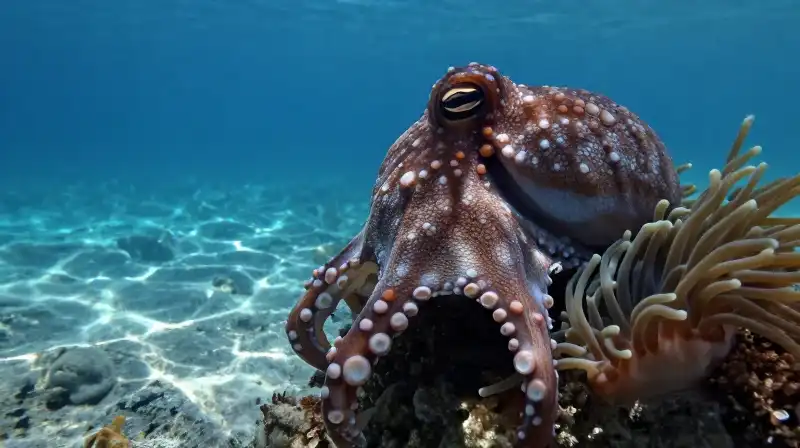
The mimic octopus represents one of the most sophisticated examples of behavioral adaptation in the ocean. It is not merely a master of disguise through passive camouflage; it is an active participant in a complex game of biological deception. By understanding how it uses its chromatophores and flexible anatomy to navigate a world of predators, we gain a deeper appreciation for the incredible intelligence and specialized evolution required to thrive in the silty depths of the sea.
Facts sourced from peer-reviewed marine biology research, NOAA, and the Smithsonian Ocean Portal. Our editorial team fact-checks all content against current scientific literature.
Frequently Asked Questions
What are some interesting facts about mimic octopuses?
The mimic octopus is the first animal known to exhibit dynamic mimicry, allowing it to switch between different animal identities like sea snakes or lionfish based on specific threats. Additionally, these creatures are notably short-lived, with a lifespan of approximately nine months.
Why is mimic octopus so good?
The mimic octopus is successful due to a combination of highly intelligent decision-making and biological flexibility. It can observe its environment to select the most effective impersonation to deter specific threats.
Is the mimic octopus rare?
While they are a specialized species found in specific environments, the mimic octopus is a well-documented part of the mucky seafloor ecosystems where it lives.
Related Articles