
10 Fascinating Facts About Sharks and Their Unique Biology


Introduction
While pop culture often depicts sharks as mindless ocean predators, the biological reality is far more sophisticated. These ancient marine architects have navigated the world’s oceans for an estimated 455 million years, surviving multiple mass extinctions long before the first dinosaurs appeared. Far from being simple hunters, sharks possess specialized sensory organs, unique skeletal structures, and highly diverse reproductive strategies that make them one of the most successful lineages in evolutionary history.
The Biological Wonders of the Elasmobranch
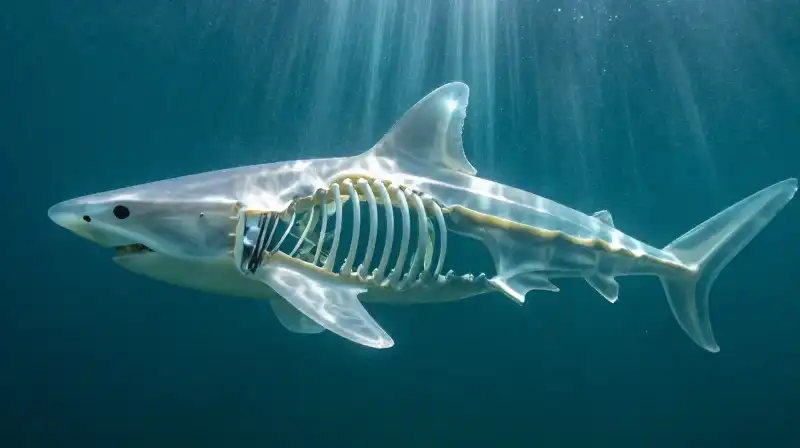
To understand how sharks function, we have to look past the teeth and examine their fundamental anatomy. Sharks belong to a group called “elasmobranchs,” a classification that sets them apart from most other fish.
A Skeleton Without Bone
Unlike humans or most bony fish, sharks lack true bone. Instead, their skeletons are composed of cartilaginous tissue—the same lightweight, flexible material that makes up the human nose and ears. This provides a dual advantage: it makes the shark more maneuverable and reduces its overall weight in the water. Despite this lack of bone, sharks can still leave a fossil record because they deposit calcium salts into their cartilage as they age, and their teeth are encased in protective enamel.
Sensory Superpowers
Sharks experience the ocean through a suite of senses that go far beyond sight and smell. They possess specialized electroreceptor organs known as the ampullae of Lorenzini. These appear as tiny black spots around the eyes and mouth, allowing the shark to detect minute electromagnetic fields and temperature shifts in the water. This “sixth sense” helps them locate prey hidden beneath the sand or navigate through murky environments.
Their vision is equally impressive. Most sharks have excellent eyesight and can navigate dark environments or see colors, aided by a reflective layer of tissue in the eye called the tapetum, which amplifies available light.
10 Fascinating Facts About Sharks
If you are looking for 10 facts about sharks to better understand these animals, the following breakdown covers their unique physical traits, behaviors, and species diversity:
- Skin Like Sandpaper: A shark’s skin is covered in dermal denticles. These are tiny, tooth-like scales that point toward the tail, acting to reduce water friction and allow for more efficient swimming.
- The “Trance” State: Some shark species can enter a state called tonic immobility. When flipped upside down, they enter a temporary, trance-like state of paralysis.
- Dental Lifelines: Sharks are constantly replacing their teeth. A sandbar shark, for example, may grow as many as 35,000 teeth throughout its lifetime.
- Specialized Tooth Shapes: Not all shark teeth are the same. Mako sharks possess pointed teeth designed for grasping, while Great Whites have triangular, serrated teeth better suited for shearing.
- Diverse Breathing Methods: While many sharks must swim constantly to force oxygen-rich water over their gills, some species possess a spiracle—a respiratory opening behind the eyes—that allows them to breathe even while resting on the seafloor.
- Ageing via Vertebrae: Scientists can estimate a shark’s age by counting concentric rings on their vertebrae, a process similar to counting tree rings. However, researchers must use “validation” studies to ensure accuracy, as deposition rates can fluctuate.
- Color Variations: While most sharks are shades of gray, olive, or brown, the Blue Shark is easily identified by its brilliant, striking blue upper body.
- Massive Scales: The Whale Shark is the largest fish in the ocean, capable of reaching lengths of 12.2 meters and weighing up to 40 tons.
- Individual Identification: Much like a human fingerprint, every Whale Shark has a unique pattern of spots, allowing researchers to identify individual animals.
- Varied Reproduction: Shark reproduction is incredibly diverse. Some species are oviparous (laying eggs that hatch externally), while others are viviparous (giving birth to live young).
Comparing Ocean Giants
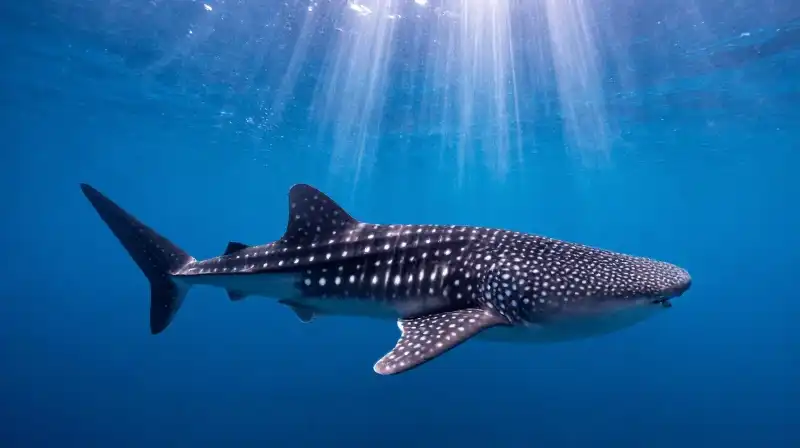
When discussing shark sizes, it is helpful to distinguish between the largest species to understand the scale of these marine animals.
| Species | Relative Size | Notable Feature |
|---|---|---|
| Whale Shark | Largest fish in the ocean | Can reach 12.2 meters and 40 tons; unique spot patterns. |
| Basking Shark | Second largest fish | Known for its massive size and filter-feeding habits. |
Understanding Shark Biology
People often ask specific questions regarding shark anatomy and behavior. Here is a clarification of some common points of curiosity:
Do sharks have bones?
No. As mentioned previously, sharks are elasmobranchs, meaning their skeletons are made of cartilage rather than true bone.
How do sharks breathe?
This depends on the species. Most must keep moving to pump water over their gills, but species with a spiracle can breathe while staying stationary on the ocean floor.
How can you tell sharks apart?
For certain species like the Whale Shark, scientists use their unique spot patterns for individual identification. For others, researchers look at tooth shape and coloration.
The Importance of Sharks

Sharks are far more than just apex predators; they are a fundamental component of marine ecosystems. From their specialized dermal denticles that optimize movement to their complex sensory systems that allow them to navigate a three-dimensional world, every aspect of their biology is a product of millions of years of refinement. Understanding these facts helps move the conversation away from fear and toward a genuine appreciation for the complexity and necessity of these ancient ocean dwellers.
Facts sourced from peer-reviewed marine biology research, NOAA, and the Smithsonian Ocean Portal. Our editorial team fact-checks all content against current scientific literature.
Related Articles