Hammerhead Shark Facts: Anatomy, Hunting Skills and Species

Introduction
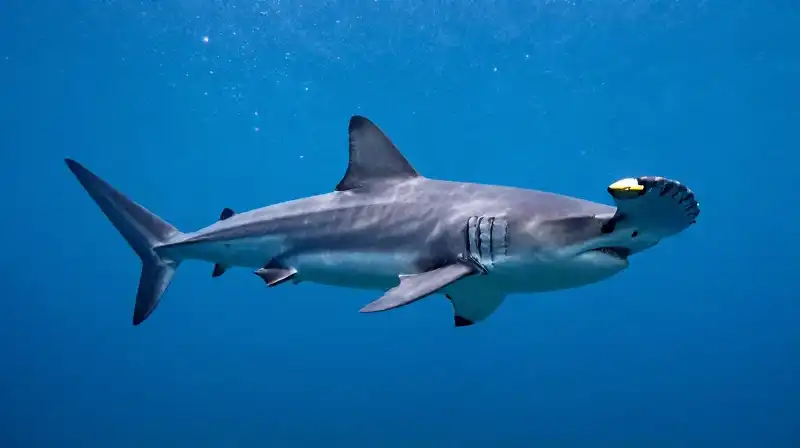
At first glance, the hammerhead shark looks like a creature designed for a science fiction film. Its most striking feature—a wide, flattened head that extends horizontally from its body—sets it apart from almost every other predator in the ocean. This isn’t just a stylistic quirk; it is a highly specialized biological tool. From advanced sensory detection to unique hunting maneuvers, every aspect of the hammerhead’s anatomy is fine-tuned for life in the reef and the open sea. Understanding these sharks requires looking past the intimidating silhouette to see a master of sensory perception and evolutionary adaptation.
The Science of the Cephalofoil
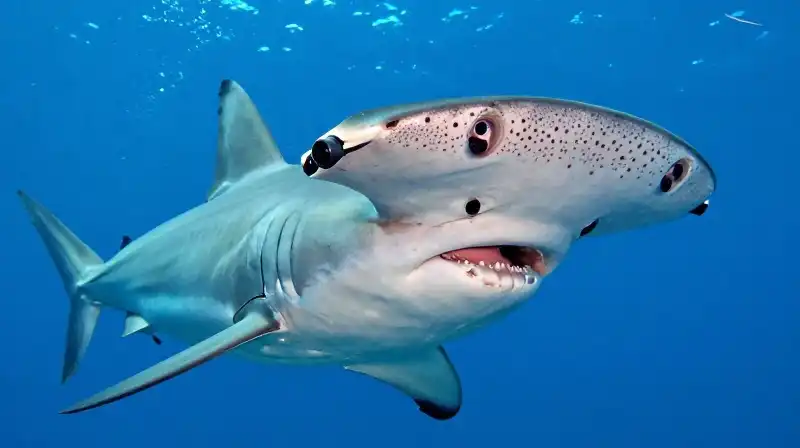
The distinctive head of a hammerhead shark is scientifically referred to as a cephalofoil. Far from being a simple weight or a decorative shape, this structure serves several vital biological functions:
- Enhanced Vision: The wide placement of the eyes provides superior binocular vision and depth perception. This wide field of view allows them to see above, below, and to the sides of their bodies, offering a near 360-degree perspective. However, they do have one limitation: a blind spot located directly in front of their nose.
- Electromagnetic Detection: Hammerheads possess specialized sensory organs called ampullae of Lorenzini. Because these organs are spread across the broad surface of the cephalofoil, the shark has an expanded “sensor array” that makes them incredibly efficient at detecting the electromagnetic fields produced by living creatures.
- Navigational Advantages: The shape helps with hydrodynamic stability and steering, allowing for precise movement through the water column.
Precision Hunters: Diet and Behavior
Hammerhead sharks are highly effective hunters that utilize their unique anatomy to secure prey that other predators might miss. One of their most impressive skills is the ability to locate stingrays by sensing the tiny electrical impulses of a heartbeat, even when the prey is completely buried under sand.
Once prey is located, the hammerhead uses its head as a physical tool. They are known to ram and pin prey—specifically stingrays—against the seafloor to immobilize them before feeding. Because stingrays can be dangerous, hammerheads have evolved a specialized tolerance to stingray barbs; researchers have even found individuals with small barb fragments embedded in their skin.
Specialized Dental Structures
A shark’s teeth are just as specialized as its head. Hammerheads utilize a “dual-purpose” dental arrangement to handle a varied diet of crustaceans, mollusks, and fish:
- Front Teeth: These are sharp and pointed, designed for grasping and holding onto slippery prey.
- Back Teeth: These are flatter and more molar-like, used for crushing the hard shells of crustaceans and mollusks.
Comparing Hammerhead Species

While many people think of “the” hammerhead, there are actually at least nine to ten recognized species, including the scalloped, smooth, smalleye, whitefin, and the much smaller bonnethead. These species vary wildly in size, lifespan, and social behavior.
| Species Trait | Great Hammerhead | Bonnethead |
|---|---|---|
| Maximum Length | Up to 20 feet | Approximately 5 feet |
| Weight | Up to 1,000 pounds | Significantly smaller |
| Notable Feature | Largest species; females are much larger than males | Smallest; some females exhibit parthenogenesis |
Social Behavior and Lifespan
Hammerhead social structures depend on the species. For instance, scalloped and smooth hammerheads are known to travel in massive schools of up to 500 sharks during the day, though they tend to disperse into smaller groups or swim solo at night. Most hammerhead species are long-lived, with wild individuals typically living between 20 to 30 years.
Reproduction and Biological Oddities
Unlike many other fish species that lay eggs, hammerheads give birth to live young, known as pups. Their reproductive biology also includes some fascinating exceptions. In certain species, such as the bonnethead, scientists have observed parthenogenesis—a form of “virgin birth” where a female can fertilize her own eggs without the presence of a male.
Conservation and Human Interaction
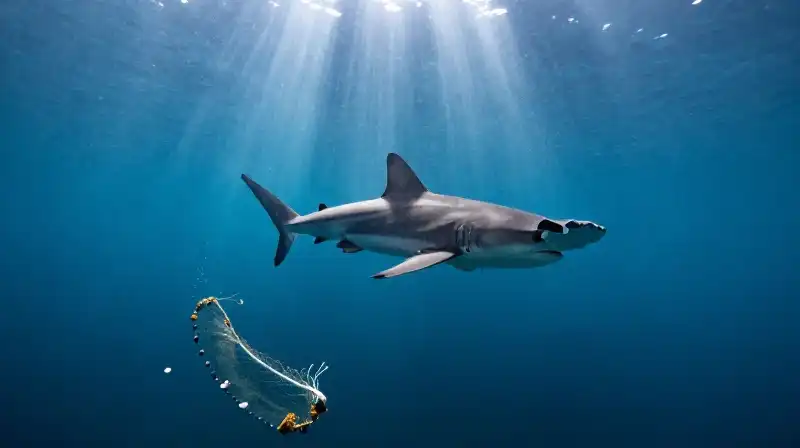
Despite their fearsome appearance, hammerheads are not the “man-eaters” often depicted in cinema. Recorded attacks on humans by the great hammerhead are very few. However, they face significant biological threats from human activity.
Many hammerhead species are currently facing extinction risks. The great hammerhead, winghead, and scalloped hammerhead are all considered at risk due to:
- Commercial Fishing Bycatch: Being caught accidentally in nets intended for other species.
- Shark Finning: The targeted removal of fins for trade.
- Habitat Loss: Including pollution and coastal erosion.
A Remarkable Evolutionary Design
The hammerhead shark is a testament to the power of evolutionary specialization. Every inch of its cephalofoil, every tooth in its mouth, and its unique reproductive capabilities serve a purpose in its survival. While they are often misunderstood as mindless predators, they are actually highly sophisticated sensory specialists. Protecting these sharks is not just about saving a single species, but about preserving the complex predatory balance of our global oceans.
Facts sourced from peer-reviewed marine biology research, NOAA, and the Smithsonian Ocean Portal. Our editorial team fact-checks all content against current scientific literature.
Related Articles