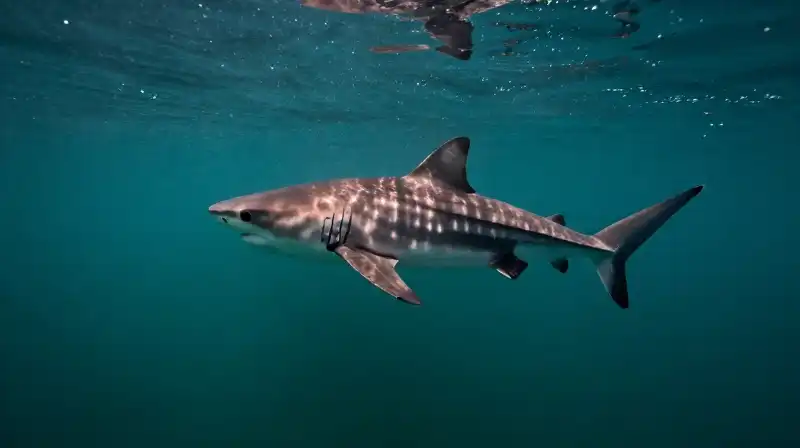
10 Fascinating Sand Tiger Shark Facts and Survival Secrets

Introduction
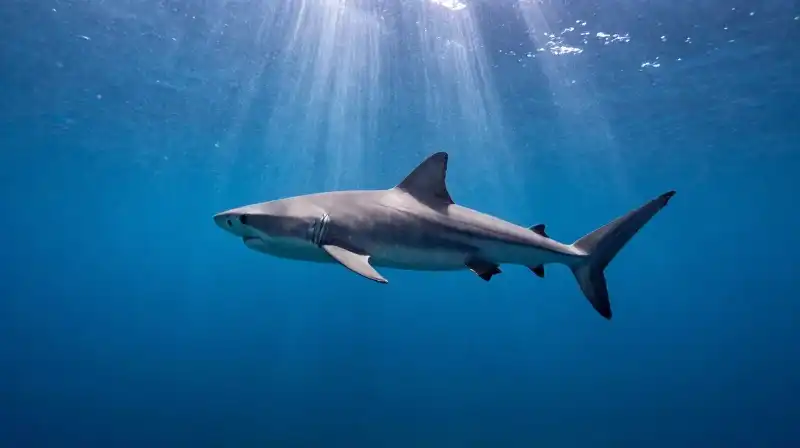
At first glance, the sand tiger shark looks like a creature designed for a horror film. Its mouth is a chaotic display of long, slender, needle-like teeth that protrude even when its jaws are closed, giving it a permanent, menacing snarl. However, beneath this intimidating facade lies one of the ocean’s more misunderstood predators. Far from the aggressive “man-eater” often depicted in media, the sand tiger shark is a specialized hunter with unique biological survival strategies that set it apart from almost any other shark in the sea.
10 Fascinating Sand Tiger Shark Facts and Survival Secrets
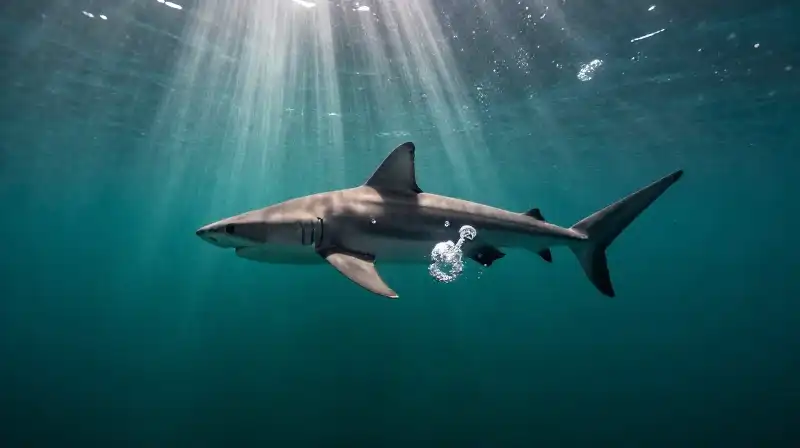
To understand why this species is so vital to marine ecosystems, we have to look past the teeth and examine how they move, hunt, and grow.
- They “breathe” air to float: Unlike many sharks that must swim constantly to maintain position, sand tiger sharks have mastered the art of hovering. To achieve neutral buoyancy, they swim to the surface and swallow mouthfuls of air, creating internal air pockets in their stomachs that allow them to remain motionless in the water column.
- They are more closely related to Great Whites: Despite the common name, they are not “true” tiger sharks. While true tiger sharks belong to the order Carcharhiniformes, sand tigers belong to Lamniformes. This means they are evolutionarily closer to the Great White, the Basking shark, and the extinct Megalodon.
- Their teeth are precision tools: Those famous protruding teeth aren’t meant for slicing through large chunks of meat like a Great White’s serrated teeth. Instead, they are smooth and designed to puncture and grip the slippery skin of mid-sized fish, ensuring prey cannot wiggle free.
- They utilize complex social hunting: Sand tiger sharks aren’t just solitary wanderers; they are capable of teamwork. Researchers have observed them working together to corral schools of fish into shallow waters or even using their tails to create cracking noises to frighten and direct prey.
- They practice intrauterine cannibalism: In a brutal survival tactic, the most developed embryos within a female’s uterus will devour unhatched eggs and weaker siblings. This ensures that only the strongest offspring survive to birth.
- Newborns are born “ready to fight”: Because they give birth to live young rather than laying eggs, sand tiger shark pups are born remarkably large—reaching up to 3 feet in length. This size provides an immediate advantage in avoiding predators.
- They use “nursery” habitats: To stay safe from larger adult sharks, juvenile sand tigers seek out secluded, shallow areas known as nurseries. These include locations like the Great South Bay near Long Island and various bays in Massachusetts.
- They are surprisingly mild-mannered: Despite their look, they are not considered aggressive toward humans. Since 1580, there have been only 29 recorded unprovoked attacks on humans, none of which resulted in a fatality.
- They can live for decades in captivity: While they are difficult to maintain in artificial environments, they adapt well to large aquariums. For instance, a female named Bertha lived at the New York Aquarium for over 40 years.
- They are a vulnerable species: The sand tiger shark is currently listed as “vulnerable” by the IUCN. Their populations have been heavily impacted by overfishing, coastal pollution, and a naturally slow reproductive rate.
Physical Profile and Identification
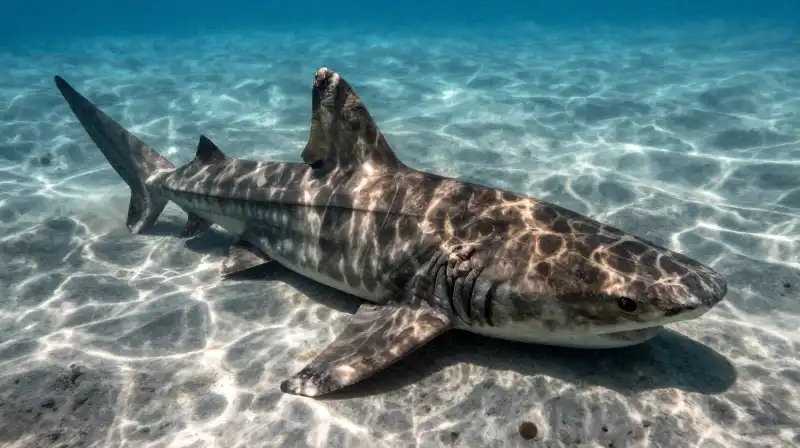
If you are looking to identify a sand tiger shark in the wild, keep an eye out for their specific coloration and size. They typically feature a brownish-gray dorsal side, which often has dark spots, transitioning to a pale, whitish belly.
| Characteristic | Typical Measurement/Detail |
|---|---|
| Total Length | 6.5 to 10.5 feet (some exceed this) |
| Weight | 200 to 350 pounds (some exceed 400 lbs) |
| Common Name (Australia) | Grey nurse shark (evolutionarily inaccurate) |
| Teeth Type | Long, slender, and serration-free |
Common Questions About Sand Tiger Sharks

What is the sand tiger shark diet?
Their specialized teeth suggest a diet focused on mid-sized, slippery fish. Their ability to hunt in groups also allows them to tackle larger schools of prey more effectively than a solitary hunter might.
Where is the sand tiger shark habitat?
They are found in various coastal environments, often utilizing shallow bays and protected waters as nurseries for their young. Their presence is noted along the U.S. eastern seaboard, though historical overfishing has significantly depleted these populations.
How big is a sand tiger shark?
Adults generally fall between 6.5 and 10.5 feet in length. While they are substantial predators, they are smaller than the “true” tiger sharks or Great Whites, usually weighing between 200 and 350 pounds.
A Species at Risk
The sand tiger shark faces a precarious future. In the late 20th century, populations along the U.S. eastern seaboard were estimated to have shrunk by a staggering 70 to 90 percent. This decline is driven by a combination of overfishing and the increasing presence of coastal pollution. Because they have a slow reproductive rate, they cannot recover from population losses as quickly as other marine species, making conservation efforts vital to ensuring they remain a part of our oceans.
Why the Sand Tiger Shark Matters
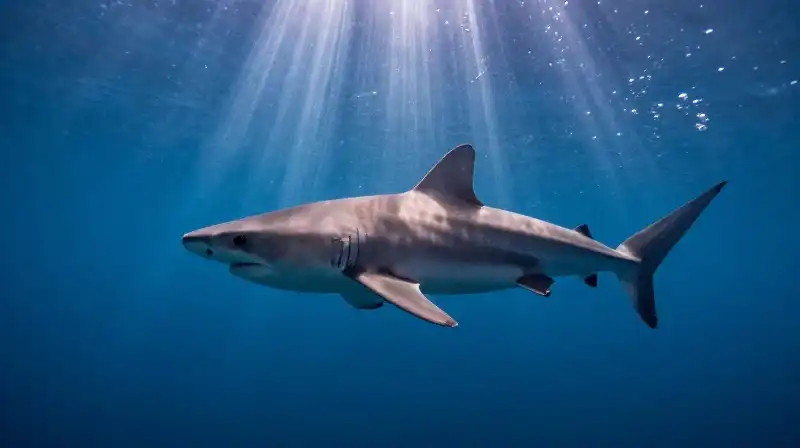
The sand tiger shark is a masterclass in evolutionary specialization. From the way they use air to defy gravity to the complex social behaviors they exhibit during a hunt, they prove that “scary” appearances often mask highly sophisticated biological rhythms. Understanding these animals—moving beyond the myth of the mindless predator—is the first step in protecting a species that is as vital to the ocean’s balance as it is fascinating to observe.
Facts sourced from peer-reviewed marine biology research, NOAA, and the Smithsonian Ocean Portal. Our editorial team fact-checks all content against current scientific literature.
Related Articles