Fascinating Facts About the Lions Mane Jellyfish and Its Size

Introduction
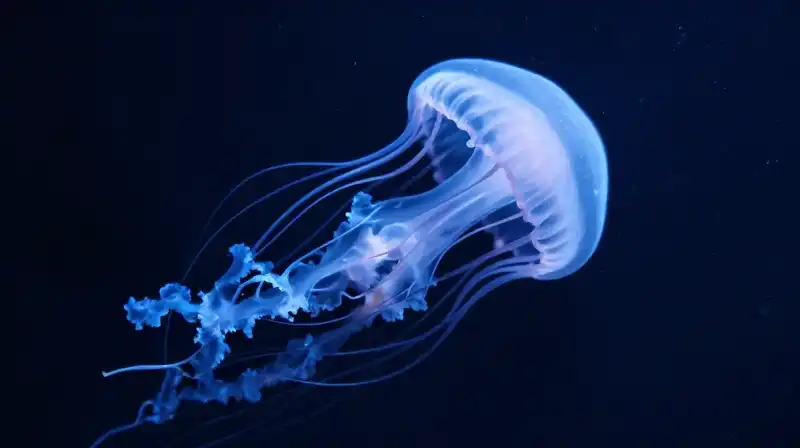
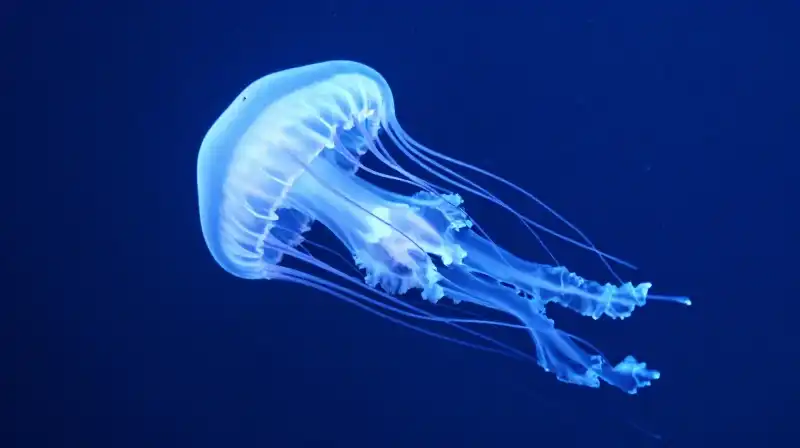
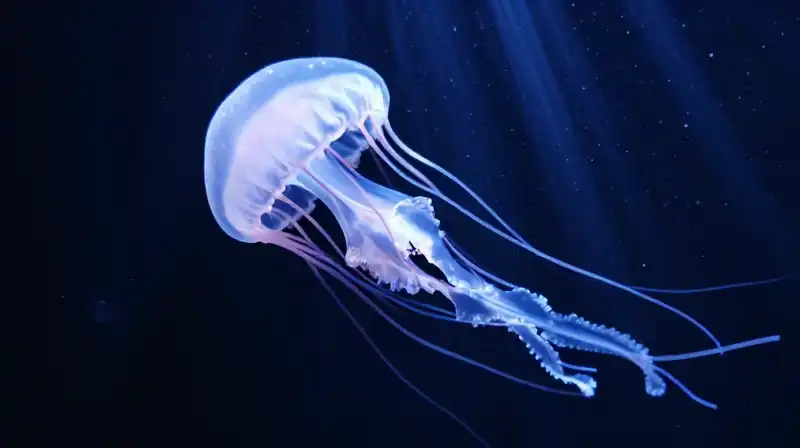
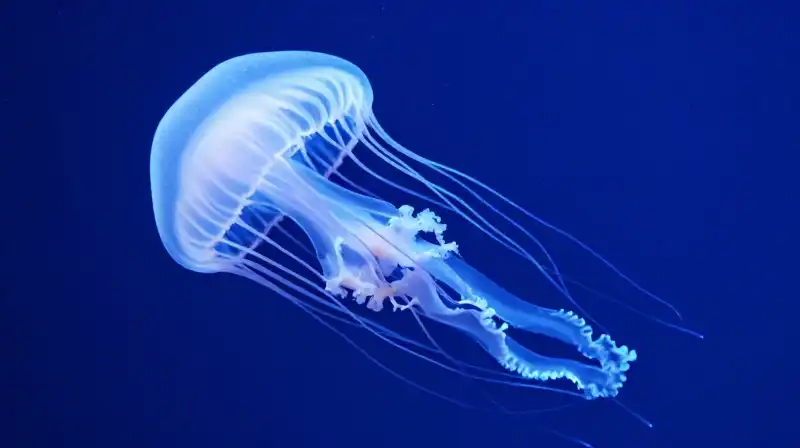
Imagine drifting through the frigid, dark waters of the North Atlantic and encountering a creature so large its trailing tentacles could rival the length of a blue whale. This isn’t a scene from a science fiction film, but the reality of the lion’s mane jellyfish. Named for the flowing, hair-like mass of tentacles that surround its bell, this gelatinous giant is one of the most impressive—and occasionally misunderstood—residents of our planet’s colder oceans.
A Giant Among Jellyfish: Understanding Its Size
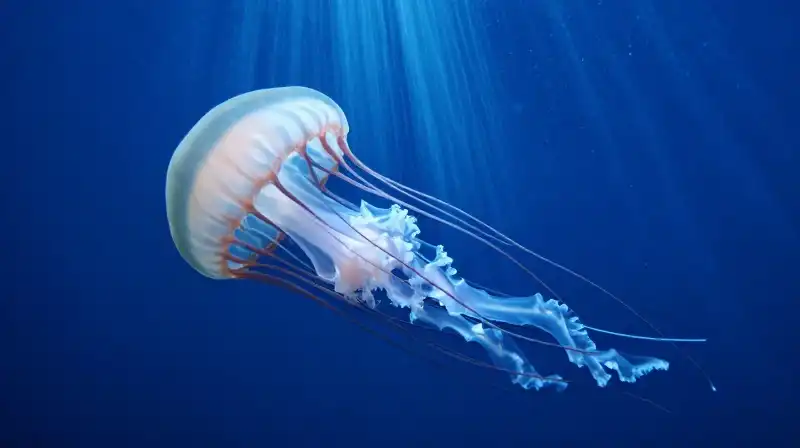
When discussing the size of the lion’s mane jellyfish, measurements can vary significantly depending on the specimen and the source. It is widely recognized as one of the largest jellyfish species in the world, but its scale is best understood by looking at its two distinct parts: the bell and the tentacles.
| Feature | Estimated Size/Range | Context |
|---|---|---|
| Bell Diameter | 50cm to 1.8 meters (5.9 feet) | While some sources note smaller bells of 50cm, others record massive bells reaching 1.8 meters. |
| Tentacle Length | 3 meters to 36.6 meters (120 feet) | Tentacle lengths vary greatly; some sources cite 3 meters, while others speculate they can reach up to 120 feet. |
The visual impact of the lion’s mane is defined by its color palette as much as its dimensions. Depending on the specific jellyfish and the lighting of the deep sea, you might see hues ranging from pink and reddish-gold to brownish-violet, or even translucent brown to dark red.
Fascinating Facts About Lion’s Mane Jellyfish
Beyond their sheer scale, these creatures possess unique biological traits and social behaviors that set them apart from more common jellyfish species.
- They hunt like a drifting net: Rather than actively chasing prey, the lion’s mane jellyfish uses a passive but highly effective strategy. It positions itself above its target and slowly sinks through the water column, using its massive network of over 1,000 tentacles to snag fish and smaller jellyfish.
- They travel in massive shoals: Most jellyfish drift somewhat individually, but lion’s mane jellyfish are known to gather in impressive groups. These shoals can stretch for as much as a kilometer (0.6 miles) in length.
- Their sting is highly specialized: The tentacles are lined with nematocysts—specialized stinging cells designed to stun and capture prey.
- They prefer the cold: You won’t find these giants in tropical coral reefs. They thrive in cold and temperate waters, inhabiting the Arctic, Atlantic, Pacific, North Sea, and Baltic Sea. In the UK, they are frequently spotted off all coasts during the summer months.
Safety and Common Misconceptions
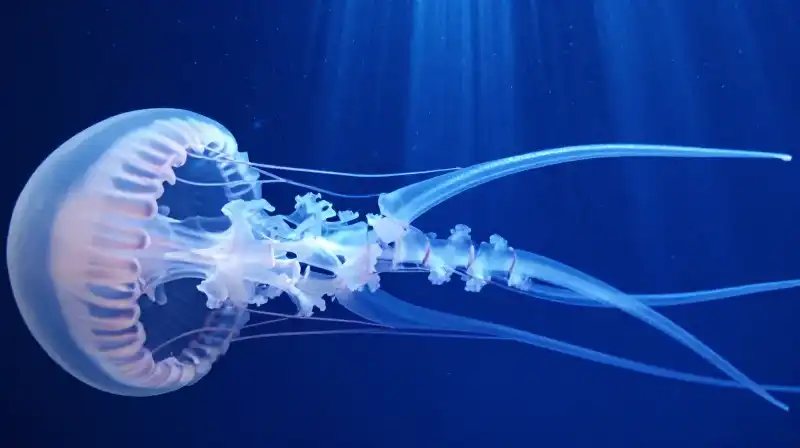
Because of their size and potent stinging cells, many people ask: Can a lion’s mane jellyfish kill you? or Is it poisonous? It is important to distinguish between a “poisonous” animal and a “venomous” one. While the jellyfish is not “poisonous” to eat, its sting is venomous.
Is the sting dangerous to humans?
While the sting of a lion’s mane jellyfish is powerful and can be described as “nasty” or very painful, it is important to understand that these animals do not intentionally sting humans. They are not predators of people; stings are almost always accidental encounters resulting from a person swimming through their tentacles.
The danger of “ghost” stings
One of the most significant risks associated with this species is that the danger doesn’t end if the jellyfish is no longer whole. Fragments of tentacles can continue to sting even after they have detached from the main body or have washed up on the shore. This means that even a jellyfish that appears to be a mere “scrap” on the beach can still cause a painful reaction.
Conservation and Ocean Health
Unlike many marine species currently struggling with habitat loss or overfishing, the lion’s mane jellyfish is not currently known to face any major threats. According to Oceana, the species is not thought to be in danger of extinction. As opportunistic feeders that thrive in a wide range of northern waters, they remain a stable and dominant presence in the marine ecosystems they inhabit.
Why the Lion’s Mane Matters
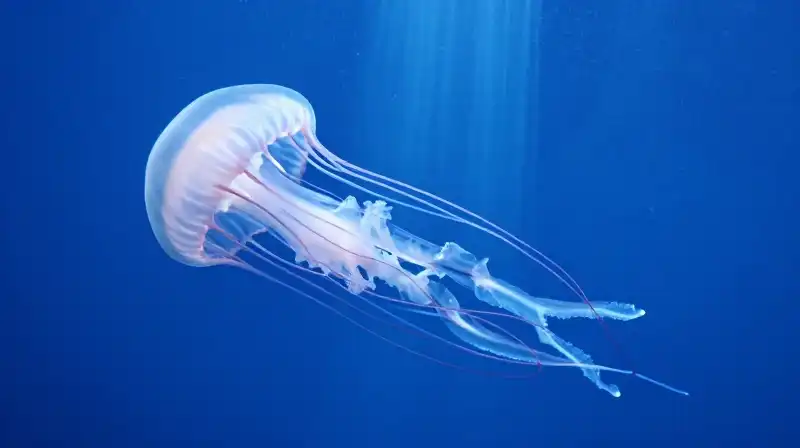
The lion’s mane jellyfish serves as a stunning reminder of the sheer scale of life in the deep, cold oceans. From their kilometer-long shoals to tentacles that mimic the length of a whale, they represent a highly successful evolutionary design: a massive, drifting net that turns the ocean’s currents into a hunting tool. Understanding their size, their habitat, and the reality of their sting helps us respect these giants as vital components of the marine world rather than mere monsters of the deep.
Facts sourced from peer-reviewed marine biology research, NOAA, and the Smithsonian Ocean Portal. Our editorial team fact-checks all content against current scientific literature.
Related Articles