Essential Facts About Megamouth Sharks: Size, Diet, and Behavior

Introduction
In 1976, a Navy research vessel’s anchor snagged something unexpected, pulling a creature from the depths that defied existing biological classifications. This was the first recorded encounter with the megamouth shark, a discovery so startling that scientists initially placed it in its own unique family, Megachasmidae. Since that first accidental meeting, this enigmatic predator has remained one of the ocean’s most elusive residents, appearing only in a few hundred confirmed sightings worldwide.
Anatomy of a Specialist: What Makes It a “Megamouth”?
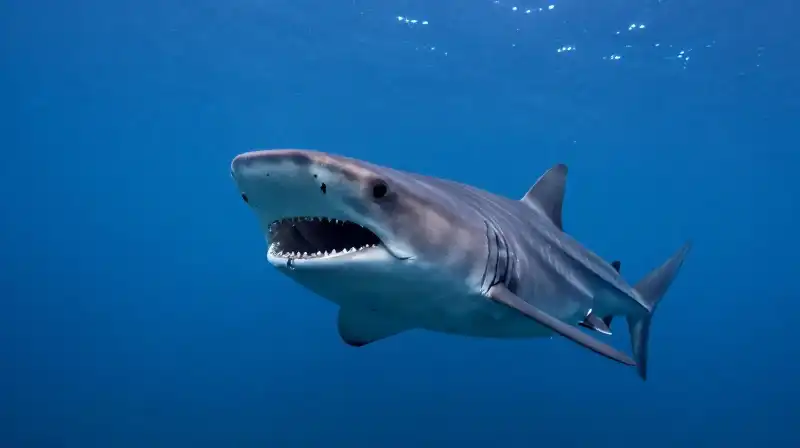
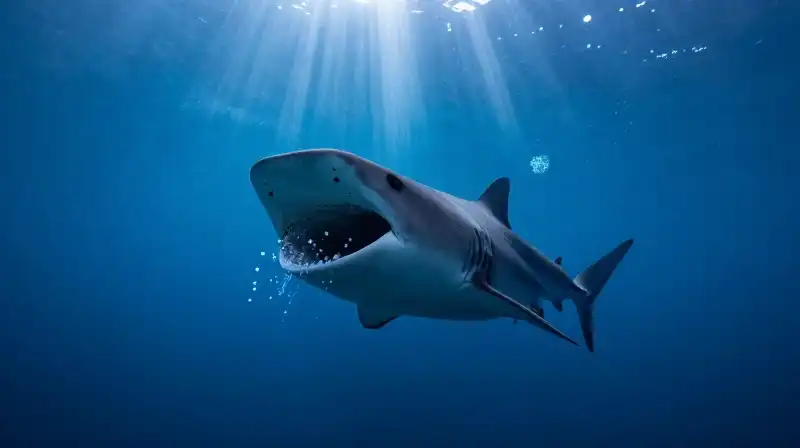
The name “megamouth” is a literal description of the shark’s most striking physical feature. Unlike many sharks that possess streamlined, pointed snouts, the megamouth has a massive, bulbous head designed to accommodate an enormous oral cavity. This mouth can reach a width of up to 4 feet 3 inches (1.3 m).
While the mouth is the centerpiece, several other specialized traits define the species:
- Highly Reflective Markings: A distinctive white band runs along the upper jaw. While some early researchers speculated this band might glow to lure prey in the dark, a 2020 study clarified that the band is simply highly reflective.
- Specialized Dentition: Despite its enormous mouth, the teeth are not designed for hunting large prey. Instead, the shark possesses up to 50 rows of small, peg-like teeth in the upper jaw and 75 rows in the lower jaw.
- Filter-Feeding Mechanism: The megamouth is a “ram feeder.” It swims with its mouth wide open, allowing water to pass through while it captures tiny organisms.
Understanding Megamouth Shark Size
There is often confusion regarding how large these sharks actually get. While they are massive, they are actually the smallest of the three primary filter-feeding sharks. To understand their scale, it is helpful to compare them to their larger relatives:
| Shark Species | Relative Size | Feeding Style |
|---|---|---|
| Whale Shark | Largest | Filter feeder |
| Basking Shark | Large | Filter feeder |
| Megamouth Shark | Smallest of the three | Filter feeder |
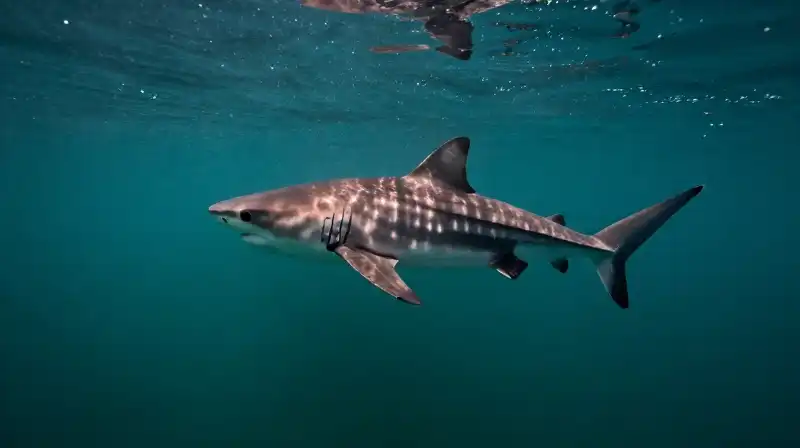
Most specimens documented by scientists measure between 13 and 18 feet (4–5.5 m). However, scientific estimates vary. Some studies suggest they can reach 20 feet (6 m), and a 2024 study regarding a male caught near Ecuador estimated the animal could have reached between 26 and 30 feet (8–9 m).
Diet and the “Deep-Sea Commute”

The megamouth’s diet consists of zooplanktonic organisms. This includes nutrient-rich prey such as krill, jellyfish, shrimp larvae, and crab larvae. Because these food sources move through the water column, the megamouth has developed a specific survival strategy known as “diel vertical migration”.
This behavior functions like a daily commute: the sharks spend their daylight hours at shallower depths and migrate to much deeper waters at night to follow the upward movement of their planktonic prey. This movement allows them to inhabit a massive range of the ocean, from shallow waters of just 16 feet (4.8 m) to the crushing depths of 15,000 feet (4,572 m).
Common Questions About Megamouth Sharks
How rare is a megamouth shark?
They are exceptionally rare to encounter. To date, there have only been approximately 273 to 296 confirmed sightings. Their rarity is partly due to their preference for deep water and their migratory nature across the Pacific, Atlantic, and Indian Oceans.
Are megamouth sharks dangerous?
While any large shark can be intimidating, the megamouth is a filter feeder that targets microscopic organisms rather than large animals. They are not known to be aggressive toward humans, though they are highly specialized animals that live mostly out of human reach.
Conservation and Biology

Biologically, megamouth sharks are ovoviviparous, meaning the young develop inside eggs that remain within the mother’s body until they hatch. This method of reproduction provides the young with a higher chance of survival once they enter the open ocean.
Currently, the megamouth shark is classified as “Least Concern” by the IUCN. However, they face the universal threat of being caught as accidental bycatch by commercial fishing operations. Because so little is known about their social behaviors and exact population numbers, they remain a primary subject of ongoing marine research.
Why the Megamouth Matters
The megamouth shark serves as a vivid reminder of how much of our ocean remains a mystery. From its accidental discovery via a ship’s anchor to its sophisticated vertical migration patterns, the megamouth challenges our understanding of deep-sea survival. Each new sighting provides a vital piece of the puzzle, helping marine biologists piece together the complex life cycles of these rare, wide-ranging giants.
Facts sourced from peer-reviewed marine biology research, NOAA, and the Smithsonian Ocean Portal. Our editorial team fact-checks all content against current scientific literature.
Frequently Asked Questions
How rare is a megamouth shark?
Megamouth sharks are exceptionally rare to encounter, with only approximately 273 to 296 confirmed sightings worldwide. Their rarity is partly due to their migratory nature and preference for deep water.
Why is it called a megamouth shark?
The name is a literal description of the sharks most striking physical feature, which is its massive, bulbous head designed to accommodate an enormous oral cavity. This mouth can reach a width of up to 4 feet 3 inches.
Related Articles