Fascinating Ocean Animal Trivia: From Blue Whales to Octopuses

Introduction
The ocean is a realm of extremes, where biological limits are pushed to scales that seem almost impossible. From the sheer mass of a creature that dwarfs a land elephant to the microscopic precision of light produced in the midnight zone, marine life operates on a different set of rules. Understanding these animals requires looking past the surface to the specialized adaptations—extra hearts, regenerative limbs, and incredible speeds—that allow them to thrive in an environment of immense pressure and vast distances.
Giants of the Deep: A Study in Scale
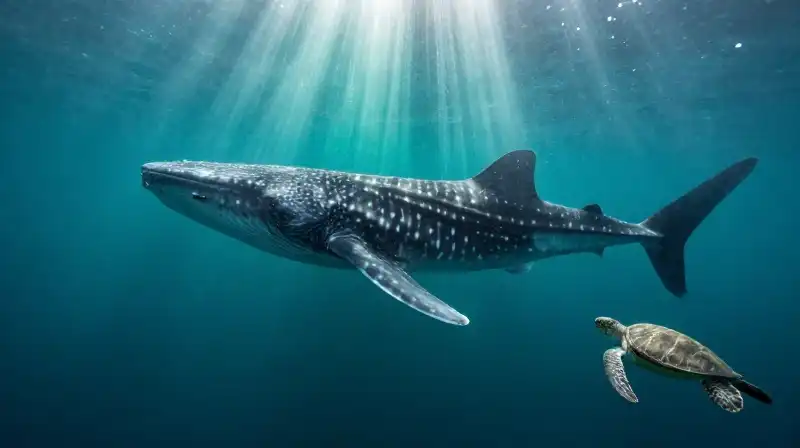
When discussing ocean animal trivia, scale is often the most striking starting point. However, “largest” can mean different things depending on whether you are looking at mammals or fish.
| Animal | Category | Notable Statistic |
|---|---|---|
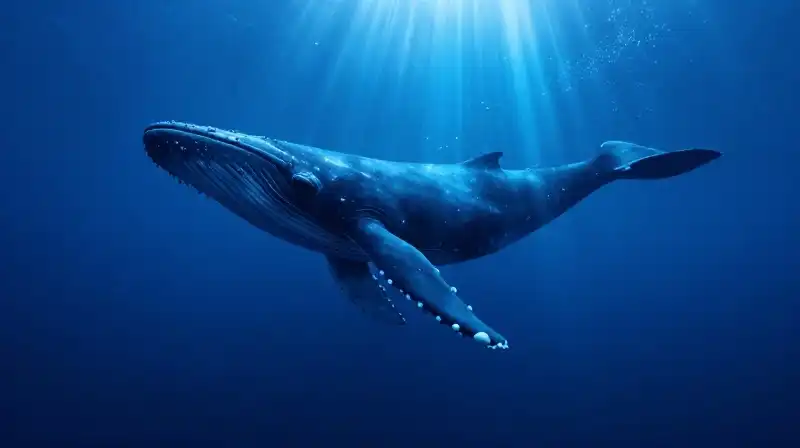
| Blue Whale | Mammal | Up to 100 feet long; weighs up to 200 tons. |
| Whale Shark | Fish | Up to 40 feet long; weighs approximately 20,000 pounds. |
| Leatherback Sea Turtle | Reptile | Can weigh up to 2,000 pounds. |
The blue whale holds the title for the largest animal known to have ever lived on Earth. To put its size in perspective, an adult female can weigh 30 times more than an African elephant. While the blue whale dominates the mammal category, the whale shark is the undisputed heavyweight of the fish world. Even among reptiles, the leatherback sea turtle stands out; these massive creatures can weigh 2,000 pounds and undertake staggering annual migrations that exceed 10,000 miles.
Extraordinary Biological Adaptations
Survival in the ocean often requires physiological “superpowers” that differ wildly from terrestrial life. These adaptations allow creatures to hunt, defend themselves, and live for centuries.
The Complexity of the Octopus
Octopuses are often misunderstood, but their anatomy is among the most sophisticated in the animal kingdom. It is a common misconception that they are similar to squid or cuttlefish; however, octopuses are distinguished by having eight arms equipped with suckers rather than possessing tentacles. Beyond their limbs, their neurological and circulatory systems are uniquely distributed:
- Nine Brains: They possess a central brain, but each of their eight arms contains a “mini-brain” that allows the limb to act with a degree of autonomy.
- Three Hearts: To manage blood flow, they use one heart for general circulation and two dedicated hearts to pump blood specifically past the gills to pick up oxygen.
Longevity and Regeneration
Some marine species have mastered the art of living long and recovering from injury. The Greenland shark is a marvel of longevity; scientists have identified a specimen estimated to be 400 years old, meaning it may have been swimming in the ocean since before the year 1604. Other animals focus on recovery rather than sheer age. Sea stars, for instance, can biologically regenerate their arms if they are lost to predators or physical damage. Even more extreme is the sea cucumber, which can expel its own toxic internal organs as a defense mechanism, only to later regenerate them.
Speed, Sound, and Light
The ocean is not a silent or slow-moving place. It is filled with high-speed hunters and high-decibel events:
- The Fastest Fish: The sailfish is recognized as the fastest fish in the ocean, capable of reaching bursts of speed up to 68 miles per hour.
- Acoustic Power: The pistol shrimp produces incredibly loud noises, with sound levels reaching as high as 210 decibels.
- Biological Light: Many marine animals utilize bioluminescence, the ability to produce their own light through chemical reactions, to navigate or communicate in the dark.
Marine Botany and Geography
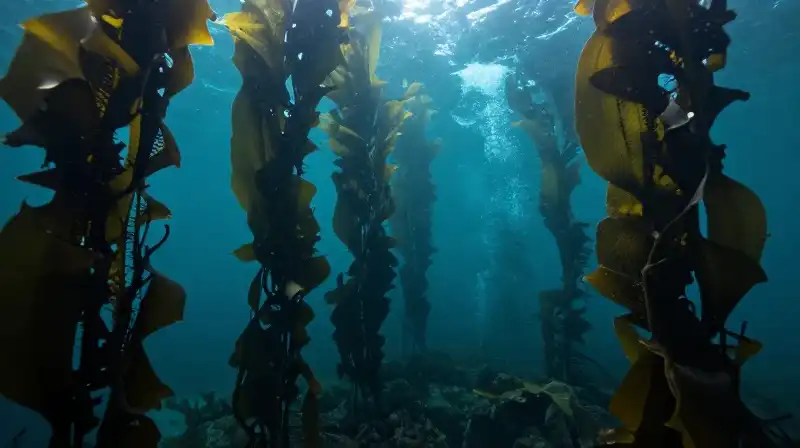
The foundation of many ocean ecosystems lies in the plants and coastal structures that support them. For example, kelp—a massive seaweed—does not possess true roots like land plants. Instead, it uses specialized structures called holdfasts to anchor itself to rocks or cobble on the seafloor.
The scale of the ocean’s edge is also immense. In the United States, Alaska possesses the most extensive oceanic coastline, totaling 4,126 miles, though that figure can climb to as much as 33,904 miles when including its many islands.
Why These Facts Matter
Exploring ocean animal trivia reveals a pattern: marine life is defined by specialization. Whether it is the Greenland shark’s ability to endure for centuries or the octopus’s distributed intelligence, these traits are direct responses to the challenges of a liquid environment. Recognizing the scale of these animals—from the 200-ton blue whale to the tiny, light-producing organisms—underscores the incredible biological diversity that requires our continued study and conservation efforts.
Facts sourced from peer-reviewed marine biology research, NOAA, and the Smithsonian Ocean Portal. Our editorial team fact-checks all content against current scientific literature.
Related Articles