
10 Fascinating Facts About Stingrays and How They Survive

Introduction
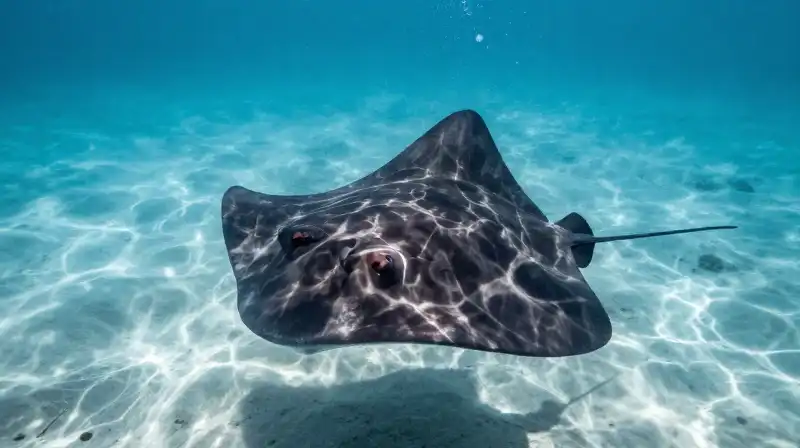
Gliding silently across the sandy floor of the ocean, the stingray is a master of camouflage and specialized evolution. While many beachgoers view them with a sense of trepidation, these cartilaginous fish are far more complex than the “monsters” often depicted in popular media. From their ancient lineage that stretches back to the age of the dinosaurs to their sophisticated ability to sense the hidden electrical pulses of living creatures, stingrays are some of the most biologically impressive inhabitants of our seas.
10 Interesting Facts About Stingrays
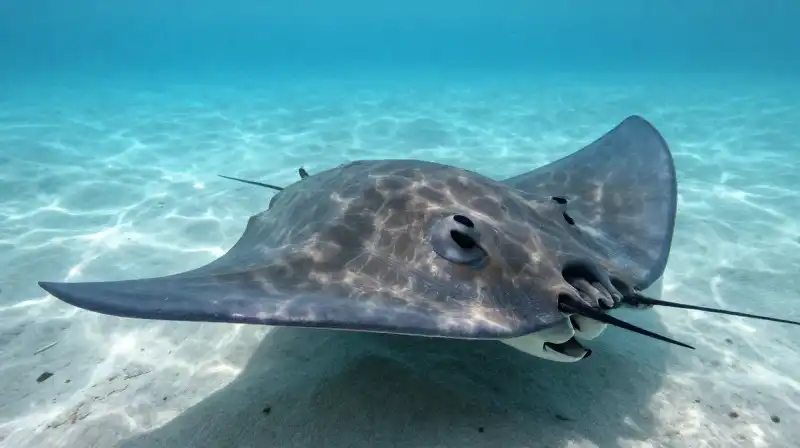
- They are built without bones. Much like their close relatives, the sharks, stingrays possess a skeleton made entirely of flexible cartilage rather than hard bone. This lightweight structure allows for greater maneuverability and fluid movement through the water.
- They possess a “sixth sense.” Stingrays use a specialized sensory system called the Ampullae of Lorenzini to hunt. These are tiny, jelly-filled pits located on their faces that detect the minute electromagnetic signals emitted by the muscle movements of prey.
- They have specialized breathing holes. When a stingray buries itself in the sand to hide, it faces the risk of suffocating if its gills are covered by sediment. To solve this, they use “spiracles”—small openings located just behind their eyes—to draw in clean water and pass it over their gills without disturbing the sand.
- They are highly efficient carnivores. These rays are dedicated hunters with a diverse diet. Some research indicates that certain species are capable of consuming as many as 30 different types of prey, including worms, small fish, and various crustaceans, every single day.
- They are ancient survivors. The stingray lineage is incredibly old. Fossil records and molecular data suggest that they diverged from other species during the Jurassic period, approximately 150 million years ago.
- They navigate using the Earth’s magnetism. Scientific studies conducted in 2020 revealed that yellow stingrays possess advanced navigation skills, using the Earth’s magnetic field to maintain their direction while traveling through the ocean.
- Their young are born ready to hunt. Unlike skates, which lay eggs in protective cases often called “mermaid’s purses,” stingrays are ovoviviparous. This means the eggs hatch inside the mother’s body, and the “pups” are born fully developed and capable of hunting independently.
- They exhibit incredible size diversity. The scale of these animals varies wildly across species. While the short-nose electric ray may only measure about 10cm across, the giant freshwater stingray can reach staggering lengths of up to 14 feet.
- Some are surprisingly acrobatic. While most stingrays are bottom-dwellers, some species break the stereotype of being sedentary. For instance, the giant freshwater stingray has been observed launching itself out of the water in acrobatic displays.
- Their defense is not an act of aggression. Although they possess venomous tail barbs, stingrays generally do not seek out conflict. They primarily use their sting for self-defense, often reacting when they are accidentally stepped on by humans.
Stingrays vs. Manta Rays: What is the Difference?
Because they share a similar flattened shape, many people confuse stingrays with manta rays. However, they occupy very different ecological niches and have distinct biological traits.
| Feature | Stingray | Manta Ray |
|---|---|---|
| Mouth Position | Located on the underside (ventral side) | Located at the front of the body |
| Defense Mechanism | Possess a venomous tail barb | Lack a stinger entirely |
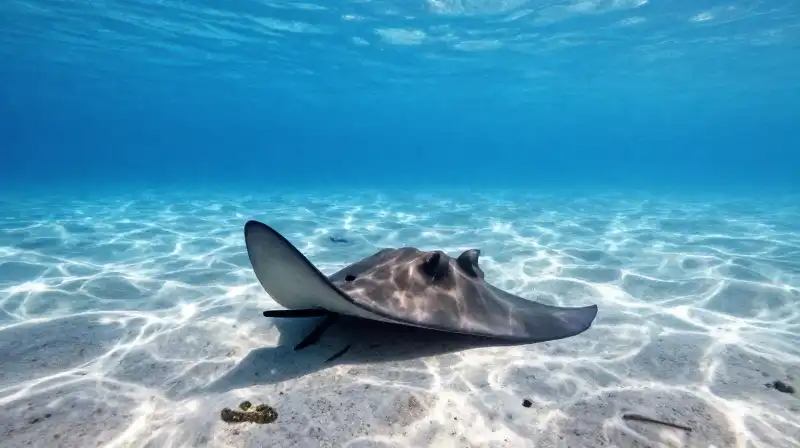
| Primary Habitat | Often bottom-dwelling/sand-dwellers | Pelagic (open water swimmers) |
Common Questions About Stingrays
What is a stingray’s favorite food?
While their diet depends on the specific species and habitat, stingrays are purely carnivorous. They generally favor a variety of marine life found on the sea floor, such as crustaceans, worms, and small fish.
Do stingrays love people?
Stingrays do not have the social structures or neurological traits that suggest they seek out affection or “love” humans. They are generally shy animals that prefer to avoid interaction. Most encounters with humans occur when a person accidentally disturbs a ray that is camouflaged in the sand.
Staying Safe: The “Stingray Shuffle”
If you are swimming in areas where stingrays are known to inhabit, you can help prevent accidental encounters. Because stingrays rely on detecting movement and vibrations to find prey, beachgoers are encouraged to use the “stingray shuffle.” By sliding your feet along the sandy bottom rather than lifting them, you create vibrations that warn the animal of your presence, allowing it to swim away before you accidentally step on it.
A Growing Conservation Challenge
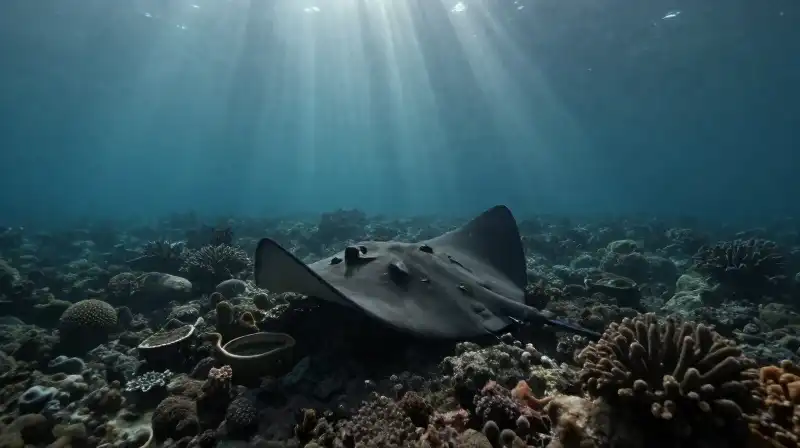
Despite their ancient history and resilience, stingrays face modern threats that their ancestors never encountered. According to the IUCN Red List, over 25 species are currently classified as endangered or critically endangered. These declines are driven by habitat loss, climate change, and overfishing. Protecting these creatures is essential for maintaining the delicate balance of our marine ecosystems.
Why Stingrays Matter
Stingrays are far more than just a biological curiosity; they are highly specialized predators that provide vital insights into marine evolution and sensory biology. From their ability to navigate via magnetism to their complex reproductive cycles, they represent a unique branch of the elasmobranch family tree. Understanding their behavior and respecting their space is the first step toward ensuring these ancient voyagers continue to glide through our oceans for millions of years to come.
Facts sourced from peer-reviewed marine biology research, NOAA, and the Smithsonian Ocean Portal. Our editorial team fact-checks all content against current scientific literature.
Frequently Asked Questions
Do stingrays love people?
No, stingrays do not have the social structures or neurological traits to seek out affection or love humans. They are generally shy animals that prefer to avoid interaction.
What is a stingray's favorite food?
Stingrays generally favor a variety of marine life found on the sea floor, such as crustaceans, worms, and small fish.
How to perform the "Stingray Shuffle"
Slide your feet
Instead of lifting your feet while walking through the water, slide your feet along the sandy bottom.
Create vibrations
By sliding your feet, you create vibrations that warn the stingray of your presence, allowing it to swim away before you accidentally step on it.
Related Articles