
12 Amazing Facts About Seahorses and Their Unique Biology

Introduction
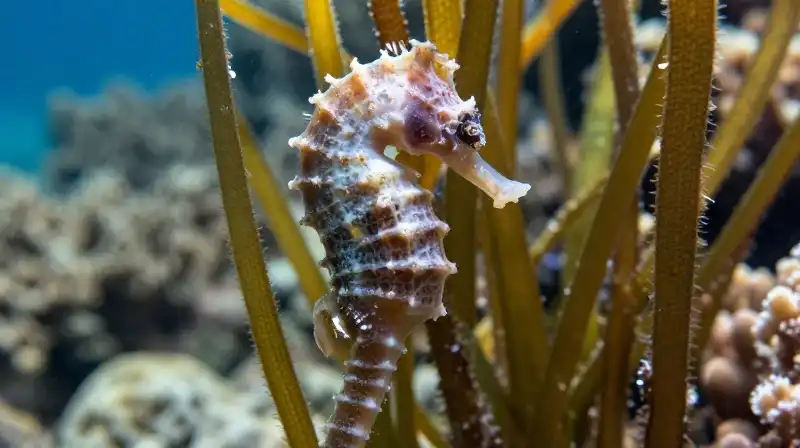
At first glance, a seahorse looks more like a creature from a fantasy novel than a typical inhabitant of the ocean. With a head resembling a tiny horse and a body that twists in ways most fish cannot, they are among the most unmistakable residents of the reef. Their scientific name, Hippocampus, literally translates to “horse sea monster” in Greek, a direct nod to their unique morphology. However, beneath this whimsical exterior lies a highly specialized fish that has mastered the art of slow-motion survival in a fast-moving ocean.
The Biology of a Specialized Fish
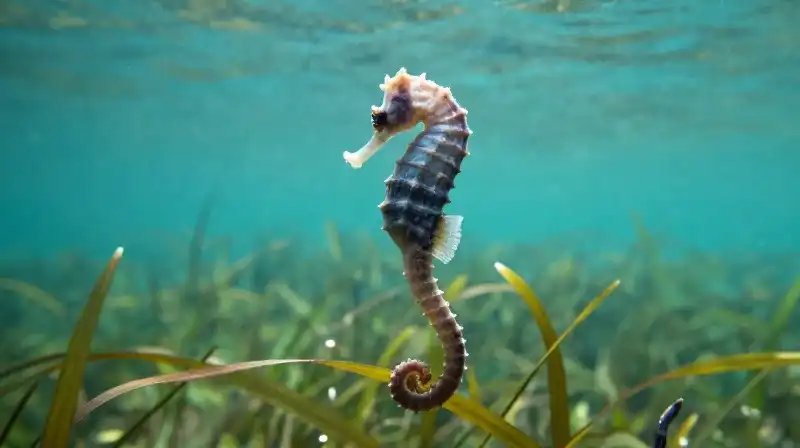
Despite their unconventional silhouette, seahorses are true fish. They possess gills to extract oxygen from the water and utilize a swim bladder—an internal gas-filled organ—to regulate their buoyancy. While they share these fundamental traits with most teleost fish, their method of movement is entirely different.
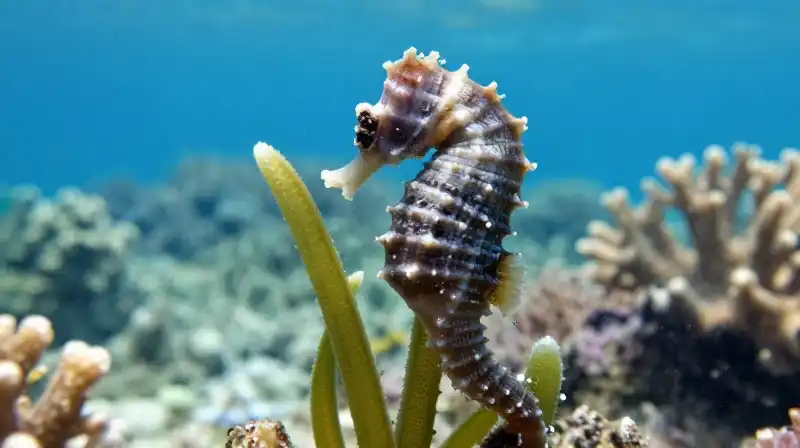
Seahorses are vertical swimmers, a posture that sets them apart from the horizontal orientation of most marine life. Because of this body shape, they are among the slowest swimmers in the sea, with top speeds estimated at only about 150cm per hour. To navigate, they use a small dorsal fin on their back for forward propulsion and tiny pectoral fins near their head to steer. To prevent being swept away by currents, they rely on their prehensile tails, which act like a fifth limb to anchor them firmly to coral, seagrass, or other vegetation.
12 Amazing Facts About Seahorse Life and Behavior
To understand why these creatures are so significant to marine biology, one must look at their specialized adaptations. Here are the most striking aspects of their biology and lifestyle:
- Masterful Camouflage: Seahorses are experts at blending into their surroundings. They can change their color—shifting through shades of yellow, red, orange, or green—to match their specific reef habitat or to signal to a partner during mating rituals.
- A Unique Reproductive Role: In one of nature’s most famous biological quirks, the male seahorse is the one who carries the offspring. The female deposits her eggs into a specialized brood pouch on the male’s body.
- The Pouch Incubation: Once the eggs are inside the male, he carries them for up to 45 days. When the time comes, he gives birth to tiny, fully formed young that are ready to fend for themselves immediately.
- Monogamous Tendencies: Many species of seahorses are monogamous, often staying with a single mate for an entire breeding season or even throughout their entire lives. They frequently engage in ritual morning “dances” to strengthen their pair bond.
- Vacuum-Style Feeding: Seahorses are ambush predators rather than active hunters. Instead of chasing prey, they use their long, tube-like snouts to act like a biological vacuum, quickly sucking in small crustaceans and fish larvae.
- The Necessity of Constant Eating: Because they lack a stomach, seahorses cannot store food for long periods. This means they must eat almost constantly to survive; some individuals may consume up to 50 small meals a day or up to 3,000 crustaceans in a single period.
- Diverse Size Ranges: Seahorses come in vastly different scales. For example, the pygmy seahorse can be as small as 13mm, while the big-belly seahorse can grow to approximately 35cm.
- Varied Species Counts: While scientists are still documenting the exact number of species, estimates range from a minimum of 36 to more than 40 distinct species.
- Global Habitats: They are not restricted to one area but are found in diverse environments ranging from warm tropical coral reefs to cooler temperate coastal waters.
- Prehensile Utility: Their tails are not just for decoration; they are essential survival tools used for anchoring in high-current areas.
- Visual Navigation: They use their pectoral fins for fine-tuned steering, allowing them to hover precisely near their prey.
- Specialized Snouts: The morphology of their snout is specifically evolved for the high-speed suction required to capture elusive larvae.
Comparing Seahorse Sizes
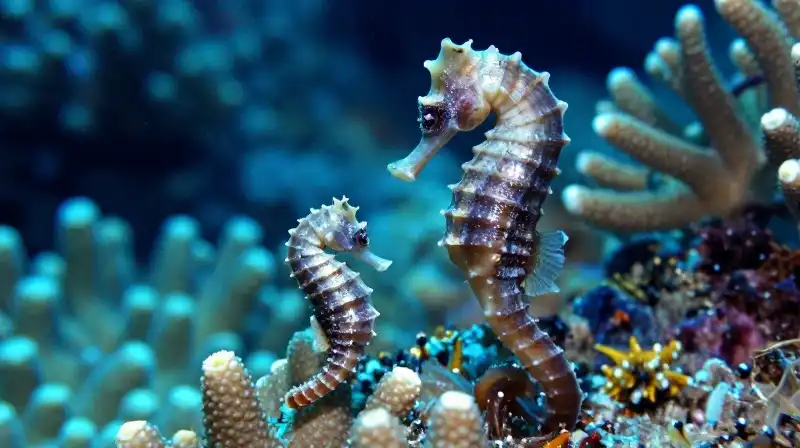
To better visualize the incredible range in size among these creatures, the following table compares two extremes of the seahorse family:
| Feature | Pygmy Seahorse | Big-Belly Seahorse |
|---|---|---|
| Typical Size | ~13mm | Up to 35cm |
| Primary Strategy | Extreme camouflage | Generalist reef inhabitant |
Conservation and Environmental Threats
While seahorses may seem delicate, their survival is tied closely to the health of the oceans. Currently, their conservation status varies by species, with some populations listed as “Vulnerable” or “Data Deficient”. They face several critical anthropogenic threats:
- Habitat Loss: The destruction of coral reefs and seagrass beds leaves them without places to anchor or hide.
- Climate Change: Shifting ocean temperatures can alter the delicate ecosystems they rely on for food and shelter.
- Fishing Pressures: Seahorses are often victims of non-selective fishing and targeted harvesting. Additionally, they are frequently caught as “bycatch”—unintended victims of fishing gear meant for other species.
The Remarkable Resilience of the Seahorse
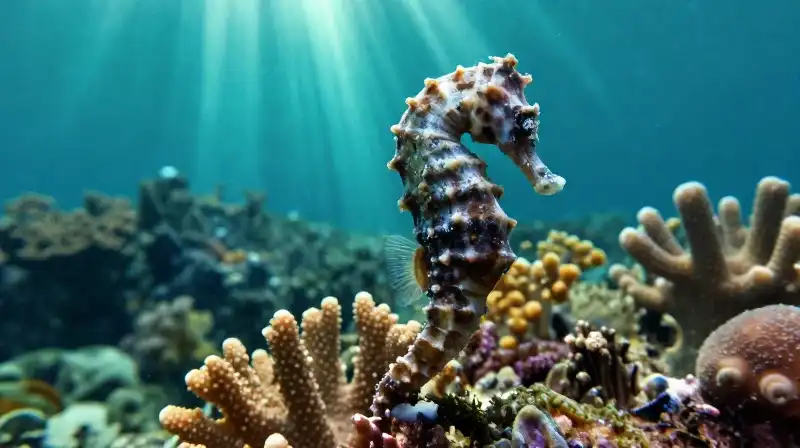
What makes seahorses truly remarkable is not just their strange appearance, but how every aspect of their biology—from their lack of a stomach to their unique method of reproduction—is a finely tuned response to life in the reef. They are specialists in an ocean of generalists, proving that being a “slow” swimmer can be a highly successful evolutionary strategy when paired with camouflage, precision, and complex social bonds. Protecting their habitats is not just about saving a whimsical fish; it is about preserving a unique lineage of marine life that has mastered one of the most peculiar niches in the sea.
Facts sourced from peer-reviewed marine biology research, NOAA, and the Smithsonian Ocean Portal. Our editorial team fact-checks all content against current scientific literature.
Related Articles