12 Fascinating Crab Spider Facts About Their Mimicry and Life

Introduction
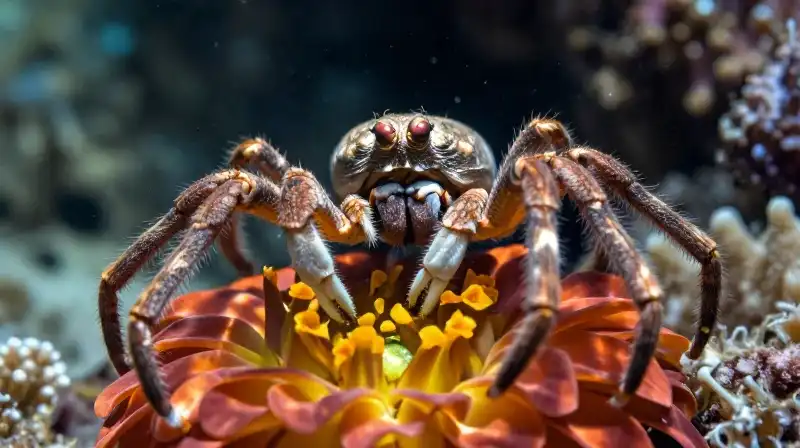
Imagine a tiny hunter sitting perfectly still on a bright yellow petal. To a passing bee or butterfly, the spider is nothing more than a part of the flower itself. This is the world of the crab spider, a master of disguise that has traded the traditional, intricate silk web for a more patient, tactical approach to hunting. Belonging to the family Thomisidae, these spiders are defined by their unique movement and their ability to blend into their surroundings with startling precision.
12 Fascinating Crab Spider Facts About Their Mimicry and Life
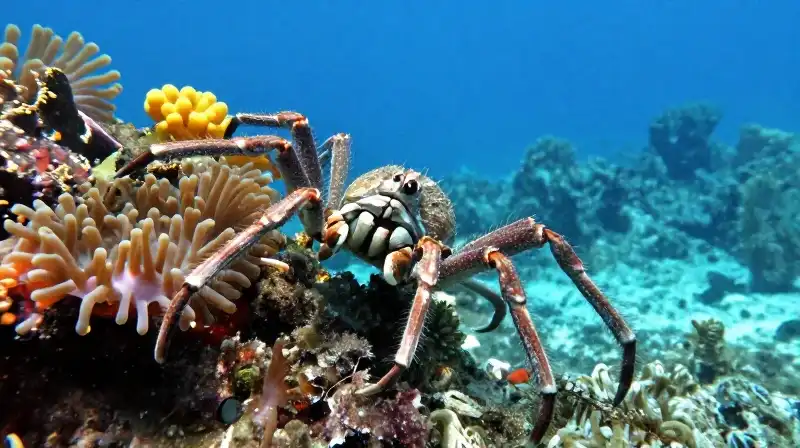
While many people associate spiders with the spinning of large, sticky webs, crab spiders operate under a completely different biological strategy. Here are the most remarkable aspects of their lives.
- They move like crustaceans: The name “crab spider” isn’t just a metaphor. They possess a movement style known as laterigrade, allowing them to scuttle sideways and backward with ease. Their four front legs are notably longer and thicker than their back legs, giving them a silhouette that resembles a crab’s pincers.
- They are ambush predators: Unlike many other arachnids, most crab spiders do not build large webs to snag prey. Instead, they are ambush hunters that pick a strategic location—such as leaf litter, tree bark, or the center of a flower—and wait for an unsuspecting insect to wander within striking distance.
- They are masters of color shifting: Certain species, most notably the Goldenrod Crab Spider (Misumena vatia), can actually change their body color. They can shift between white, yellow, pink, or even a pale mint green to match the specific flowers they inhabit. This isn’t an instant transformation; the process can take several days of acclimation.
- They still use silk for essential tasks: Even though they don’t build “trap” webs, they haven’t abandoned silk entirely. They use single strands of silk to navigate their environment or to construct protective egg sacs for their offspring.
- The family name has a specific meaning: The scientific family name, Thomisidae, is derived from the Greek word thominx, meaning “cord” or “string.” This refers to their reliance on those single, purposeful strands of silk rather than complex, woven structures.
- They exhibit extreme sexual dimorphism: In the world of the crab spider, size is not equal between the sexes. Females are significantly larger than males; in species like Misumena vatia, a female can be many times larger than her male counterpart.
- They use specialized mimicry to survive: Beyond just matching colors, some species use advanced mimicry to trick prey or avoid being eaten. The Amyciaea genus mimics ants (specifically weaver ants) to hunt them, while Phrynarachne species evolved to look like bird droppings to stay invisible to predators.
- They have potent venom for small prey: While they possess venom capable of subduing insects like bees, wasps, and crickets, they are generally not considered a threat to humans due to their tiny size.
- Their diet can be opportunistic: While they are primarily insectivores, some flower-dwelling species, such as Thomisus onustus, are flexible enough to supplement their diet with nectar and pollen when insect prey is hard to find.
- Females are dedicated protectors: In many species, the female takes on a significant parental role, guarding her eggs and the newly hatched spiderlings until they undergo their second molt.
- Unique gender distributions exist: Nature has produced strange exceptions in certain species. In the Platythomisus genus, almost every individual found is either female or a juvenile, with the single exception of the P. jucundus species, which consists entirely of males.
- They inhabit diverse, non-extreme environments: Crab spiders are found worldwide in habitats ranging from deserts to temperate forests. However, they are generally absent from the world’s most extreme environments, such as the coldest or driest regions.
Comparing Crab Spider Traits
To understand how these spiders differ from the “typical” spider many people imagine, it helps to look at their specific biological adaptations.
| Feature | Typical Orb-Weaver Spider | Crab Spider (Thomisidae) |
|---|---|---|
| Hunting Style | Active web-spinning/trapping | Passive ambush/waiting |
| Primary Tool | Complex, sticky silk webs | Camouflage and speed |
| Movement | Often radial or forward-facing | Laterigrade (sideways/backward) |
| Primary Defense | Web vibration/flight | Visual mimicry and color shifting |
Common Questions About Crab Spiders

What does a crab spider eat?
Crab spiders are primarily insectivores, meaning they eat insects. Their diet frequently includes pollinators like bees and wasps, as well as crickets. Interestingly, some species like Thomisus onustus can even consume nectar and pollen if they cannot find enough insects.
Where do crab spiders live?
They are found globally in a wide variety of habitats, including temperate forests and deserts. They tend to prefer areas with plenty of vegetation or flowers where they can hide. However, you won’t typically find them in extremely cold or extremely arid environments.
Are crab spiders dangerous?
While they do possess venom used to paralyze their prey, they are not considered a danger to humans. Their small size makes them unlikely to cause any harm to people.
The Strategy of Stillness
The success of the crab spider lies in its ability to disappear in plain sight. By evolving specialized movement, incredible color-changing abilities, and even mimicry that fools other animals, they have carved out a highly effective niche as the ocean and land’s ultimate “wait-and-see” predators. They remind us that in the natural world, being the fastest or the strongest isn’t always the best way to survive—sometimes, being the most invisible is the greatest advantage of all.
Facts sourced from peer-reviewed marine biology research, NOAA, and the Smithsonian Ocean Portal. Our editorial team fact-checks all content against current scientific literature.
Related Articles