15 Fascinating Facts About the Ocean and Its Marine Life

Introduction
Earth is a blue planet, but much of that color is hidden beneath a surface we have barely begun to understand. While we map the surfaces of distant planets with precision, humans have explored only about 5% of our own oceans, leaving the vast majority of the deep sea a profound mystery. The ocean is not just a body of water; it is a massive historical archive that holds more artifacts and remnants of human history than all the world’s museums combined.
From the rhythmic breathing of the atmosphere to the crushing depths of underwater trenches, the marine world operates on a scale that defies easy comprehension. To understand the ocean is to understand the life-support system of our planet. It regulates our climate, dictates our weather, and even provides the very air we breathe.
The Scale of the Blue Planet
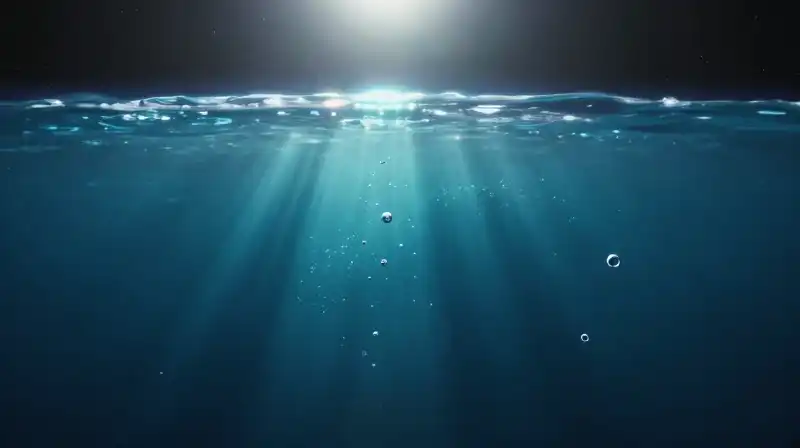
To grasp the sheer magnitude of the marine environment, one must look at the proportions of the Earth itself. The ocean is not merely a feature of our world; it is its dominant characteristic.
- Global Coverage: Oceans cover approximately 70% of the Earth’s surface and contain about 96.5% of the planet’s total water.
- The Pacific Giant: The Pacific Ocean stands as the largest individual ocean on Earth, covering roughly 30% of the planet’s entire surface. Its name originates from the Latin Mare Pacificum, which translates to “peaceful sea”.
- The Deepest Descent: The ocean’s vertical scale is just as staggering as its horizontal reach. The Mariana Trench represents the deepest known point in the ocean, plunging to depths of approximately 11km.
- Underwater Mountains: We often think of mountain ranges as terrestrial landmarks, but the world’s longest mountain range is actually the Mid-Oceanic Ridge. This underwater system stretches over 56,000km along the center of ocean basins.
Extraordinary Marine Biology
The biological diversity found in the ocean ranges from microscopic plankton to creatures of impossible proportions. The following facts highlight some of the most unique physiological and social traits found in marine life.
Giants and Longevity
Size and lifespan in the ocean often follow different rules than those on land. Some creatures have evolved to reach massive scales, while others have mastered the art of extreme aging.
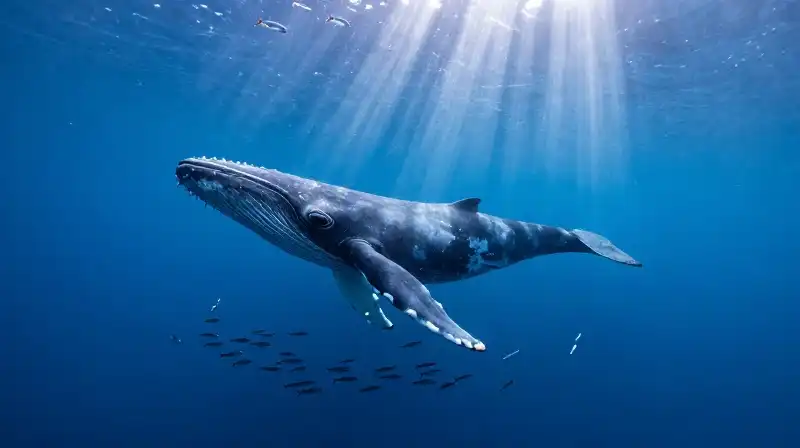
- Blue Whale Supremacy: The blue whale is the largest animal known to have ever lived. These giants can weigh up to 247,000 pounds; to put their scale in perspective, a blue whale’s tongue alone can weigh as much as an entire elephant.
- The Centuries-Old Greenland Shark: While many marine animals have fast life cycles, the Greenland shark is a master of longevity. By using radiocarbon dating on the protein layers within their eyes, scientists have estimated that these sharks can live for hundreds of years.
Intelligence and Adaptability
Marine life has developed sophisticated ways to navigate, hunt, and survive in high-pressure or low-light environments.
- Cephalopod Mastery: Octopuses and cuttlefish are masters of disguise, capable of changing both their skin color and texture to blend seamlessly into their surroundings.
- The Octopus “Skeleton”: Because an octopus has no internal or external bones, its only rigid body part is its beak. This unique anatomy allows them to squeeze through any opening that is small enough to accommodate the diameter of that beak.
- Orca Social Structures: Orcas are frequently misclassified as whales, but they are actually the largest members of the dolphin family. They live in complex matrilineal societies where essential knowledge is passed down through generations, from grandmothers to mothers to daughters.
Biological Anomalies
Evolution has produced some truly unexpected chemical and physical traits in sea creatures.
| Feature | Marine Example | Scientific Detail |
|---|---|---|
| Blood Chemistry | Horseshoe Crab | Contains copper, which results in blue blood. |
| Blood Chemistry | Humans | Contains iron, which results in red blood. |
Busting Marine Myths
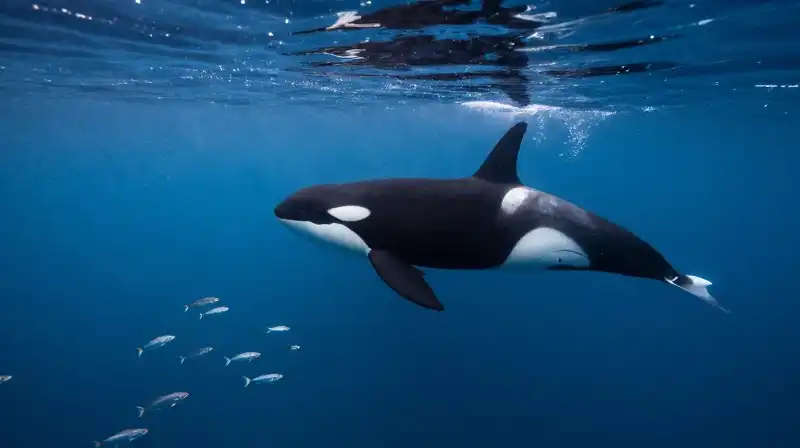
Popular culture often portrays the ocean as a place of constant, unprovoked danger. However, science offers a more nuanced view of these “monsters.”
The “Killer Whale” Misconception: Despite their name, there are no recorded instances of wild orcas attacking and killing humans. Their predatory behavior is highly specialized and directed toward specific prey in their natural habitats, rather than being a generalized threat to humans.
The Ocean and the Atmosphere
The relationship between the ocean and the air we breathe is fundamental to life on land. One of the most important, yet least discussed, facts is that oceans produce approximately 70% of the oxygen in our atmosphere.
The ocean also serves as a barometer for global climate change. Sea levels are not static; they fluctuate based on temperature and ice volume. During the last ice age, much of the Earth’s water was locked in glaciers, leaving the sea level about 400 feet lower than it is today. Currently, warming temperatures are causing sea levels to rise through a combination of melting ice and thermal expansion.
Why the Ocean Matters
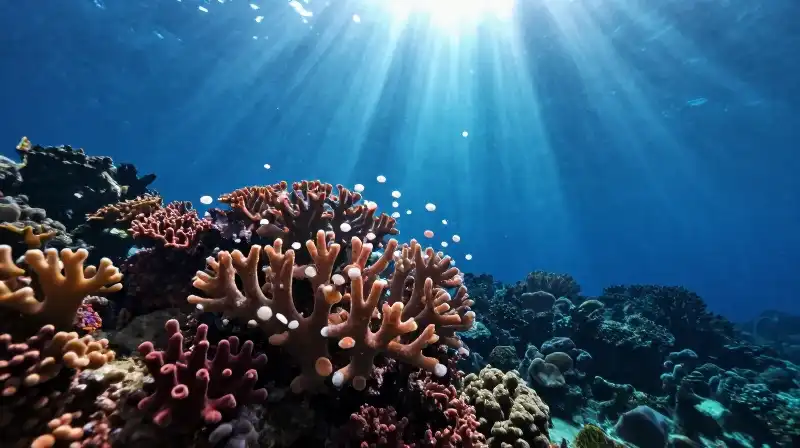
Whether you are looking for interesting things about the ocean for kids or exploring complex marine biology as an adult, the takeaway remains the same: the ocean is the engine of our planet. It provides our oxygen, regulates our temperature, holds our history, and hosts creatures that challenge our understanding of biology. As we continue to explore the remaining 95% of this vast frontier, understanding its fragility and its wonders becomes increasingly vital for our own survival.
Facts sourced from peer-reviewed marine biology research, NOAA, and the Smithsonian Ocean Portal. Our editorial team fact-checks all content against current scientific literature.
Related Articles