
Scary Ocean Facts: From Dark Depths to Ghost Ships

Introduction
The ocean is often described as the final frontier on Earth, not because it is far away, but because it remains largely a mystery. While we have detailed maps of the lunar surface and distant galaxies, estimates suggest we have only discovered between 5% and 20% of the ocean’s territory. This vast, liquid expanse is not just a place of beauty; it is a realm of extreme physics, crushing pressures, and biological processes that operate on a scale entirely different from life on land.
The Physics of the Deep: Darkness and Pressure
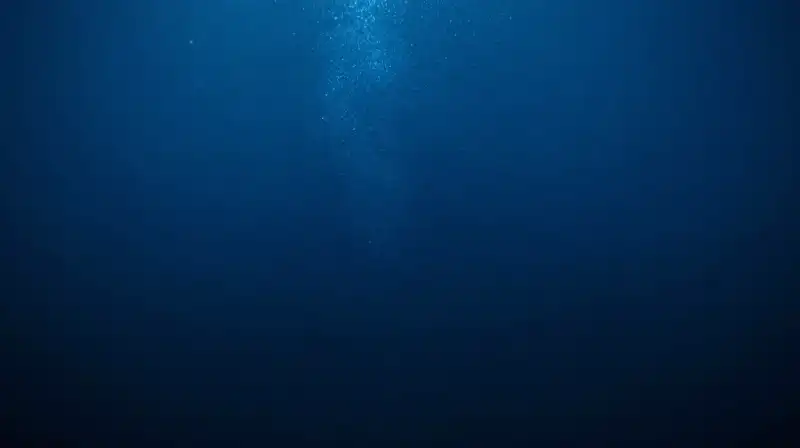
To understand why the ocean can feel intimidating, one must look at the physical barriers that separate the surface from the abyss. The environment changes drastically with every meter of descent.
- Perpetual Darkness: Sunlight is a finite resource in the ocean. It cannot penetrate much deeper than 600 feet, meaning the vast majority of the marine world exists in total, absolute darkness.
- Crushing Depths: In the Challenger Deep—the lowest point of the Mariana Trench—the water reaches depths of approximately 36,200 feet. At this level, the pressure is roughly 1,100 times the atmospheric pressure humans experience at sea level.
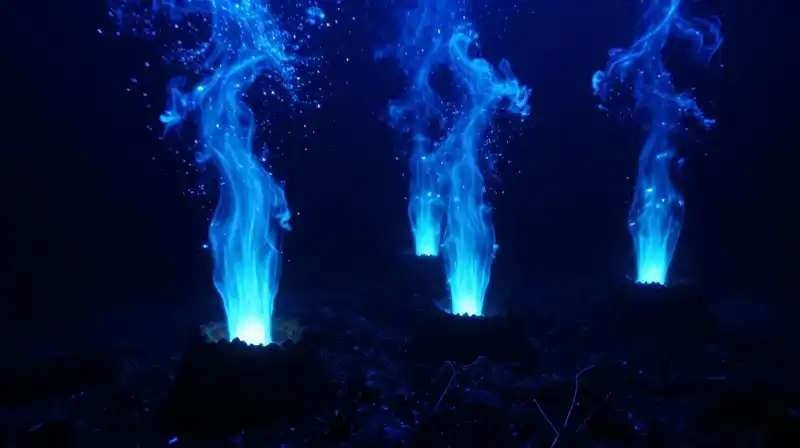
- Extreme Temperatures: While much of the deep ocean is near freezing, hydrothermal vents located at tectonic plate boundaries create localized “hot zones.” Here, seawater is heated by underlying magma to temperatures as high as 700 degrees Fahrenheit.
Unusual Biology and Marine Mysteries
Life in these extreme conditions has forced evolution to take some startling turns. From microscopic organisms to specialized predators, the biological diversity of the ocean is as strange as it is resilient.
The Scale of Marine Life
The ocean hosts creatures that challenge our understanding of anatomy and survival. Some examples include:
- The Bony-Eared Assfish: A vertebrate noted for its highly unusual proportions, specifically possessing the smallest brain-to-body weight ratio of any known vertebrate.
- The Viral Landscape: Microscopic life is just as overwhelming as the macrofauna. A single milliliter of ocean water can contain approximately 10 million viruses, many of which play critical roles in infecting bacteria and phytoplankton.
- The “Marine Snow” Economy: Because there is no sunlight for photosynthesis in the deep, many ecosystems rely on “marine snow”—a continuous shower of organic material falling from the upper layers of the water column to sustain life in the dark.
Predatory Tactics: The Great White Shark
When people search for scary facts about ocean animals, the Great White Shark often tops the list. However, their behavior is driven by highly evolved hunting mechanics rather than mindless aggression. Great Whites are known to hunt by dropping low in the water column, targeting the silhouettes of seals against the surface light before surging upward in a rapid strike. They also engage in massive, mysterious migrations, such as traveling to a remote region in the Pacific known as the “White Shark Café,” located between Hawaii and the Baja California peninsula.
Human History and the Ocean Floor
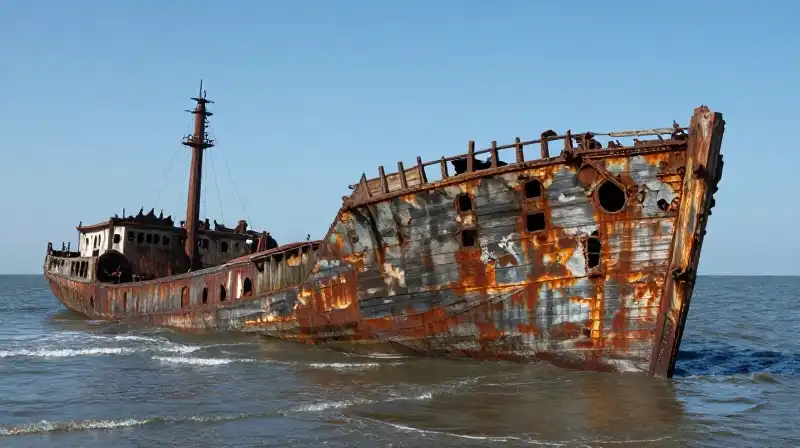
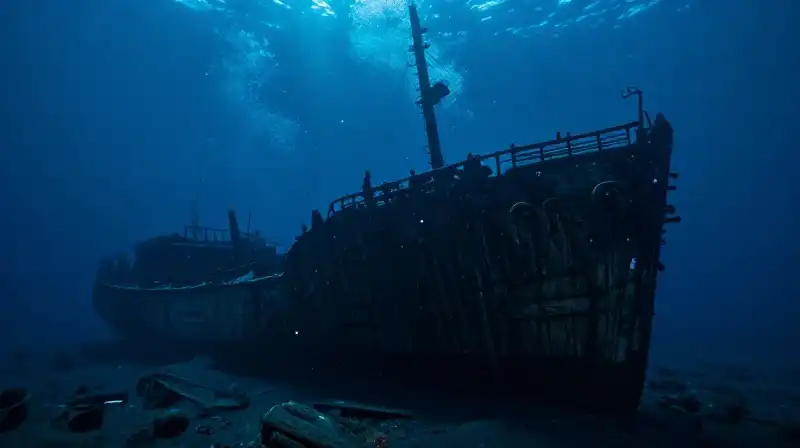
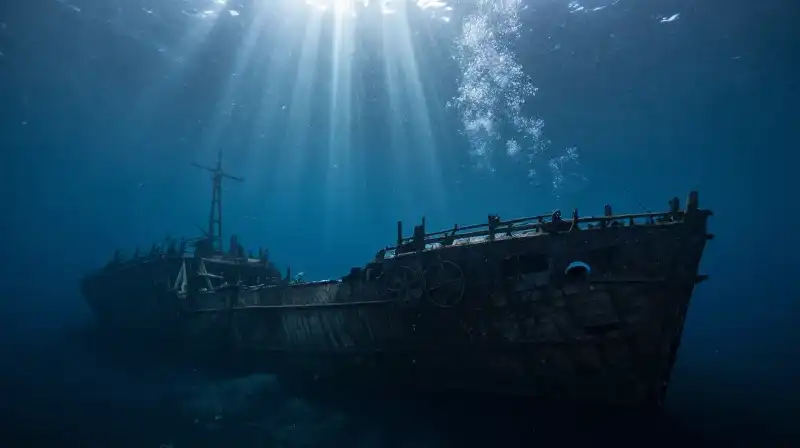
The ocean also serves as a massive, silent repository for human history and debris. The seafloor is littered with the remnants of our past, creating a landscape of “ghost” objects.
- Shipwrecks: The ocean contains a vast amount of historical debris, including an estimated 89,309 plane wrecks.
- Ghost Ships: Modern vessels can still be found drifting without crews. For example, a Taiwanese fishing vessel was found adrift in 2021 with no sign of its crew.
Ecological Shifts: What Will Happen in 2050?
A common question regarding the future of our planet is: What will happen in 2050 to the ocean? While long-term projections vary, we know that the ocean’s ecosystem is sensitive to rapid biological and chemical changes. For instance, large-scale algal blooms can drastically alter water chemistry. These blooms can be terminated by massive viral infections, which may simultaneously release toxins into the water column. As climate change and pollution continue to influence ocean temperatures and acidity, these biological cycles may become more unpredictable.
Summary of Ocean Extremes
| Feature | Characteristic | Impact on Life |
|---|---|---|
| Light Penetration | Limit of ~600 feet | Creates a world of perpetual darkness for most species. |
| Mariana Trench | ~36,200 feet deep | Pressure is 1,100x greater than at the surface. |
| Hydrothermal Vents | Up to 700°F | Supports unique life forms via chemical energy rather than light. |
| Viral Density | 10 million per ml | Regulates populations of bacteria and phytoplankton. |
The “scary” aspects of the ocean—the darkness, the pressure, and the unknown—are actually the very factors that make it one of the most vital and fascinating habitats on Earth. Understanding these extremes is the first step toward respecting the complex biological and geological systems that keep our planet functioning.
Facts sourced from peer-reviewed marine biology research, NOAA, and the Smithsonian Ocean Portal. Our editorial team fact-checks all content against current scientific literature.
Frequently Asked Questions
What will happen in 2050 to the ocean?
The article does not state exactly what will happen in 2050, but it notes that biological cycles may become more unpredictable as climate change and pollution influence ocean temperatures and acidity.
Related Articles