
Terrifying Ocean Facts: From Extreme Pressure to Ghost Ships

Introduction
The ocean is an environment of extremes, where the rules of biology and physics shift dramatically as you descend. While much of our world is defined by sunlight and breathable air, the sea holds vast, silent territories that remain largely alien to human experience. We are often reminded of the ocean’s scale, but its true nature is found in the crushing pressures, the perpetual darkness, and the specialized life forms that have evolved to thrive in conditions that would be instantly fatal to us. Understanding these terrifying ocean facts is not about feeding a sense of fear, but about appreciating the immense, complex, and often misunderstood frontier that covers most of our planet.
The Unexplored Abyss
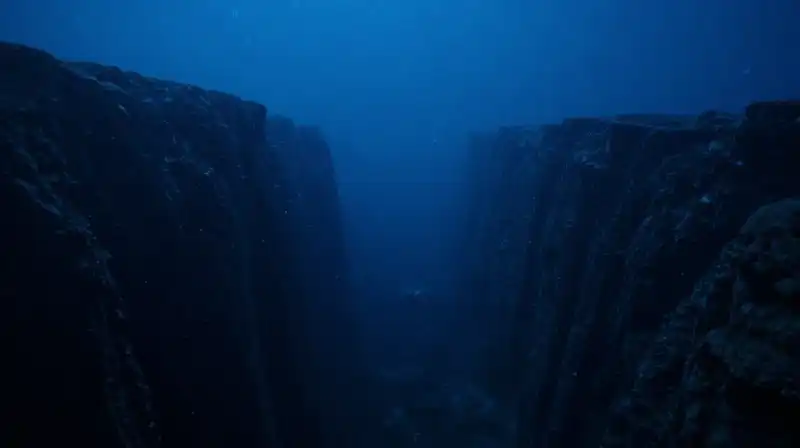
One of the most unsettling aspects of the ocean is how little we actually know about it. While some scientific estimates suggest we have only explored about 5% of the ocean, other researchers argue the figure may be closer to 20%. This massive gap in our knowledge means that much of the seabed remains a mystery, leaving room for both scientific discovery and popular speculation.
The Limits of Light
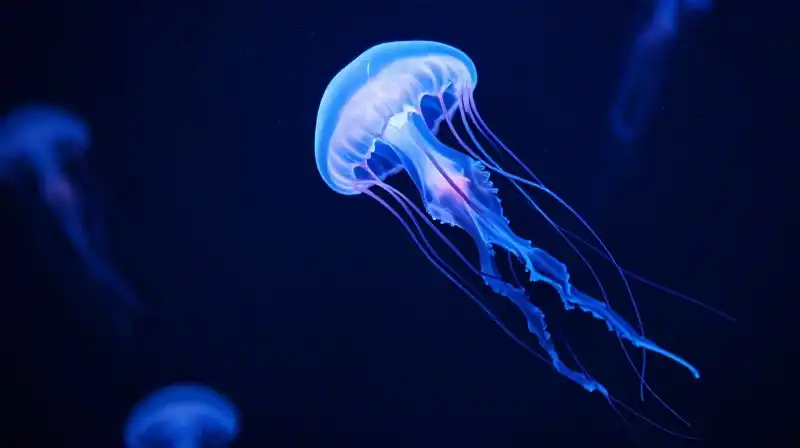
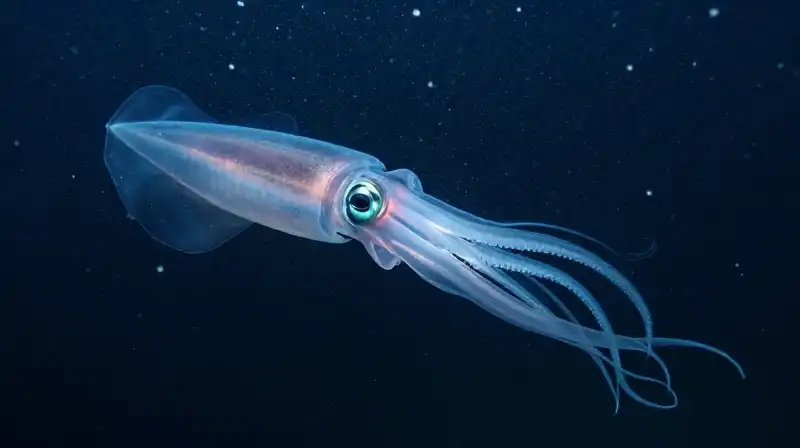
The most immediate change as you move away from the coast is the disappearance of light. Sunlight generally only penetrates to a depth of about 200 meters, though in a very thin surface layer, light can reach up to 600 feet to allow for photosynthesis. Beyond this, the ocean enters a state of perpetual darkness. This lack of visibility creates a world where creatures must rely on different senses—such as bioluminescence or electrical fields—to navigate and hunt.
Extreme Physical Forces
In the deepest parts of the ocean, the physical environment becomes incredibly hostile. At the Challenger Deep, located within the Mariana Trench, the water pressure is approximately 1,100 times the air pressure experienced by humans at sea level. Even in areas where life is abundant, such as hydrothermal vents located near spreading tectonic plates, conditions are extreme; as magma heats the seawater, temperatures can reach up to 700 degrees Fahrenheit.
Survival in the Deep
Life in the deep sea does not follow the same patterns as life on land. Because food is scarce in the dark, ecosystems have developed unique ways to recycle nutrients.
- Marine Snow: Much of the deep-sea ecosystem relies on “marine snow,” which is a constant drift of organic material—dead organisms, waste, and debris—falling from the productive surface layers down into the darker depths.
- The Bony-Eared Assfish: This species is notable for its unique biology, possessing the smallest brain-to-body weight ratio of any known vertebrate.
- Microscopic Life: The ocean is also a massive reservoir for viral life. A single milliliter of ocean water can contain approximately 10 million viruses, the majority of which infect bacteria and phytoplankton.
Shark Behavior and Common Myths
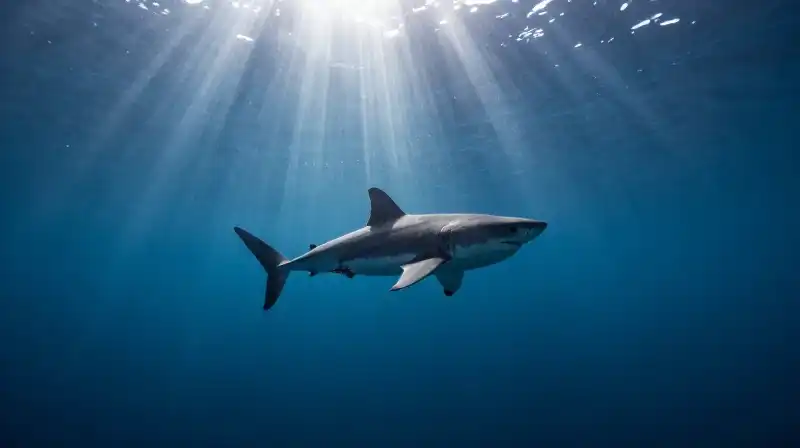
Sharks are often the focus of “scary ocean facts,” but their actual behaviors are more a matter of biological precision than mindless aggression. Understanding how they hunt and move can dispel some of the more sensationalized myths.
The Hunting Tactics of Great Whites
Great white sharks are highly specialized predators. Rather than simply swimming toward prey, they often hunt by dropping low in the water column. They look upward for the silhouettes of seals or other prey against the faint light from the surface, allowing them to strike upward with immense speed.
The “White Shark Café”
Great whites also follow mysterious migratory patterns. One notable area is the “White Shark Café,” a remote region in the Pacific located between Hawaii and the Baja California peninsula, where these predators congregate.
| Topic | Scientific Reality | Common Myth/Misconception |
|---|---|---|
| Megalodon | There is currently no scientific evidence or remains to support the idea that Megalodons are still alive. | The massive, unexplored ocean hides prehistoric monsters like the Megalodon. |
| Shark Attacks | Sharks hunt using specific visual cues, like shadows, to identify prey. | Sharks are mindless “monsters” that hunt humans indiscriminately. |
Unexplained Phenomena and Ocean Mysteries
Beyond biology, the ocean holds mysteries that touch on human history and maritime lore. Even in the age of modern technology, certain phenomena remain difficult to fully explain.
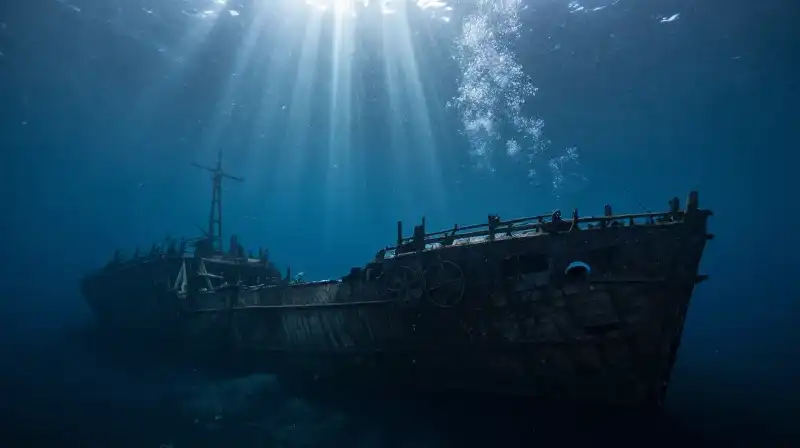
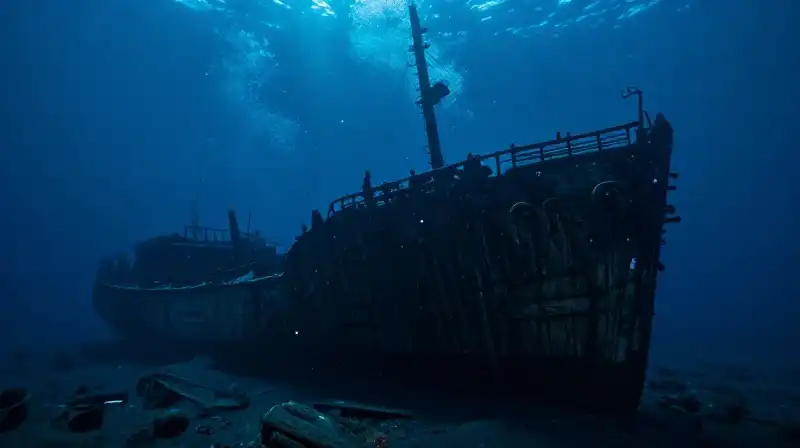
One such phenomenon is the existence of “ghost ships”—vessels that are found adrift and completely intact, yet without any sign of their crew. While many of these incidents can eventually be attributed to storms or accidental abandonment, the sight of a perfectly preserved ship sailing an empty course remains one of the more unsettling aspects of maritime history.
The Reality of Ocean Conservation
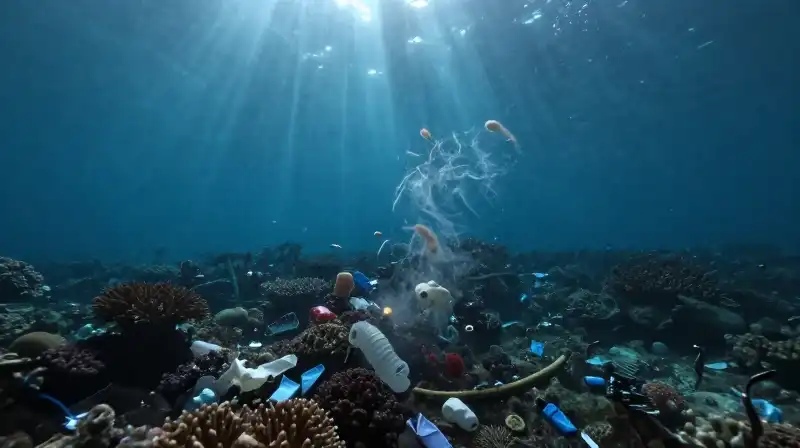
While the ocean’s depths may feel remote, they are deeply connected to the health of the planet. Today, marine ecosystems face significant and growing challenges. Ocean conservation is currently a race against two major factors: climate change and plastic pollution. These stressors affect everything from the microscopic phytoplankton that produce our oxygen to the apex predators in the open sea.
Understanding the Deep
The ocean is far more than a collection of scary facts; it is a highly specialized, complex, and fragile system. From the microscopic viruses in a single milliliter of water to the massive migratory paths of great white sharks, every element of the marine world is built on survival and adaptation. By moving past the sensationalism of “terrifying” ocean facts and looking at the actual science of pressure, darkness, and biology, we gain a much deeper respect for the vast, unexplored reaches of our blue planet.
Facts sourced from peer-reviewed marine biology research, NOAA, and the Smithsonian Ocean Portal. Our editorial team fact-checks all content against current scientific literature.
Related Articles